
Woman Sees Abandoned Dog On Instagram And Races Across The City To Save Her
Guest Contributor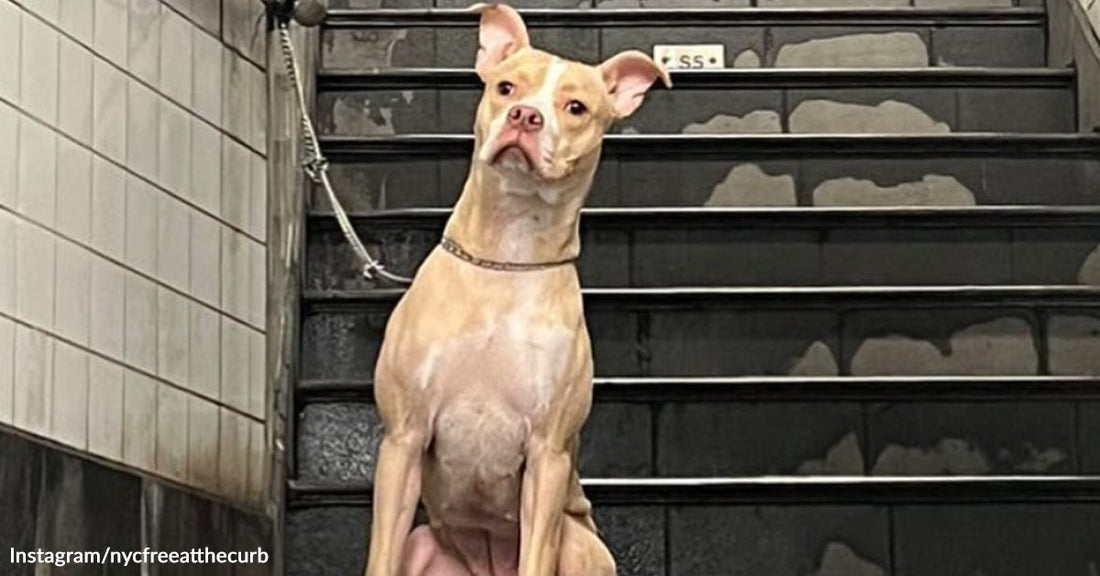
Every once in a while, a simple scroll through social media interrupts the usual blur of photos and posts with something that feels unmistakably urgent. That is exactly what happened when Heather Hamm, relaxing one evening in her New York City apartment and considering opportunities to foster a dog, opened Instagram and came across a single, startling image. The picture showed an abandoned dog tied to a Subway station pole, shared on a local account that typically highlights free items left on city streets. Instead of discarded furniture or household goods, though, this post captured a living, vulnerable animal waiting alone. For anyone who loves animals, and especially for someone actively searching for a foster dog, it was a powerful and unexpected moment.
Hamm had already been sifting through foster options online, trying to figure out what situation might be the best fit. Nothing had felt quite right. That changed the instant the image of the tied dog appeared on her feed. The dog was clearly alone, clearly abandoned, and clearly depending on the kindness of whoever saw that photo next. According to what Hamm later shared with The Dodo, she interpreted that image as more than a coincidence. She described it as a sign that this particular dog might be meant for her.

Instead of rushing out the door immediately, Hamm set a short but important boundary with herself. She reportedly decided that if an hour passed and no one else stepped in to help, she would go. The Instagram post began to fill with comments, but no one confirmed that the dog had been rescued. After only about thirty minutes, she checked again. Still no updates, no word that anyone had claimed the pup or brought her to safety. At that point, waiting felt wrong. Hamm chose to act, calling a cab so she could get to the Subway station and at least see what was happening in person.
During the cab ride, the emotional weight of her decision started to sink in. It is one thing to imagine helping a dog in need and another to actually show up at a city street corner, unsure what situation you might encounter. Hamm loved dogs, but she had never tried to carry out a rescue on her own. Questions and worries surfaced. She wondered what condition the dog would be in, how the animal might react to a stranger, and what responsibilities would follow if she did manage to bring the dog home. She was confident she wanted to help, yet the unknowns were impossible to ignore.
Those fears met a very different reality when she finally reached the Subway station. The dog, still there and still tied to the pole, did not greet her with fear or aggression. Instead, the pup responded with affection and playfulness. As Hamm approached, the dog rolled over onto her back, offering her belly, and began licking Hamm’s face. The nervous energy from the cab ride reportedly disappeared in that instant. Any concerns about whether they could connect were replaced by a sense of relief. The dog seemed to be waiting not just for anyone but for someone willing to see her as a companion rather than a problem.
What followed shows how quickly an abandoned animal’s fate can change when people choose to intervene thoughtfully. Police arrived at the scene, and Hamm spoke with them about the situation. After discussing what had happened, she received permission to take the dog home. This was not a spontaneous decision made without preparation. Before leaving her apartment, Hamm had taken practical steps to get ready, anticipating that she might return with a new foster dog. That preparation paid off immediately as she guided the pup away from the pole and into a car headed toward a safer, more stable environment.
On the way home and in the hours that followed, the dog’s personality continued to unfold, supporting Hamm’s first impression. The pup, later named Peaches, was not only friendly but also clearly familiar with basic training. According to Hamm’s account, Peaches already knew several commands and was quick to pay attention. She did not behave like a dog unfamiliar with human companionship. Instead, she presented herself as a well-mannered dog who simply needed a new, caring space.
Once in Hamm’s apartment, Peaches settled into foster life with, as reported, impressive ease. She embraced many classic dog joys, from cuddling on the couch to enthusiastic games of fetch. One small detail that stands out is her attachment to a monkey-shaped stuffed animal, which quickly became a favorite toy. She also thrived on walks in the park, where she could explore and enjoy the city from a far more comfortable vantage point than a street corner tied to a pole. I found this detail striking because it highlights how quickly an animal’s world can expand once someone chooses to step in and offer help.
Even as she bonded with Peaches, Hamm understood that fostering comes with a bittersweet reality. Fostering is designed to be temporary, a bridge between crisis and long-term security. She knew from the outset that she might not be able to keep Peaches forever. According to The Dodo, that awareness did not diminish her belief that she had made the right decision when she called the cab and set off on that late-night rescue. In fact, it emphasized the importance of her role. By opening her home for a time, she could offer stability, affection, and structure that would prepare Peaches for a lasting home.
Peaches is now in the process of being adopted by her future family, moving toward the permanent home she deserves. While that next chapter unfolds, she continues to enjoy a life rich with attention, play, and comfort, supported by a foster mom who chose action over hesitation. Stories like this highlight how modern platforms like Instagram can do more than entertain. A single post showing an abandoned dog in New York City became the catalyst for a meaningful rescue, reminding people that real change can begin with a moment of compassion and a willingness to get involved.
Fostering a dog, especially one found in such uncertain circumstances, is not always simple. It involves emotional investment, time, and a readiness to say goodbye when a permanent home appears. Yet as Hamm’s experience suggests, that effort can transform not only an animal’s life but also the way people see their own capacity to help. Whether someone chooses to foster, adopt, volunteer, or share verified information about animals in need, each action adds to a network of care. In Peaches’ case, a chain that began with an online photo and a difficult moment at a Subway station now leads toward a secure and loving forever home.