
🚨Urgent: Missile Strikes Shelter in Ukraine! Rush Emergency Aid!
Iwo Jima Flag-Raising Mural Honors Marine Corps Veteran’s Legacy
Guest Contributor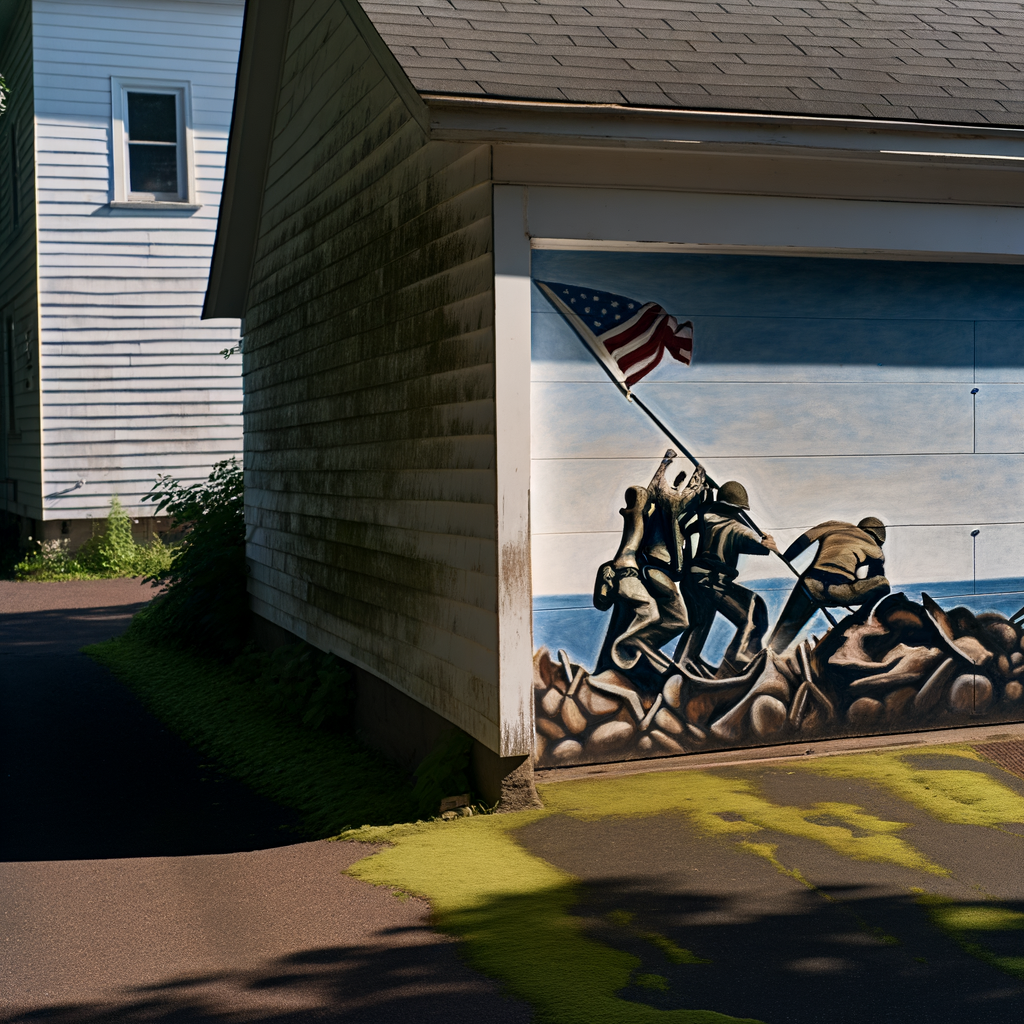
In a heartfelt tribute that blends art with military history, a muralist has brought the iconic image of the Iwo Jima flag-raising to life on the garage door of a Marine Corps veteran. The mural, a powerful representation of one of World War II’s most enduring moments, now stands as a personal monument on private property, honoring the service and sacrifice of those who served.

The mural, which captures the moment six U.S. Marines raised the American flag atop Mount Suribachi during the Battle of Iwo Jima, was painted for a veteran living in Amherst. This image, originally photographed by Joe Rosenthal in 1945, has become a symbol of unity, perseverance, and patriotism. Recreating it on a garage door transforms a familiar suburban surface into a canvas of remembrance and respect.
I found this detail striking: the decision to place such a significant piece of art on a personal structure, rather than a public space, adds a layer of intimacy to the tribute. It’s not just a mural; it’s a daily reminder for the homeowner and a visual statement to the community about the lasting impact of military service.
The artist behind the work, whose name was not detailed in the source, has managed to capture the emotion and gravity of the original moment. The figures are rendered with care, emphasizing the strain and determination etched into each Marine’s posture. The flag, caught in mid-motion, evokes both movement and permanence—an apt metaphor for the enduring legacy of those who served in the Pacific theater.
This mural is more than a nod to history; it’s a deeply personal expression of gratitude. According to the report, the homeowner is a Marine Corps veteran himself. For him, and for many others who see the mural, it likely serves as a visual link to shared experiences, memories, and a sense of purpose that extends beyond active duty.
Public art often plays a role in community identity, and in this case, the mural also contributes to a broader cultural memory. The image of the Iwo Jima flag-raising has been replicated in statues, stamps, and textbooks, but seeing it in a neighborhood setting brings it closer to everyday life. It reminds passersby that history is not confined to museums or memorials—it lives on in the people who served and in the communities that support them.
In recent years, there has been a growing trend of using murals to honor veterans and first responders. These works often serve dual purposes: they beautify public and private spaces while also educating and inspiring viewers. This particular mural joins that tradition, offering both aesthetic value and a poignant message.
The placement of the mural also invites reflection on the role of veterans in civilian life. After service, many veterans return to roles as neighbors, parents, and community members. Art like this acknowledges their service while also integrating it into the fabric of everyday life. It’s a way of saying, “We see you. We remember.”
While the Chronicle Telegram article did not provide extensive background on the muralist, their work speaks volumes. The choice of subject, the attention to detail, and the emotional resonance suggest a deep respect for the military and its history. It’s a reminder of how art can be both personal and universal, speaking to individual experiences while connecting with broader themes of sacrifice and honor.
For those unfamiliar with the Battle of Iwo Jima, it was one of the fiercest and most strategically significant battles in the Pacific during World War II. The photograph of the flag-raising quickly became a symbol of American resolve and was later used as the model for the Marine Corps War Memorial in Arlington, Virginia. By recreating it on a garage door in Amherst, the muralist ties a global historical moment to a local narrative, making the past feel immediate and relevant.
In a time when many communities are seeking ways to support veterans and recognize their contributions, projects like this offer a meaningful and accessible approach. They don’t require grand ceremonies or extensive resources—just a wall, some paint, and a commitment to honoring those who served.
As road closures begin in nearby Lorain for the Charles Berry Bridge inspection, and headlines continue to shift with new developments, this mural stands as a quiet yet powerful counterpoint. It doesn’t demand attention, but it earns it. It reminds residents of the strength and sacrifice embedded in their community’s history, and it does so with grace and dignity.
For those interested in seeing the mural or learning more about the veteran it honors, the full story is available through the Chronicle Telegram. It’s a testament to how even small acts of creativity and remembrance can resonate deeply, offering both beauty and meaning in equal measure.