
Boat Propeller Crushes Kraken’s Shell but Veterinarians Attempt a Rare Procedure
Guest Contributor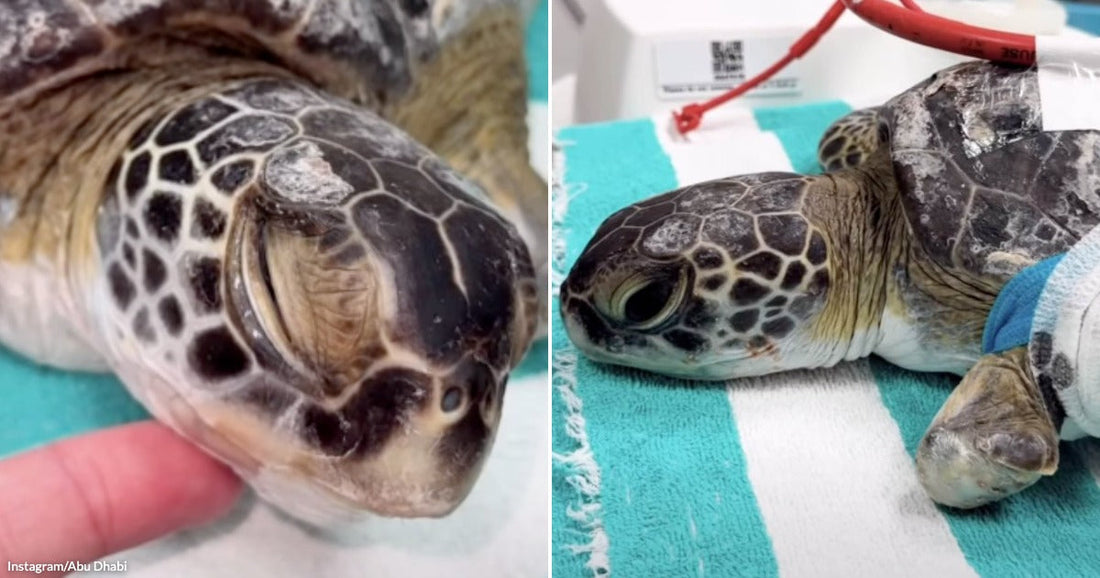
The National Aquarium in Abu Dhabi is known for its sweeping 35-foot-deep underwater tunnel and its massive 5,000,000-liter ocean tank shimmering with thousands of marine animals. Yet behind the scenes, something even more remarkable is happening. The aquarium has become a global leader in marine life rehabilitation, particularly for endangered sea turtles. Its team has already saved more than 1,300 sea turtles, and recently they faced one of their most challenging cases yet: a green sea turtle named Kraken whose shell had been crushed by a boat propeller.
In a video shared on Instagram, turtle care team member Aisha introduced Kraken to the world. The turtle arrived at the National Aquarium with a severe crack across the top of his shell, called the carapace, as well as along the underside, known as the plastron. These two parts form the turtle’s protective armor and shield its vital organs. For an injury to cut through both, Aisha explained, it most likely came from a powerful boat strike, probably from a spinning propeller.

Kraken’s condition was even more serious than a fractured shell. He was also missing a front flipper, which raised immediate concerns about whether his spine or internal organs had been damaged. The aquarium’s veterinary team quickly moved to X-ray the injured sea turtle, preparing for the worst. To everyone’s relief, the imaging results showed that despite the violent collision, no critical organs or the spine appeared to be damaged.
Even with that good news, Kraken was far from safe. A crushed and cracked shell on a sea turtle is not just a structural problem. If left untreated, bacteria and debris can invade the wound and trigger dangerous infections or blood poisoning. Over time, a poorly healed shell can also affect how a turtle swims and controls its buoyancy, making everyday survival in the ocean far more difficult. The stakes were incredibly high, which is why the National Aquarium described Kraken as one of its most special rescue cases.
To give him the best chance at survival, the team turned to an advanced medical technique increasingly used in sea turtle rehabilitation: negative pressure wound therapy. Sometimes informally called “Turtle VAC” therapy, this method was first pioneered for humans in the 1990s and later adapted by wildlife veterinarians for severe injuries in marine animals. Aisha explained that the team was creating a type of vacuum over Kraken’s injury. That vacuum helps the damaged shell and underlying tissues come together, while also expelling excess fluid and supporting the healing process.
In practical terms, negative pressure wound therapy involves sealing the wound beneath an airtight, adhesive covering. A suction tube connects this covering to a mechanical vacuum pump, which applies gentle and continuous negative pressure over the area. Over time, this controlled suction draws out infectious fluids, reduces swelling, and stimulates blood flow. For sea turtles with boat strike injuries, it can also encourage new tissue growth around fractures and help stabilize damaged shell segments.

Instagram/Abu Dhabi
Because sea turtles live in the water, standard bandages are not enough. The team uses waterproof dressings and marine-grade sealants designed to keep the vacuum system secure even when the turtle is submerged. This added layer of protection helps ensure that seawater cannot reach the wound and disrupt the delicate healing environment beneath the dressing. According to Aisha, Kraken’s treatment represented one of the first times the National Aquarium had used this method on a shell fractured in such a complex way.
Kraken’s story highlights a growing reality in marine conservation. Boat strikes are a significant threat to endangered sea turtles around the world. Alongside entanglement in fishing gear, plastic ingestion, environmental pollution, and poaching, collisions with watercraft are a recurring cause of traumatic injuries. As more turtles and other marine animals share coastal and offshore waters with human activity, rescue centers and aquariums are increasingly turning to innovative treatments like negative pressure wound therapy to give injured wildlife a second chance.

Instagram/Abu Dhabi
Half a world away, another young green sea turtle recently faced a similar ordeal. In Juno Beach, Florida, the Loggerhead Marinelife Center took in a patient named Aelin after an accidental boat strike in an intracoastal waterway in late March. The center described Aelin’s injuries as brutal, and like Kraken, she required Turtle VAC therapy to stabilize her shell and support recovery.
The rehabilitators in Florida reported that Aelin was first dry-docked with a wound vacuum to help stabilize her shell. Once the injury was more controlled, surgeons removed dead bone and reapplied the negative pressure system to promote further healing. Over time, Aelin progressed enough to be moved into one of the center’s larger hospital pools, where she continues to receive regular examinations and wound cleaning as her shell and tissues recover.
There is something quietly powerful in the parallel journeys of Kraken and Aelin. Although they are separated by nearly 7,800 miles, both sea turtles are recovering from the same advanced procedure and benefiting from teams of specialists committed to their survival. Their recoveries showcase how medical innovation developed for humans can be adapted for wildlife conservation, and how coordinated turtle rehabilitation efforts can make a real difference for individual animals as well as endangered species.
The National Aquarium’s staff shared that Kraken is responding well so far. Aisha expressed hope that his healing will continue to move in the right direction and that he will make a full recovery. While the road ahead may still be long, every successful day of treatment brings him closer to swimming freely again. In much the same way, Aelin’s continued improvement in Florida offers another encouraging sign of what is possible when expert care, creative techniques, and long-term commitment come together in service of marine life.
Stories like Kraken’s and Aelin’s underscore the importance of preventive action alongside rehabilitation. Safe boating practices, awareness of wildlife in coastal waters, and support for marine rescue and research organizations can all help reduce the number of injured animals needing critical care. At the same time, the success of Turtle VAC therapy provides a hopeful reminder that when injuries do occur, there are increasingly effective tools available to help sea turtles survive and return to the ocean where they belong.
Read more at https://www.goodgoodgood.co/articles/green-sea-turtle-kraken-boat-propeller-injury