
Earthquake Survivors Refuse to Give Up on Missing Pets as Rescue Groups Race to Bring Families Back Together
Guest Contributor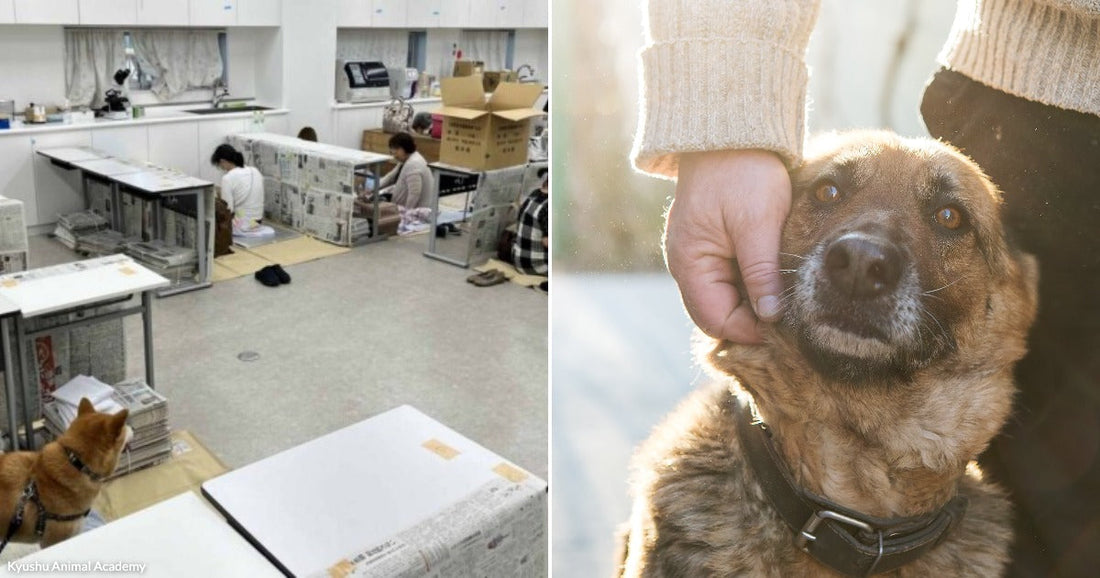
An uplifting story of compassion is unfolding in Japan, where pet lovers, volunteers, and local organizations have rallied to reunite lost animals with their families after a powerful 7.1 magnitude earthquake. In the middle of collapsed homes, evacuations, and heartbreaking loss of life, a network of digital rescuers and on-the-ground caretakers has emerged to make sure that pets, too, find their way back home. For anyone who has ever shared life with an animal, the idea of being separated during a disaster is terrifying, which makes these acts of solidarity especially moving.
At the center of this effort is Maigo Ken no Keijiban, the Lost Dog Bulletin Board, which has become a vital digital hub for lost pet notices. With around 150,000 members on social media and a status equivalent to a 501(c)3 nonprofit in the United States, this organization was already known for helping owners locate their missing dogs. After the earthquake, its role became even more important as communities scrambled to account for both people and pets. By collecting and amplifying information on lost and found dogs, the group has turned social media into a powerful tool for disaster response.

One especially heartening example from the recent days involves a small Chihuahua named Leo. Separated from his family in the chaos after the quake, Leo might easily have vanished without a trace. Instead, his story became a vivid demonstration of what an organized online community can achieve. Volunteers and concerned residents shared his information, spread his photo, and kept watch in their own neighborhoods. Through this coordinated digital search, Leo was identified and safely returned to his owner, who was about a mile away from where the dog had been found. The outcome highlighted how, even in the confusion that follows a natural disaster, accurate information and collective attention can bridge that distance.
The Japan Times has also reported on another unfolding search effort that has captured the attention of bulletin board members. A Shiba Inu named Go, cared for by his owner Yosuke Matsuda, bolted in the aftermath of the quake. Go had been adopted less than a year earlier and had likely experienced abuse in the past. According to Matsuda, this history made the dog especially prone to fear and skittishness. It is easy to imagine how the shaking ground, crashing sounds, and sudden commotion would have overwhelmed a sensitive animal already inclined to be frightened. Members of the group’s Kyushu island chapter have sighted Go, which has given Matsuda and other supporters hope as they wait for further news.

Stories like Leo’s reunion and the ongoing search for Go reveal how intertwined human and animal well-being can be in a crisis. The owners’ comments underline how deeply pets are seen as family members, not just companions. In a traumatic moment, the loss of a beloved animal can magnify the sense of displacement and grief. Conversely, every reunion carries emotional weight that reaches well beyond a single household. I found this detail striking because it shows how compassion for animals often inspires broader community care among people, too.
The work of Maigo Ken no Keijiban and its volunteers is one side of the response. On the other side, local institutions have stepped in as physical safe havens for both pets and their guardians. In the city closest to the earthquake’s epicenter, the Kyushu Animal Academy, a vocational school specializing in animal care, quickly converted several of its classrooms into temporary shelters. Instead of lessons and training sessions, those spaces now hold kennels, makeshift beds, and improvised corners where people and animals can rest.

At present, around 20 pets and evacuees are staying at the school. While this number is modest compared with the school’s past efforts, it still reflects a significant commitment. During an earthquake in the same city in 2016, the academy managed to accommodate around 1,500 people, which shows that this is not a one-time gesture but part of a continuing ethos of service. This kind of institutional memory matters in disaster preparedness. It suggests that the academy has thought carefully about how to adapt its resources quickly when the community is in need, whether that means taking in hundreds of people or providing a smaller, more specialized refuge for evacuees and their animals.
Ryunosuke Tokuda, the school’s headmaster, has spoken candidly about why this work matters. He has observed that most public evacuation centers are not designed to house animals indoors. This limitation creates a painful dilemma for pet owners who may be forced to choose between a safe roof over their own heads and staying close to an animal that depends on them. According to Tokuda, being able to keep pets nearby can lift people’s spirits at a time when morale is fragile and uncertainty looms large. His words, “Pets are family, and having them close makes a huge difference,” capture a sentiment that resonates across cultures and languages.
This focus on emotional well-being within disaster relief is not a trivial addition. It aligns with research and lived experience that show how psychological resilience can be strengthened by preserving familiar bonds. When a dog curls up next to an evacuee, or a cat purrs in a makeshift carrier, those small moments can counterbalance the stress of damaged homes, displacement, and long waits for news. In that sense, the pet-friendly shelter efforts in Kyushu are not only about physical safety but also about mental and emotional support, both of which are essential in the weeks and months after a major quake.
Tokuda has emphasized that the school cannot serve as an evacuation center indefinitely. Eventually, responsibility will shift fully to local government offices and longer-term support systems. This realistic acknowledgment does not lessen the power of what is happening now. Instead, it underscores how disaster relief often begins with flexible, community-level action, then gradually transitions to more formal structures. The academy has chosen to position itself in that crucial early phase, when improvisation is needed and a rapid, compassionate response can have disproportionate benefits.
Another important detail is the school’s open invitation to foreigners, including people who may not speak Japanese. By explicitly welcoming anyone with a pet who needs help, regardless of language barriers, the academy signals that its concern is based on shared humanity and care for animals rather than local affiliation alone. In an emergency context, this inclusiveness can be a powerful reassurance for residents and visitors who might otherwise feel uncertain about where they belong.
As communities in Japan work through the aftermath of this earthquake, the joint efforts of digital groups like Maigo Ken no Keijiban and on-the-ground allies such as the Kyushu Animal Academy offer a model of how to care for the whole community, including its animals. The lost pet bulletin board demonstrates how online networks can be harnessed for focused, practical outcomes, like reuniting Leo with his family and continuing the search for Go. The academy’s makeshift pet shelter shows how institutions can pivot quickly to provide safety and emotional support. Together, they reveal an ecosystem of care that recognizes pets as integral members of households and emphasizes that disaster relief is most effective when it addresses both physical and emotional needs.
In the face of rubble and uncertainty, this solidarity between pet owners, volunteers, and educators provides a different kind of headline from the usual disaster coverage. It is a reminder that humanitarian response does not stop with human beings alone, and that sometimes the path to healing runs through four paws and a wagging tail. Read more at https://www.goodnewsnetwork.org