
Family Hears Their Dog Whimpering From Abandoned Well as Firefighters Race to Reach Her
Guest Contributor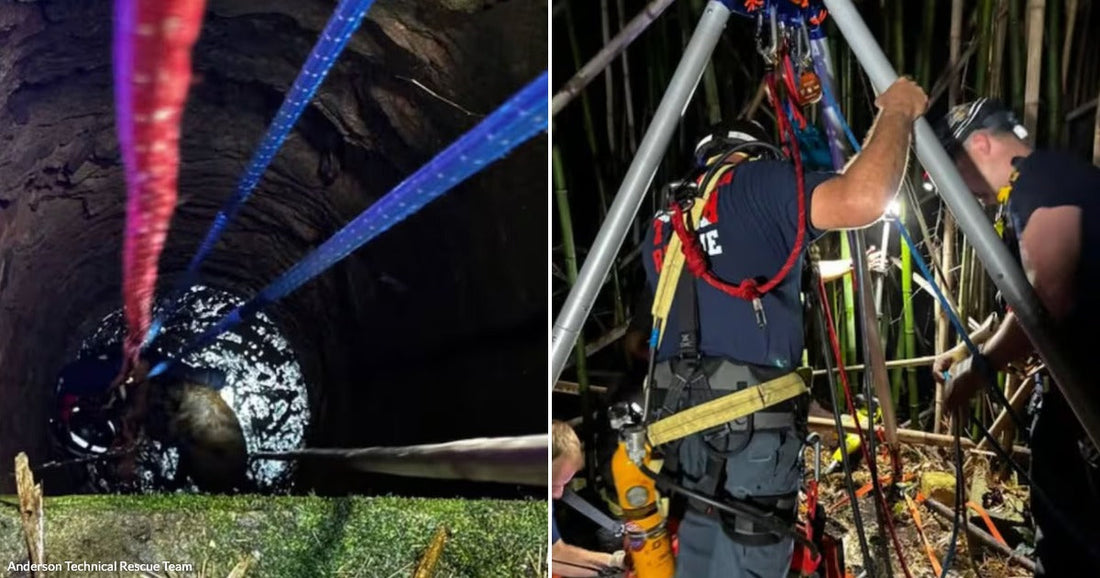
In West Pelzer, South Carolina, a routine Sunday night turned into a tense rescue that highlights a hidden danger on many properties: old, abandoned wells. When Maisy, a family dog, bolted out an open door and vanished into a stand of overgrown bamboo, her owners had no way of knowing she would fall 50 feet into a water-filled shaft that had sat largely forgotten for years. Her story is gripping on its own, yet it also points to a much larger problem with aging infrastructure and unsealed water wells across South Carolina.
The dog’s owner, Cheyanne Miller, realized something was wrong when Maisy did not return after nearly an hour. That is when her father remembered an old well concealed in the bamboo behind their home. The family called 911 and crews from Anderson County and the West Pelzer Fire Department responded to the scene. The rescue took about an hour and a half as first responders worked carefully to reach the dog in the narrow, water-filled shaft. At one point, Maisy was reportedly almost completely underwater, her head resting on the side of the well. When Miller called down to her, the dog wagged her tail, a small but powerful sign that she was still fighting.

Miller later admitted she feared the worst. She described thinking they might not get Maisy out at all, or that the responders would recover only her body. Instead, what followed felt like a small miracle to the family. Despite falling roughly 50 feet, Maisy escaped with a torn toenail, a bruised hip, and an infected cut. She suffered no broken bones and was soon back on her feet, trying to greet the first responders who had pulled her from the well. That outcome is remarkable, especially given the height, water, and the time she spent trapped.
The well that nearly killed her had been on the property since before the family moved in over a decade ago. For years it lay hidden under the dense bamboo that had grown up around it. Only after the accident did the Millers add a temporary cover. Now they face a complicated problem: how to permanently seal a well that is too deep to simply fill in without proper planning and professional help. Their experience has turned into a warning for other property owners, especially those with pets or children.

Anderson Technical Rescue Team
Miller urged others to be cautious, not just when visiting unfamiliar places but even on land they think they know well. Abandoned wells, concealed pits, or hidden openings can be especially dangerous for animals that explore by running and sniffing rather than watching their step. Her advice is simple yet sobering. It is a reminder that unseen hazards can exist in backyards, fields, and wooded areas, particularly on older properties or rural land.
Maisy’s story also connects to a broader infrastructure issue in South Carolina. The state’s water system and related structures have been evaluated by the American Society of Civil Engineers, and South Carolina recently received an overall C-minus on its infrastructure report card. Notably, that grade is considered an improvement, which suggests both progress and ongoing concern. While the report covers many areas, from roads to dams, the issue of old water wells is one clear example of how aging infrastructure can persist long after its original purpose has ended.

Anderson Technical Rescue Team
Experts estimate that South Carolina may have more than 100,000 water wells, and no one can say how many of them were abandoned without being properly sealed. When a well is no longer in use, it should be decommissioned by a qualified professional who can ensure it is closed safely. If that does not happen, the opening can remain hidden yet hazardous. Over time, houses, sheds, or decks may be built on or near such wells. Vegetation may grow over them, or floors and boards may conceal them from view.
Recent incidents show the potential consequences. In 2021, a contractor in Gaffney fell through the floor of a home into a hidden well and was seriously injured. Then in 2023, an Oconee County woman died after falling through floor boards into a well that had been concealed for roughly 40 years. Hunters in Sumter National Forest have also reported finding open, unmarked wells in remote areas. These are not isolated curiosities; they are part of a pattern in which aging or forgotten infrastructure intersects with everyday life in dangerous ways.
The policy response so far has been limited. A state bill that would have required property sellers to disclose known wells on their land died in committee years ago. That means buyers may not always learn about old wells during real estate transactions. In the absence of a comprehensive regulatory solution, responsibility often falls back on individual property owners to investigate and address potential hazards.
Organizations like the American Ground Water Trust have tried to make that task more manageable. They encourage property owners to look for signs that might indicate an abandoned well. Pipes protruding from the ground can be one clue. Small outbuildings or sheds that could have once served as well houses may be another. Depressions in the soil, concrete vaults or pits, or old windmills and wind pumps can also suggest a former water source. For those with access to historic maps, old property plans, or utility records, these documents may reveal where a well once existed, even if it is no longer visible on the surface.
Older homes are of particular concern. Many were originally built with private wells as their main water supply before municipal water lines reached the area. Over time, as properties were renovated or expanded, some wells were covered by additions, porches, or new flooring. If those closures were not done correctly, the structure can weaken and fail many years later, turning a long-forgotten well into a sudden and catastrophic hazard. Persistent moisture, recurring mold, or unexplained damp spots in certain parts of a house can be early signs that something is wrong below the surface and may warrant expert investigation.
For anyone who suspects they have an old or unused well on their property, the guidance is to consult a qualified drilling or groundwater contractor. The South Carolina Ground Water Association maintains a directory of professionals who can answer questions, assess wells, and carry out proper sealing procedures when a well is no longer needed. Handling abandoned wells is not a do-it-yourself project. It requires the right equipment and knowledge to ensure the well is closed in a way that is safe for people, animals, and the surrounding environment.
Maisy’s rescue ends on a hopeful note, yet the incident underlines an ongoing and largely invisible problem. Hidden wells can be a threat to pets, children, adults, and first responders alike. By learning to recognize the signs of abandoned wells, checking crawl spaces and yards for anything unusual, and calling experts when something seems off, property owners can help prevent future tragedies. In that sense, the Millers’ frightening ordeal and Maisy’s unlikely survival offer more than just a dramatic story. They serve as a reminder that safety sometimes begins with looking beneath the surface of the places we think we know best.