
Woman Arrested After Two Dogs Die From Starvation
Guest Contributor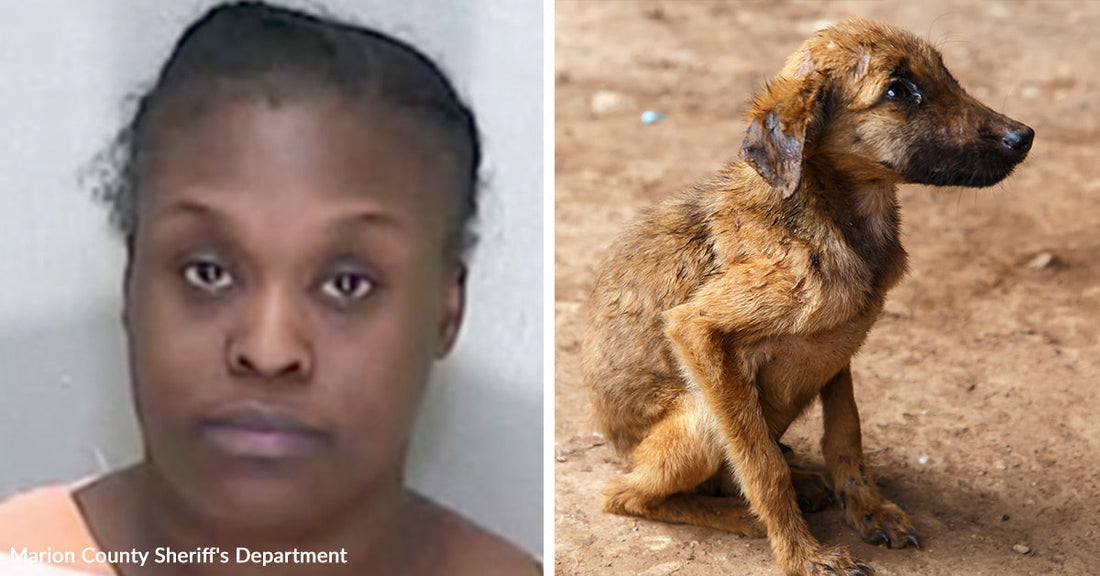
The details emerging from Marion County, Florida, are deeply unsettling. A Central Florida woman is accused of abandoning three dogs at a property in Ocklawaha while she traveled to Georgia for a job opportunity. According to deputies and animal services, two of the dogs were later found dead and one, a dog named Olaf, was discovered alive but in poor condition. Cases of animal cruelty and pet abandonment like this one force a hard look at what responsible pet ownership truly requires.
The Marion County Sheriff’s Office reports that the case began when animal services opened an abandonment investigation. The focus was a dog owner connected to the Ocklawaha property. The following day, investigators returned with a warrant to collect two dogs from the address. What they encountered painted a heartbreaking picture of neglect. Inside the home, two dogs were found in crates. One had already died. The other, identified as Olaf, was still alive.

Out in the backyard, investigators found another dog, also deceased, still tethered to a deck post. A public information officer with the sheriff’s office described the scene as heartbreaking and emphasized that animals, especially those confined in cages or tied up, are completely dependent on humans for care. According to the arrest report, the two dogs that died were described as “skin and bones.” There was no food in their stomachs, and they were also found to have hookworms.
Authorities said they did not yet know precisely how long the dogs had been left alone. What they did know was that all three had suffered. Olaf, the surviving dog, was examined by a veterinarian and determined to have both heartworms and hookworms. Because of an active criminal case, county officials told WESH 2 that they could not disclose Olaf’s current condition or release any photos, a reminder that this is not only a story of grief but also one that is still moving through the justice system.
The arrest report identifies the owner of the dogs as Shan’Tayia Brenae Edwards. Investigators reached that conclusion by speaking with family members and by referencing a previous animal control case involving Edwards from just a few months earlier. In that earlier encounter, the report states that Edwards was educated on proper animal care. That detail is particularly striking, since it suggests she had already been informed of appropriate standards and responsibilities for pet ownership before this incident allegedly occurred.
When investigators tried to reach Edwards during the abandonment investigation, the report says she did not return their phone calls. A family member told authorities that Edwards had said a cousin would be coming by to feed the dogs, but could not provide a name or any way to confirm that claim. In animal neglect cases, questions about intent and responsibility are often complicated. In this situation, however, law enforcement has emphasized that leaving animals confined, tethered, and allegedly without adequate care can lead to criminal liability, no matter what arrangements the owner believed might be in place.
Once the dogs were discovered, the Marion County Sheriff’s Office began working to find Edwards. After interviewing family members, they learned that she had gone to Georgia for a job interview. Investigators then narrowed down her location, coordinating with law enforcement agencies in Georgia. According to the sheriff’s office, Georgia authorities conducted their own work to identify her home address and the Waffle House where she was employed.
After locating her, Georgia officials arrested Edwards. She was then extradited back to Marion County on February 17. Jail records show that she was released on bond the same day, facing charges of animal cruelty and abandonment. The sheriff’s office has publicly emphasized that they want her to be held accountable for the pain and suffering experienced by the dogs, particularly the two that died, and has described the suspected deaths by starvation as both heartbreaking and deeply sad.
Stories like this one are painful to read, yet they underscore some significant truths about the relationship between people and their pets. Dogs depend on their human guardians for every aspect of their well-being: food, water, shelter, medical care, and basic companionship. When a person prepares to relocate for a job or any major life change, responsible pet ownership requires concrete arrangements. That might mean taking animals along, arranging verified temporary care, or surrendering them to a reputable shelter or rescue when no other safe option exists.
Abandonment investigations remind communities that neglect is not always loud or obvious. It can be as quiet as an empty yard, a closed crate, and a dog waiting behind a fence for someone who never comes back. In this case, the condition of the deceased dogs, described as skin and bones with no food in their stomachs, aligns with what animal welfare professionals recognize as clear signs of prolonged deprivation. The presence of hookworms and, in Olaf’s case, heartworms also points to ongoing medical needs that were not being adequately addressed.
It is worth noting that local animal services and sheriff’s offices often carry a heavy emotional burden in these cases. They are the ones called to investigate, to open crates, and to document the final state of animals that once depended entirely on human care. A public information officer’s statement that they “are to care for these animals” reflects an awareness that the community looks to them to protect living beings that cannot advocate for themselves.
This case in Central Florida may ultimately serve as a stark reminder and a call to action. For those who share their lives with animals, it highlights the importance of planning ahead and understanding that pets are not possessions that can be left behind when life becomes complicated. For communities, it underscores the need to support local shelters, encourage responsible pet ownership, and be willing to report suspected neglect or abandonment before it becomes a matter of life and death.
While the criminal process continues and Olaf’s current condition remains undisclosed, the known facts already tell a sobering story about the consequences of failing to provide basic care. Two dogs died tethered and crated, reportedly with no food in their stomachs. Another survived but with serious health problems. Law enforcement tracked the accused owner across state lines, coordinated with out of state agencies, and brought her back to face charges. As this case moves forward, many will be watching to see how the legal system responds and what message that response sends about the value of animals’ lives and the responsibilities that come with owning them.