
State Police Intern and Two Officers Race to Save a Wounded Bald Eagle From Highway Traffic
Guest Contributor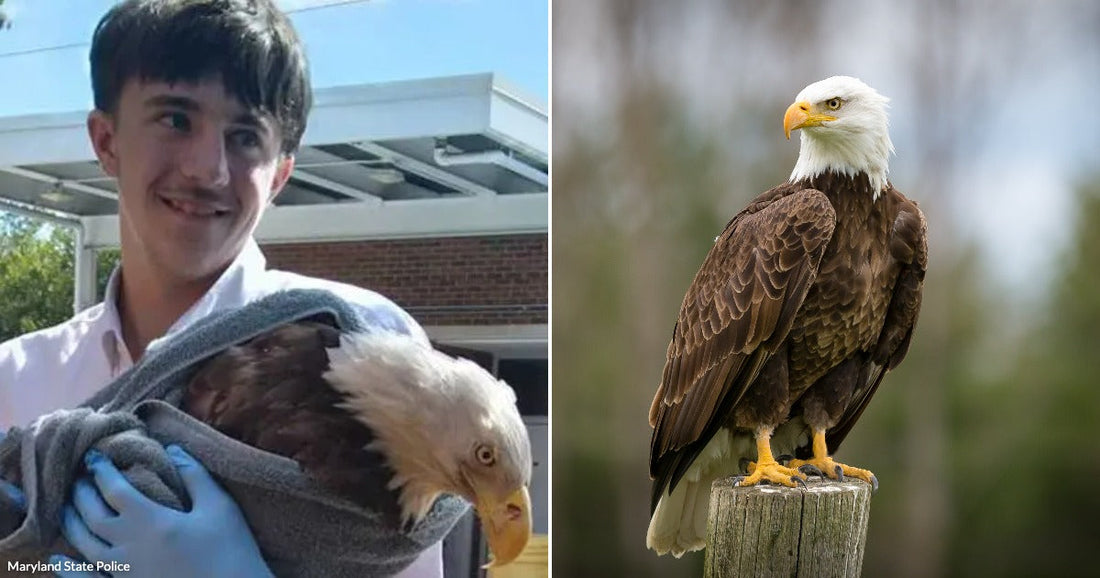
A routine day on Maryland’s Eastern Shore turned into an unexpected wildlife rescue when a Maryland State Police intern, a trooper and a police officer worked together to save an injured bald eagle. The brief incident, which unfolded along the busy lanes of westbound U.S. Route 50/301, highlights both the unpredictability of law enforcement work and the deep respect many people feel for this iconic national bird. For anyone who cares about Maryland State Police stories or inspiring animal rescue moments, this is one worth slowing down to appreciate.
According to Maryland State Police, the chain of events began when an injured bald eagle was spotted on the highway. The location alone created a high-stakes situation. U.S. Route 50/301 is a major artery connecting parts of Maryland’s Eastern Shore with the rest of the state, and traffic along that stretch often moves at highway speeds. An injured raptor on the roadway presented a danger not only to the bird itself but also to unsuspecting drivers who might swerve or brake suddenly to avoid it.

At the heart of the response were three people: Centreville Barrack intern Jackson Roach, Trooper A. Setter and an unidentified off-duty officer who stepped in to help. Together, they safely removed the bird from the highway. While official details are limited, the very act of approaching an injured bald eagle in a live traffic setting involves quick judgment, coordinated teamwork and a steady sense of calm. Bald eagles are large raptors with strong talons and beaks. Even an injured bird can thrash or attempt to defend itself. Safely moving one requires care and respect for the animal’s power and stress level.
The group transported the bald eagle back to the Maryland State Police Centreville Barrack. That decision brings another layer of meaning to the story. Police barracks are usually associated with patrol operations, investigations and administrative work. On this particular day, the barrack temporarily became a waystation for a protected bird on its way to specialized care. It is a small example of how public safety spaces sometimes serve unexpected roles in community and wildlife protection.

Maryland State Police
From there, the Owl Moon Raptor Center took over. Staff from the center picked up the bald eagle at the barrack and transported it to their wildlife rehabilitation facility in Boyds, located in Montgomery County. The partnership between law enforcement and a dedicated raptor center shows how different groups can come together for a shared purpose. Law enforcement officers and interns are not typically trained wildlife rehabilitators, so connecting the injured bird to an organization with the right expertise was essential.
The Owl Moon Raptor Center focuses on the care and rehabilitation of birds of prey. While the article does not detail the eagle’s injuries, the involvement of an established raptor center suggests that the bird will receive appropriate medical evaluation and a chance at recovery. It is a reminder that rescue is only the first step in a much longer process. Rehabilitation can include diagnostics, treatment, careful handling and, when possible, preparation for release back into the wild.
Maryland State Police highlighted the event in a social media post that underscored the experience from the perspective of the intern program. The agency noted that interns have opportunities to learn, serve and experience the work of law enforcement firsthand, sometimes in ways they might never anticipate. It is an important point about Maryland State Police internships. While most people associate police internships with ride-alongs, paperwork or observing routine patrol work, this incident shows that real-world experience can involve unique and memorable situations.
For intern Jackson Roach, participating in the bald eagle rescue may be one of those experiences that stays vivid long after the internship ends. Interns in public safety settings often talk about moments when abstract ideas like service, community support and responsibility become very concrete. Helping to remove a vulnerable bird from a dangerous highway and then ensuring it reaches professional wildlife care is one of those moments when public service takes a tangible, visible form.
The involvement of an off-duty officer also speaks to the way many in law enforcement view their role. Being off duty does not always mean stepping away from a sense of responsibility. When that unnamed officer helped in the rescue, it showed an instinct to respond to a situation that involved both a safety issue and an animal in distress. The anonymity of that role, at least in the initial reports, quietly reinforces the idea that many such acts of assistance happen without much public recognition.
The bald eagle itself adds another layer of significance. In the United States, the bald eagle is more than just a large bird of prey. It carries symbolic weight as a national emblem and represents resilience, recovery and the importance of conservation. Bald eagles were once severely threatened but have rebounded thanks to legal protections and conservation efforts. Seeing one injured on a highway can be jarring, yet watching a coordinated effort to protect and rehabilitate that same bird can feel equally powerful.
I found this detail striking because it shows how everyday jobs intersect with unexpected responsibilities. A routine patrol area, an internship shift at a barrack and an ordinary drive on Route 50/301 turned into a moment of shared care for a vulnerable animal. These moments often pass quickly in the flow of news, yet they quietly reveal how public agencies, individual officers and specialized nonprofits like the Owl Moon Raptor Center form a network of support that extends even to wildlife.
Stories like this one also invite reflection on community values. There was no direct obligation for an intern, a trooper and an off-duty officer to risk entering a hazardous roadway to assist an animal, yet they did. Their actions, followed by the work of professional wildlife rehabilitators, show an ethic that values both human safety and the well-being of an injured creature. In a time when traffic, development and human activity frequently intersect with natural habitats, such cooperation becomes even more important.
As the bald eagle recovers at the rehabilitation center in Boyds, this brief incident on the Eastern Shore stands as a reminder that acts of care can occur in the most practical of settings, from the shoulder of a buzzing highway to the lobby of a state police barrack. It is a small but memorable example of service in action and of how the work of law enforcement can extend beyond crime and traffic stops to include compassion, quick thinking and collaboration for the sake of a single injured bird.