
Louisiana Lab Turns Heads By Fetching Bullfrogs Like A Seasoned Pro
Guest Contributor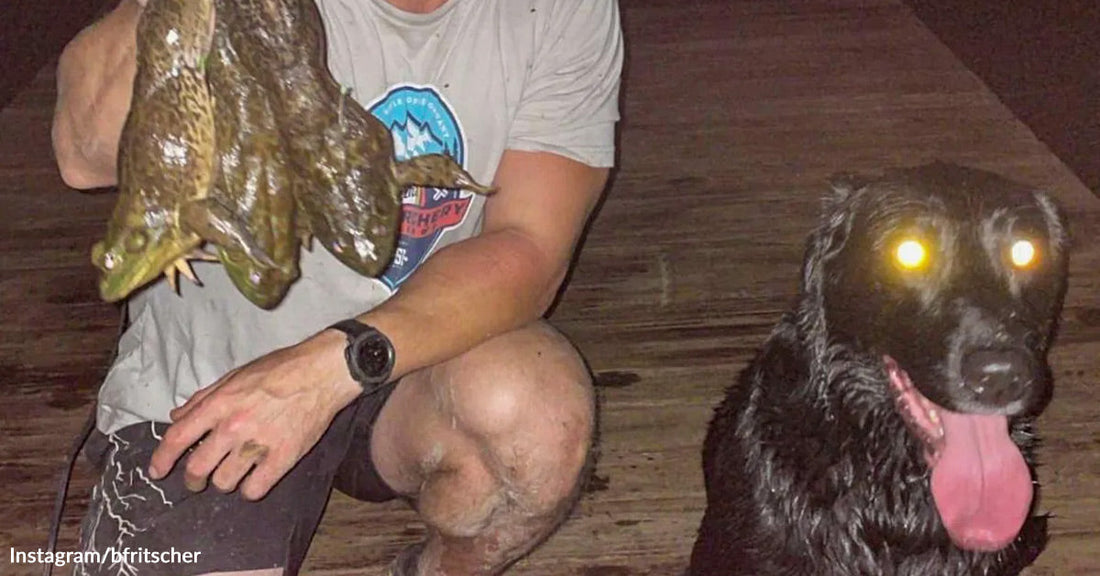
In rural Louisiana, where rice fields, crawfish ponds, and duck blinds shape everyday life, one 7-year-old Labrador retriever has quietly become a local legend. His name is Juice, and while he is a capable duck dog and all-around hunting companion, his most unexpected talent has captured people’s attention online. Juice fetches bullfrogs. The story behind this “bullfrog dog” offers a glimpse into working retrievers, family traditions, and the creative ways hunters keep their dogs active and engaged year round.
The story begins long before Juice was born, with another yellow Lab named Jack. In the late 1990s, Jack belonged to the uncle of Barret Fritscher, who is now a tugboat captain working out of Duson, Louisiana. Jack developed a quirky habit that would eventually make him a local celebrity. As a puppy, he wandered around the family’s crawfish and rice farming operation, scooping up bullfrogs and dropping them on the shop floor. In 1998 that unusual behavior was newsworthy enough to earn Jack a spot on local TV and even Good Morning America. For a young Barret, that frog-fetching Lab became the stuff of childhood legend.

Growing up in a duck hunting family, Fritscher was immersed in the world of retrievers and training. He recalls hunting ducks as “a staple of life in Louisiana” and working with duck dogs alongside his dad. Over time he developed his own passion and skill for training, to the point that he now spends weekends and free time helping others run informal dog training sessions. The idea of one day having a dog like Jack never left him. In his mind, the ultimate “do it all” dog would be one that could master traditional retrieves and also pick up frogs on command.
That idea resurfaced when his nephew approached him last summer with a specific request. The younger hunter, whose grandfather owned Jack, wanted to know if his own duck dog Rip could learn to retrieve frogs too. The question prompted Fritscher to think through practical training drills. He suggested a simple method that took advantage of the bullfrogs’ biology and behavior. By placing a few frogs on ice first, they would become lethargic and easier to work with during training. The plan was to run short retrieving drills with Rip, focusing on basic mechanics and consistency.
The technique worked. Soon Rip was trotting back with frogs, just as he would with bumpers or birds. Fritscher’s main advice was to maintain strong “hold conditioning,” the training foundation that teaches a dog to pick up, carry, and deliver objects to hand on command. This step is crucial, he explained, because most dogs are not naturally inclined to carry frogs. According to Fritscher, a bullfrog’s primary defense is its taste. Many dogs simply do not want to keep such a foul-tasting animal in their mouths, which is why only well conditioned retrievers will reliably hold onto frogs instead of spitting them out.
Watching Rip’s success made Fritscher consider his own Lab, Juice. Unlike Jack, who had discovered frogging on his own, Juice would need a deliberate introduction. Fortunately, Juice already had the core skills of a seasoned working retriever. He was obedient, steady, and force fetched, meaning he had been formally trained to pick up and hold a variety of objects, including birds. To start, Fritscher sent Juice toward a sluggish frog from about 15 feet away. The result was not what he expected. Juice overran the mark and seemed oblivious to the frog’s presence even as he stepped on it and dragged his nose across its back.
That experience revealed an intriguing wrinkle. Fritscher observed that dogs seem to struggle to smell frogs. If they do not actually see the frog as a visual mark, they may not recognize it as something to retrieve. Adjusting his approach, he shortened the distance to about 10 feet, making sure Juice could clearly see the frog before sending him. This time the concept clicked. Juice appeared to look back as if to confirm, “You want me to grab this?” Once he understood the assignment, he connected the dots quickly. After that moment, Juice became a reliable frog retriever. If he could see a frog, he could mark it and bring it back.
The key, again, was that solid hold conditioning and force fetch work had already been done. Juice accepted that he was expected to carry whatever object his handler directed, regardless of taste. That foundation turned an unusual task like frogging into just another retrieve. Fritscher believes that many retrievers could learn to pick up frogs with proper training, though not every dog will tolerate the unpleasant flavor long enough to deliver one consistently.
When Fritscher and Juice head out to hunt frogs now, their routine highlights the partnership between handler and working dog. They typically hunt at night in the family’s crawfish ponds and rice fields, which he notes are generally safer from the alligators and snakes that Louisiana is known for. The water is shallow and the retrieves tend to be short, which is ideal for a dog that is gradually aging but still eager to work. Fritscher wears a hard hat equipped with a bright light on the front, similar in concept to a coon hunter’s headlamp but designed for boaters by the mud motor company Go-Devil. He uses that strong beam to illuminate the frogs and points them out with a stick.
Reading Juice’s body language is part of the process. When Fritscher sees his dog’s ears perk up, he knows Juice has locked onto the frog’s position and is ready. Only then does he send him. For the next outing, Fritscher plans to attach a light directly to his pointing stick. That way, when he turns his head to check on Juice, the beam will stay fixed on the frog and make marking even easier.
Beyond its novelty as a viral video, the story of Juice also reflects the broader life of a multipurpose hunting dog. Fritscher describes Juice as a “once-in-a-lifetime dog” and a true multitool. Juice works ducks, geese, and doves. He runs rabbits, tracks deer, and flushes upland birds on South Dakota trips. Frogging is simply the latest task added to his resume. Although Fritscher credits his upbringing around duck dogs and long exposure to training methods he learned from his father and other handlers, he is quick to acknowledge that there is something special about Juice that training alone does not explain. As he puts it, Juice is “the kind of dog who makes his owner look good.”
For Fritscher, that bond is also wrapped up in a bigger dream. He loves training dogs and happily shares tips with anyone who is interested, whether they want help with a duck dog, a frog retriever, or general obedience. He has spoken openly about his hope of leaving tugboat work behind someday to become a full-time dog trainer. In the meantime, he is using activities like bullfrog hunting to keep Juice engaged, fit, and happy. Louisiana allows frog hunting for most of the year with a brief closed season in April and May. That long season turns frogging into a valuable off-season job for a retriever who might otherwise be waiting months between duck hunts.
There is also a deeper motivation behind all this. Fritscher reflects on how many dog owners look back after their companions are gone and wish they had done more with them. His approach with Juice is to do as much as he can now, while his dog is still able. Fetching frogs provides a lower impact, high reward activity that suits an older dog, while preserving the working relationship they have built together. It gives Juice a chance to keep doing what he loves and gives his owner more shared memories in the fields and ponds that defined his own upbringing. Read more at Outdoor Life