
🚨Urgent: Missile Strikes Shelter in Ukraine! Rush Emergency Aid!
Helpless Dog Could Not Defend Herself As Owner Stomped Her Again And Again For What He Called “Hard Love”
Guest Contributor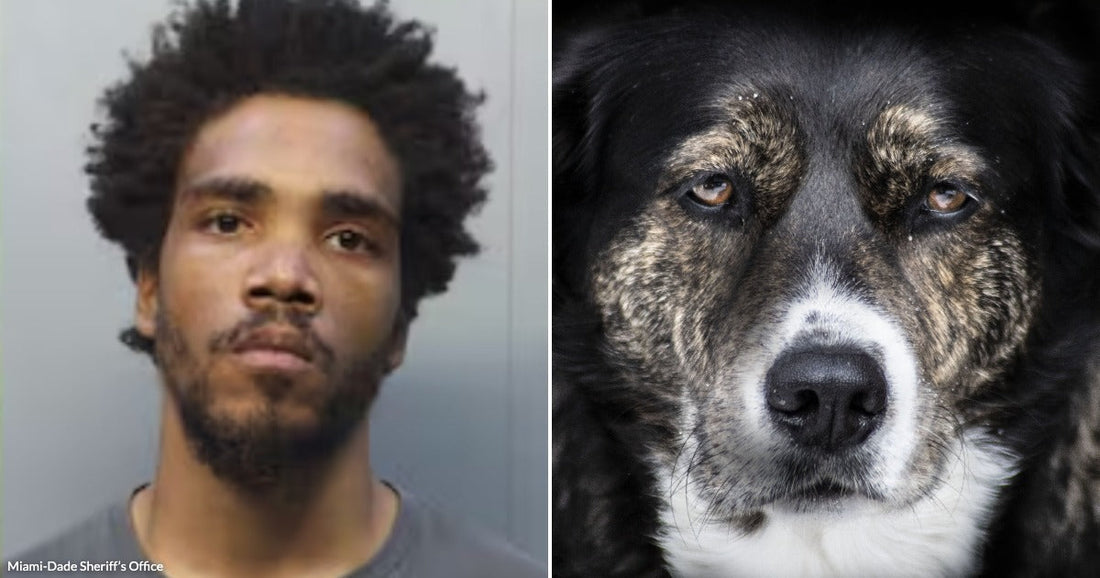
The recent case of a Miami-Dade man accused of stomping a dog in what he allegedly described as “hard love” has drawn attention to the realities of animal cruelty and the responsibilities that come with pet ownership. According to the Miami-Dade Sheriff’s Office, the incident involved a female Rottweiler named Lola and has already led to an animal cruelty charge with intent to injure or kill. Stories like this one about a Miami-Dade man accused of animal cruelty can be difficult to read, but they also highlight how essential it is for communities to recognize abuse and advocate for the humane treatment of animals.
Investigators report that the alleged abuse occurred on the morning of February 3 at a home in the Biscayne Gardens neighborhood, near the 400 block of Northwest 144th Street. Surveillance video is described as central to the case. Deputies say the footage shows 28-year-old DeAndre Dontay Ingham inside the fenced front yard of his residence, repeatedly stomping on a female Rottweiler named Lola. The report states that the dog was on the ground and unable to defend herself while the acts took place. Authorities say the video captured about six stomps, and described the incident as causing “unnecessary pain and suffering to the animal.” Those few words, sparse and clinical, point to a situation that is deeply distressing for anyone who cares about animal welfare.

The role of surveillance video in this investigation appears significant. According to the arrest report obtained by Local 10 News, the recording did not just document the actions themselves. It also became a crucial piece of evidence when law enforcement returned to the home days later. On the morning after detectives visited the property, they spoke with Ingham and his girlfriend. She reviewed the footage and, as the report recounts, identified both the person and the dog in the video. She is quoted as confirming that the man seen stomping the animal was her boyfriend of seven years, DeAndre Ingham, and that the dog was Lola, a Rottweiler she had purchased for him several years earlier. This identification helped tie the video directly to the individuals involved and provided additional corroboration for the investigation.
What stands out in the reporting is that, after seeing the surveillance footage, Ingham reportedly admitted to being the dog’s sole owner and acknowledged that he had stomped on her. Investigators say he did not deny the acts recorded on video. Instead, the arrest report notes that he tried to explain his behavior in terms of discipline. According to the sheriff’s office, he told deputies that Lola had urinated and defecated inside the home, including on a bed, and had also damaged a Wi-Fi wire. Those behaviors, he allegedly said, “pisses” him off. He is then reported to have described stomping on the dog as his form of “hard love.” I found this detail striking, because it illustrates how some individuals may frame violent responses as discipline rather than recognizing them as abuse.

Miami-Dade Sheriff’s Office
The phrase “hard love” is particularly unsettling in this context. While the concept of “tough love” is sometimes used when talking about setting limits or enforcing boundaries, the conduct described in the report is categorically different. According to the Miami-Dade Sheriff’s Office, the dog was lying on the ground and unable to protect herself from the repeated blows. The description in the arrest report suggests a vulnerable animal experiencing significant physical and emotional distress. This case underscores why animal welfare laws are so explicit about what constitutes cruelty. Training, frustration, and behavioral issues never justify inflicting pain or fear on a pet.
Authorities say that after the interview and admission, Ingham voluntarily surrendered Lola to Miami-Dade Animal Services. The report does not describe Lola’s condition in detail, but the transfer of custody places her in the care of professionals who are responsible for her safety and well-being. Surrendering an animal after an incident like this also removes the dog from an environment that investigators have already described as harmful. For many readers following the story, the involvement of animal services offers at least some reassurance that Lola is now with people who are equipped to evaluate her medical and behavioral needs and decide the best path forward.

From a legal standpoint, the arrest report shows that Ingham is facing one count of animal cruelty with intent to injure or kill. Jail records indicate he is being held at the Turner Guilford Knight Correctional Center on a 5,000 dollar bond. The article notes that he has a prior arrest on accusations of operating an illegal chop shop, described as a place where stolen vehicles are dismantled so that their parts can be sold or used to repair other stolen vehicles. While the outcome of the current case will be determined by the courts, the charge itself reflects how seriously Florida law treats purposeful harm against animals. The legal system’s involvement sends a broader message that animal cruelty is not a private matter, but a public concern with real consequences.
This incident in Biscayne Gardens is also a reminder of how modern technology influences accountability. Surveillance cameras around homes and neighborhoods are increasingly common, and in this instance, the footage appears to have played a central role in both uncovering and confirming what happened. The video reportedly documented the conduct in detail, allowed another witness to identify those involved, and confronted the accused with visual evidence of his own actions. While privacy discussions often surround these devices, cases like this highlight how they can serve as tools for protecting those who cannot speak for themselves, including pets.
Stories of animal abuse are painful to read, and the details in this case are no exception. At the same time, they emphasize the importance of education, awareness, and clear expectations around humane treatment. Dogs, including powerful breeds like Rottweilers, depend on people for food, shelter, security, and guidance. When behavioral issues arise, training methods grounded in patience and positive reinforcement are widely recognized as safer and more effective than punishment that causes pain or fear. Recognizing the difference between firm boundaries and cruelty is essential not only for pet owners, but for everyone who may witness a situation that does not look right.
Community involvement can make a difference. While the article does not detail how the surveillance footage came to the attention of authorities, the response from law enforcement and animal services shows how seriously these allegations are taken once reported. For those who encounter possible abuse, contacting local authorities, animal control, or an animal welfare organization can be a critical step. Each report can help protect a vulnerable animal, and each successful intervention reinforces the message that violent treatment of pets is unacceptable. This Miami-Dade case illustrates both the harm that can occur behind a fence or front door and the role that neighbors, technology, and law enforcement can play in bringing such acts to light.
As the legal process moves forward, many will likely continue to think of Lola, the Rottweiler at the center of this story. Her experience reflects a broader reality that pets are not property to be controlled through fear, but living beings capable of feeling pain and distress. Animal welfare laws, investigation by agencies like the Miami-Dade Sheriff’s Office, and the work of Miami-Dade Animal Services all exist to reinforce this basic principle. Cases of alleged “hard love” that involve violence underscore why compassion and respect must be the foundation of any relationship with an animal. Read more at https://www.local10.com