
Cat Vanishes in 2009 and a Wildfire Rescue Finally Brings Him Home 17 Years Later
Guest Contributor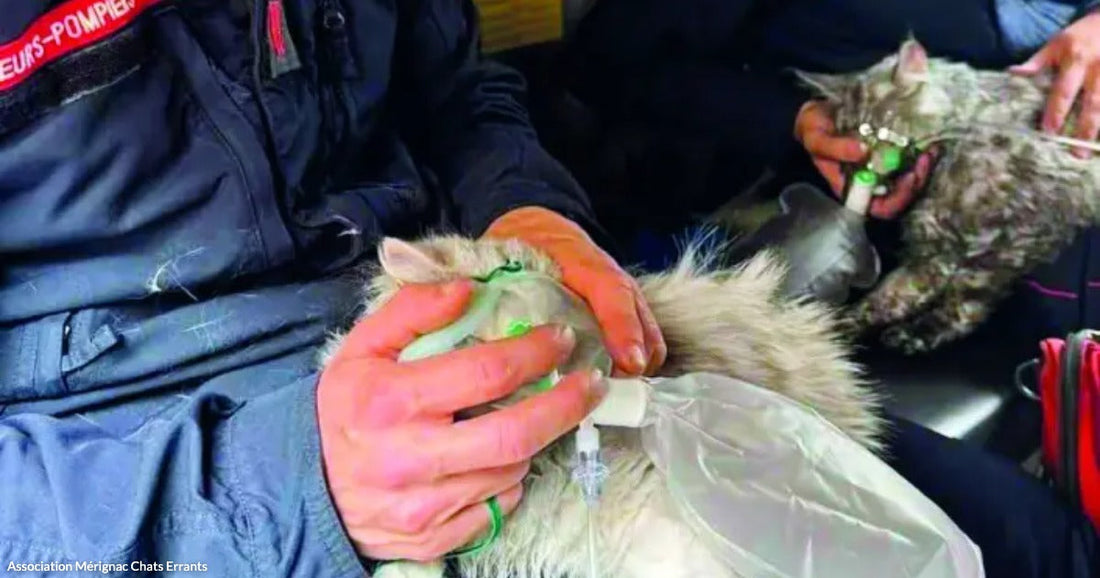
In the middle of the charred landscapes left behind by the Gironde wildfires, one small story of hope quietly unfolded. During emergency animal rescue efforts in southwest France, volunteers discovered a cat whose microchip revealed a remarkable truth. This was Mozart, a pet who had gone missing from Bordeaux in 2009 and had been presumed gone forever. Seventeen years later, the Gironde wildfires and a simple microchip check reunited him with his astonished owner, offering a powerful reminder of how much electronic identification can matter in a crisis.
The report describes how Mozart’s owner, Elisabeth-Sophie Stevens, now living near Dijon, received a phone call on July 25 from volunteers with the Association Mérignac Chats Errants. When they told her they had found her cat, she initially thought there must be some mistake. Her cat, she replied, was already curled up beside her on the sofa. That companion, however, was her current cat, Gandhi, not the long-lost Mozart. The moment the rescuers mentioned his name, memories instantly resurfaced. Mozart had vanished many years earlier in Bordeaux, and after so much time, his owner never expected to hear about him again.

The vice president of the association, Véronique Laveissière, recalls the surprise from both sides of the conversation. The volunteers had scanned the cat’s microchip as part of their routine checks during the fire response, and the identification data led them straight back to Mozart’s original family. According to the report, there was no sign that the animal had been living rough all this time. On the contrary, his condition suggested years of consistent care. That detail hints at a quieter, unseen story that unfolded during the 17-year gap.
Rescuers quickly began to wonder what Mozart’s life had looked like during his long absence. Laveissière observed that he did not behave or appear like a feral cat. In her view, if he had truly been living entirely outdoors without human support, it would have been less likely for him to survive for so many years. She suggested that someone probably took him in, perhaps believing he was lost or abandoned, and offered him food, shelter, and safety while his original family remained unaware of his fate.

The account is careful not to cast blame. There is no indication of deliberate wrongdoing or intentional concealment. Instead, the most plausible scenario is that a kind-hearted person or household decided to help a cat in need. Mozart may have lived for many years as a cherished companion in another home, only to reappear on official records because a wildfire forced a large-scale animal rescue operation that included microchip scanning. I found this detail striking because it shows how easily an animal’s story can branch off in unexpected directions, even without anyone meaning harm.
Once Mozart’s identity had been confirmed, a friend of Ms Stevens traveled to Gironde to collect him and bring him back to the Dijon area. The reunion took place quietly, away from the cameras and flames, yet it stands as one of the most uplifting outcomes to emerge from the wider tragedy. At the same time, it highlights a sobering reality. Many animals caught in disasters, or lost in everyday circumstances, never make it back to their original families, either because they are not identified or because their details are out of date.
For Laveissière and her colleagues, Mozart’s story has become a powerful example of why microchipping pets is so important. She emphasized that electronic identification can keep a fragile thread of connection intact, even when years or decades pass. Without his microchip, Mozart would likely have been just one more anonymous cat rescued from the wildfire zone, impossible to match with an owner hundreds of kilometers away. Instead, that tiny implanted chip carried his history across time and distance, making a reunion possible long after hope might have faded.
To understand the context of Mozart’s discovery, it helps to picture the broader animal rescue operation underway in Gironde. As the fires advanced and smoke darkened the sky, emergency services had to prioritize evacuating residents and protecting human life. The article describes scenes of burned forests, destroyed houses, and twisted car wrecks, a landscape that Laveissière compared to the aftermath of war. Amid this devastation, countless animals were left behind when people fled, or were already living outdoors when the fires began.
Animal welfare groups such as Association Mérignac Chats Errants stepped in to fill the gap. Volunteers organized transport cages, trapping cages, food supplies, and temporary shelter. They coordinated with firefighters, who brought in animals found near the flames, and searched abandoned properties for pets that might still be hiding or trapped. Around 100 animals were taken into care during this effort, including cats, dogs, rabbits, and even a parrot. Mozart was only one of many, yet his case stands out because of the extraordinary span of time between his disappearance and his recovery.
This single story illustrates several broader points that resonate far beyond the Gironde region. Microchipped pets, even when lost for years, have a much higher chance of finding their way back to their original homes. Disaster situations like wildfires, floods, or storms are unpredictable and often unfold faster than families can react. Identification gives animal welfare teams a practical tool to reconnect animals with their people, which can be a source of comfort in the midst of loss. It can also offer long-delayed answers to the painful question of what became of a missing companion.
The article notes that the association is now struggling with the sheer number of animals rescued during the fires and is appealing for support. Their volunteers took on an enormous responsibility in difficult conditions, and their work continues long after the flames are put out. Behind each rescued animal is a complex story, often involving fear, separation, and uncertainty, and sometimes, as with Mozart, a surprising twist that leads to joy. When communities back these organizations through donations, fostering, or responsible pet care, they help transform emergency rescues into long-term recoveries.
Mozart’s journey from Bordeaux to Gironde, and finally to the Dijon area, spans nearly two decades and more than one home. Nobody can fully reconstruct those missing years, yet the combination of careful animal rescue efforts and a microchip check has given his original owner the rare opportunity to welcome him back. The Gironde wildfires brought enormous destruction, but amid the smoke and ash, this quiet reunion shows what can still be saved when people act with compassion, preparation, and respect for the animals who share their lives. Read more at https://www.connexionfrance.com