
Microplastics on Mount Everest: Atmospheric Plastic Rain Reaches the Third Pole
Guest Contributor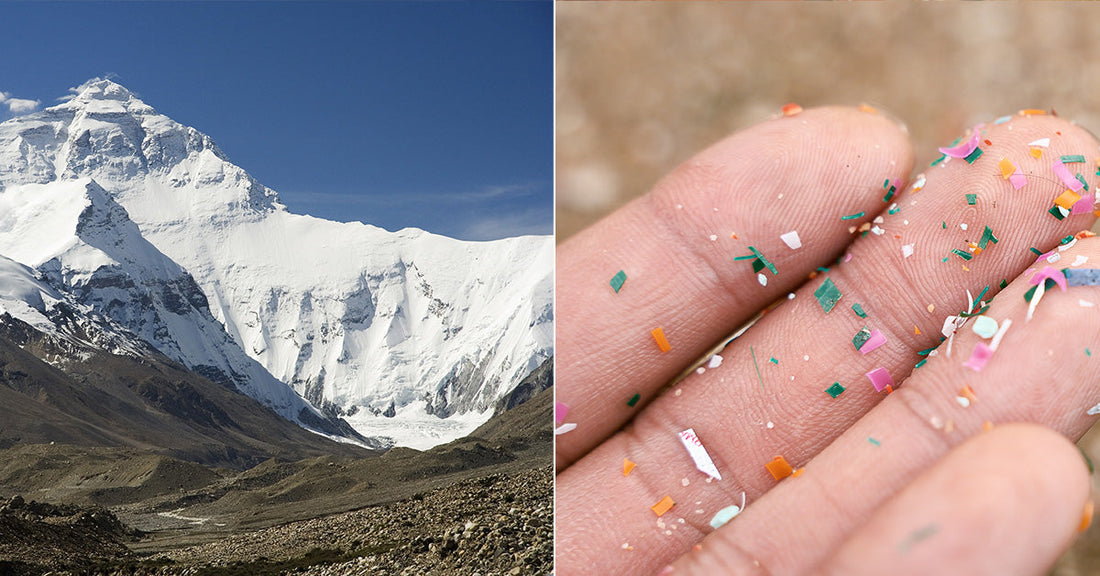
Far above the crowded cities and plastic-choked coastlines of the world, Mount Everest has long stood as a symbol of remoteness and purity. Yet new research shows that even the “roof of the world” is no refuge from modern pollution. According to a recent study, microplastics are raining down on Mount Everest all year round, carried by the atmosphere and deposited on the mountain in both wet and dry conditions. The finding underscores just how pervasive microplastics and nanoplastics have become, and highlights the Tibetan Plateau as an unexpected yet significant hotspot for airborne plastic pollution.
The study reports that ultra-small plastic fragments, less than 5 mm in length, are now falling from the sky over Everest and the broader Third Pole region. These particles, known as microplastics and nanoplastics, are not new to science. They have already been detected in oceans, rivers, soils, and even inside living organisms. What is striking here is the scale and constancy of their arrival in such an isolated, high-altitude environment. Microplastics on Mount Everest are no longer a rare curiosity found in a stray snow sample, but part of a continuous atmospheric supply.

Researchers monitored Everest’s northern slope for several months, focusing on two key locations: Qomolangma Station, a high-altitude research facility in Tibet, and Everest Base Camp. By carefully measuring how many microplastic particles settled on the ground each day, they concluded that the atmosphere is acting as an efficient pathway for plastic delivery to the Third Pole. I found this detail striking because it turns the common image of plastic pollution on its head. The problem is not only what people carry up the mountain; it is also what the wind and weather bring down from far beyond the immediate region.
The numbers from the study are sobering. Qomolangma Station received an average of 64 microplastic particles per square meter per day. Everest Base Camp, by comparison, recorded about 23 particles per square meter per day. Even at a glance, this reveals a significant difference in microplastic deposition between the two locations. The scientists highlight this contrast in their findings, noting that the flux at Qomolangma Station far exceeds that at Base Camp. This suggests that local factors such as altitude, weather patterns, and atmospheric circulation play a major role in how plastics are transported and deposited.
The study also identifies the types of plastics found in the samples. At both sites, the deposited particles were mainly polyamide, polyethylene terephthalate (often abbreviated as PET), and polyethylene. These are common materials found in textiles, packaging, and consumer goods. At Qomolangma Station, researchers also detected higher levels of smaller nanoplastics, including polyethylene, PET, polyvinyl chloride, and polypropylene. The presence of these materials in nanoplastic form is especially concerning. The smaller the particle, the more easily it can be carried by wind and potentially inhaled or ingested by living organisms.
Microplastics have already been linked by previous research to a range of potential health concerns. Studies cited in the context of this work indicate that such particles may induce inflammation, DNA damage, and hormone disruptions in humans and other animals. While the new Everest study does not itself assess health outcomes, it reinforces the broader worry that these tiny fragments, once thought to be an issue mainly for oceans or urban centers, are now truly global. Microplastic pollution on the Tibetan Plateau, and the associated nanoplastics that are even harder to detect, may pose ecological risks to high-altitude ecosystems that evolved in conditions of relative isolation.

One of the most telling findings is the estimated total load of microplastics in the region. Researchers suspect that more than 56 tons of microplastic particles could be accumulating every year on the Tibetan Plateau at altitudes above 4,000 meters, or roughly 13,123 feet. That figure is difficult to visualize, yet it drives home the scale of the problem. Over years and decades, such a continuous input has the potential to alter soil and water quality, affect plants and wildlife, and even influence the glacier-fed river systems that originate in the Third Pole and support millions of people downstream.
The study makes clear that Mount Everest is not simply collecting plastics dropped by climbers, tourists, and support teams. While waste from human expeditions has received rightful attention, atmospheric circulation appears to be adding a constant, invisible layer of pollution from afar. Air currents can carry microscopic particles across continents and oceans, and in the case of Everest, these particles eventually settle out of the atmosphere as they encounter cold temperatures, clouds, and precipitation at high altitude. The research points to the atmosphere itself as a persistent conveyor belt of plastic, linking industrial and urban regions with some of the most remote places on Earth.
Weather patterns, especially monsoon systems, appear to influence how much plastic ultimately falls to the surface. The investigators note that monsoon periods increased microplastic volumes through wet deposition. In simple terms, this is the process by which pollutants are captured by rain, snow, or mist and brought down from the atmosphere. While microplastics and nanoplastics can remain suspended in the air, the formation of water droplets or ice crystals helps sweep some of them out of the atmosphere. As clouds develop and precipitation occurs, those droplets and crystals carry the particles downward, depositing them on snowfields, rocky slopes, glaciers, and streams.
The concept of plastic rain may once have sounded like a metaphor, but the Everest findings give it a literal dimension. Microplastics falling on Mount Everest year-round reveal that no environment is too high, too remote, or too pristine to be touched by human-made materials. For scientists, this research provides crucial data for understanding how plastics move through the atmosphere and settle in cold, high-altitude regions. For the broader public, it raises difficult questions about how societies produce, use, and dispose of plastic products that can fragment into particles small enough to travel globally.
Yet there is also value in recognizing how this study fits into a growing body of work on planetary-scale pollution. As more evidence emerges of microplastics in polar ice, deep ocean trenches, and now the Tibetan Plateau, the picture that forms is one of interconnected systems rather than isolated problems. Plastic fibers from clothing, fragments from packaging, and dust from degraded materials do not simply disappear. They circulate through air and water, trace the outlines of trade routes and weather systems, and ultimately show up in places like Mount Everest that once stood for untouched nature. The research on microplastics and nanoplastics raining down on Everest invites a broader reflection on how modern life leaves a physical imprint, even in thin mountain air.