
Missing Idaho Cat Somehow Turns Up 645 Miles Away In San Francisco Shelter
Guest Contributor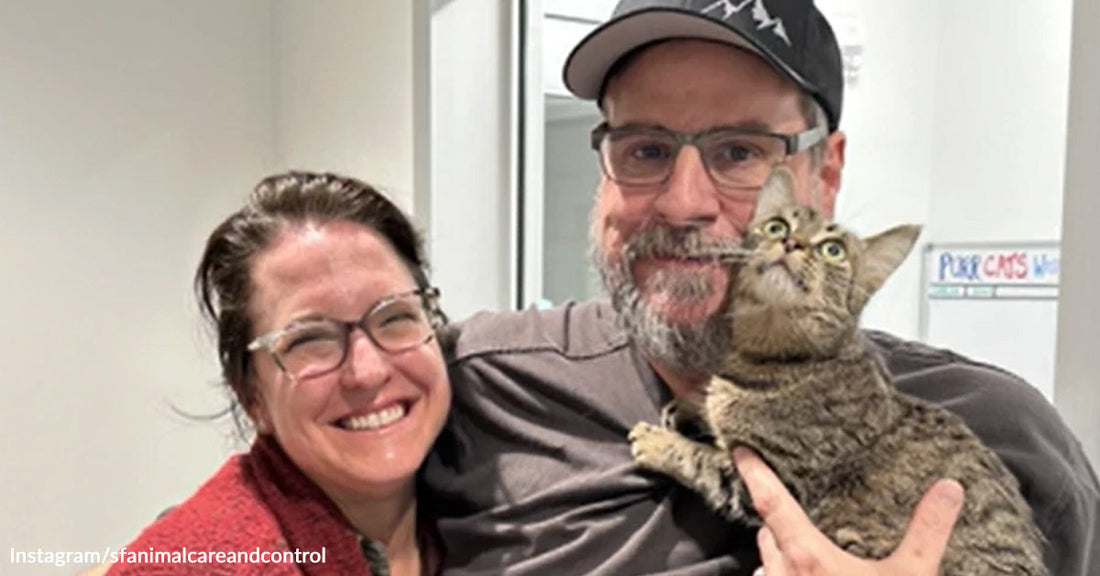
Every so often, a cat story surfaces that feels almost unbelievable. A missing Idaho cat found in San Francisco and safely reunited with her family is one of those rare tales that captures both the mystery of feline behavior and the very practical power of a microchip. The story of Pepper, a brown tabby from Boise, Idaho, is both heartwarming and a powerful reminder of why microchipping cats can make all the difference.
Pepper lived with her human family, Lindsay and Jeffery Lang, in Boise. In early October, she suddenly bolted out of their home and disappeared. For many cat guardians, that scenario is a familiar fear. The Langs searched and hoped, but after days passed with no sign of their cat, they believed they might have lost Pepper for good. Their heartbreak reflects a reality many pet families face when a beloved animal vanishes without a trace.

About a month later and more than 600 miles away, someone in San Francisco’s Mission Bay neighborhood noticed a brown tabby wandering alone. Concerned for the cat’s safety, this Good Samaritan brought her to San Francisco Animal Care & Control. Shelter staff treated the cat as a possible stray and followed standard procedure by scanning for a microchip. What they discovered astonished them. The chip information did not point to a local resident or even a nearby city. Instead, it traced back to Pepper’s family in Boise, Idaho.
That moment inside the shelter turned a routine intake into a remarkable reunion story. Staff contacted the Langs, who suddenly learned that their missing cat was alive in another state. Although Pepper was underweight and clearly had endured a difficult journey, she was safe. The couple immediately drove overnight from Idaho to San Francisco to bring their cat home. According to what Lindsay shared with CBS News Bay Area, the reunion at the shelter was emotional and intense. When Pepper saw her family, she let out a loud meow that Lindsay described as if the cat were saying, “You came and got me!”
The drive back to Idaho became a kind of debrief, at least as far as a cat can give one. Lindsay said Pepper “talked” to them all the way home, as though narrating her adventures. While no one can truly know where Pepper went or how she survived, that image of a chatty tabby in the car transforms a frightening ordeal into a story filled with relief and connection. I found this detail striking because it captures how deeply many people feel that their cats are true family members with their own perspectives on the world.
Once home, Pepper began to recover. After her long absence, she had lost weight and had clearly been through a stressful experience. Over time, she regained some of the weight and, according to Lindsay, became noticeably more affectionate and clingy. Before all this, Pepper had been described as a wild, high-energy kitten who loved to race around the house. Afterward, she stayed especially close to Lindsay and Jeffery, as if the ordeal had shaken her and made home feel even more precious.
The biggest unanswered question in this story is how Pepper made it from Boise to San Francisco at all. The distance is roughly 645 miles, and the time frame was about one month. The article notes that no one knows whether she walked, survived on scraps, and found places to sleep outdoors or whether she might have secretly hitched a ride. It is entirely possible she climbed into a vehicle, such as a truck, and traveled unnoticed across state lines. Without direct evidence, the path she took and the way she survived remain a mystery.
That sense of mystery aligns with what many people feel about cats in general. The article mentions that cats are thought to have a special homing instinct, a kind of internal navigation system that helps them find their way back home even after wandering far. The exact mechanisms behind this ability are not well understood and remain more theory than settled science, but stories like Pepper’s keep the question alive. The idea that a small tabby could traverse such a long distance or manage to end up in a major city so far from home speaks to the resilience and resourcefulness that many associate with felines.
Beneath the wonder, there is a very concrete takeaway that shelters and veterinarians emphasize. Pepper’s safe return to her family hinged on a small piece of technology: her microchip. The shelter shared the story on Instagram and highlighted that “all’s well that ends well because of a microchip.” Once staff scanned Pepper and saw her chip number, they could connect her to the Langs despite the state line, distance, and time that separated them. Without that tiny identifier, she might have remained just another unidentified stray.
San Francisco Animal Care & Control noted that it is not unusual to find an animal with a microchip registered in another state. People move, adopt pets from distant shelters, or relocate with their animals. What made Pepper’s situation different was that her family had not moved at all. She had somehow gone from Idaho to California on her own. The shelter described this aspect of the case as a surprise and a mystery, reinforcing the idea that no one can fully predict what a determined or frightened animal might do once outside.
The story also connects with other examples of microchipped cats reuniting with their families after long separations. One highlighted case is Marley, an orange tabby in Colorado Springs who went missing for two and a half years. When the Humane Society of the Pikes Peak Region scanned Marley, his microchip provided the information needed to find and notify his original family. Another example is Artie, a much-loved cat in Philadelphia who split his time between his own home and friendly visits with other neighbors. Artie was stolen, yet thanks to both a microchip and a tracking device, he was eventually returned to his family after being dropped off at a shelter amid a social media campaign.
These stories illustrate a consistent pattern. Cats may wander, travel surprising distances, or even be taken from their homes, but a registered microchip dramatically improves the chance of a happy ending. The article encourages all cat guardians to check whether their pets are microchipped and to take action if they are not. Microchips are small, typically about the size of a grain of rice, and are implanted under the skin. Once registered with up-to-date contact information, they serve as a permanent form of identification that cannot fall off like a collar.
The article also looks to broader policy, noting that England has required all cats to be microchipped by 20 weeks of age, with compliance mandated by June 2024. The author views this type of law as a positive step that will likely reduce the number of cats who vanish forever and never make it back to their families. While different countries and regions have varying regulations, the underlying principle is the same. Widespread microchipping, kept current with accurate information, is one of the most effective ways to reconnect lost animals with the people who love them.
In the end, Pepper’s journey from Boise to San Francisco remains unsolved. Whether she walked, rode hidden in a vehicle, or followed a series of chance events that carried her across hundreds of miles, no one can say. What is clear is that a stranger’s compassion in bringing her to a shelter, the staff’s routine practice of scanning for microchips, and the Langs’ decision to microchip Pepper long before she escaped all combined to make her reunion possible. Stories like this blend the enduring mystery of cats with the very real, practical impact of responsible pet care. For anyone living with a cat, Pepper’s adventure is a powerful invitation to make use of the tools available so that, if the unthinkable happens, there is a better chance of writing a similar happy ending.
Read more at https://cats.com/news/missing-idaho-cat-found-in-san-francisco-and-reunited-with-family