
Senior Dog Survives More Than a Month Alone in Yellowstone Before Rescuers Finally Bring Her to Safety
Guest Contributor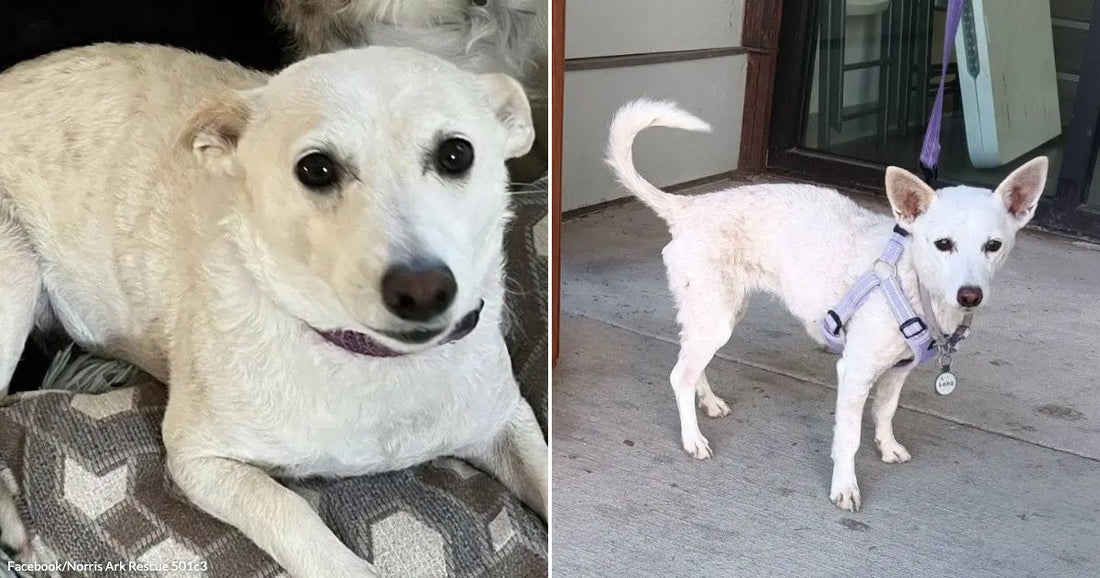
A tiny Jack Russell terrier surviving alone for more than a month in Yellowstone National Park sounds like the plot of a movie, yet that is exactly what happened to Luna, a 10-year-old pup from California. Her story began as a family vacation and turned into a frantic missing dog search in Yellowstone, filled with uncertainty, strict park rules, and a race against winter. It ended with something many had started to doubt was possible: a safe reunion and a dog that, according to officials, is “alive and well.”
According to reports, Luna disappeared on September 10 while her family was visiting Yellowstone National Park. Like many responsible visitors, they followed park rules that do not allow dogs at geothermal sites such as Norris Geyser. The family left Luna inside a cabin at the Canyon Village Campground, placed a “Do Not Disturb” sign on the door, and headed out to explore. At some point, housekeeping staff opened the cabin door despite the sign, and Luna slipped out. Staff then tried to catch her and reportedly chased the terrier for more than two hours, which unfortunately had the opposite effect. Startled and frightened, Luna bolted away from the campground and vanished into the surrounding wilderness.

In the days that followed, park visitors and employees began reporting sightings. Each new glimpse of Luna provided a spark of hope that she was still alive somewhere in the vast landscape. Yet even with these promising reports, the odds did not look good. Rangers reportedly told Luna’s family that her chances of survival were slim, given Yellowstone’s freezing temperatures and the presence of predators such as coyotes. After about a week of searching the area themselves, the family felt they had no choice but to return to California, believing they might never see their dog again.
At that point, the story could easily have ended with heartbreak. Instead, it shifted into something closer to a rescue thriller. The family reached out to Norris Ark Training and Recovery Center, a nonprofit animal rescue organization. Its president, Katie Boucher, and her team took on the search, determined to find Luna before early winter conditions and logistical barriers made that mission impossible. The team’s work unfolded under real pressure. They were operating under a special permit from the National Park Service that allowed them to continue searching through the end of October. That permit, along with all of their equipment, had to be wrapped up and removed by October 31.

Facebook/Norris Ark Rescue 501c3
Yellowstone itself added to the urgency. Roads and campgrounds in the park were scheduled to close for the winter, which would limit access for both rescuers and potential witnesses. As each day passed without a successful capture, the physical challenges of the landscape and the ticking clock loomed larger. Luna was not simply missing in a neighborhood or a small forest; she was alone in one of America’s most famous wilderness areas, a place known for both its beauty and its harshness.
The team at Norris Ark Training and Recovery Center also had to respect strict rules about how they conducted the search. In many missing dog cases, rescuers rely on food as a powerful lure, placing tasty bait in humane traps to coax frightened pets into safe enclosures. In Yellowstone, that was not an option. The article explains that using food could attract bears, wolves, coyotes, or mountain lions. Such bait would not only endanger Luna further but could also bring wild predators into closer contact with human activity, something the park must avoid. The very tools that often increase the odds of a successful capture were essentially off the table.

Facebook/Norris Ark Rescue 501c3
In response, the team used a more subtle and creative approach. Instead of food, they relied on scent from Luna’s family in their trapping efforts, a strategy that aligns with what many lost dog experts recommend. Familiar smells can draw a frightened pet more reliably than a stranger’s voice or presence. This detail, to me, highlights a quiet emotional thread in the story. Even after Luna’s family had gone back to California, their presence lingered in Yellowstone in the form of scent articles, serving as an invisible guide back to safety.
Technology could not fully step in to make up for these restrictions either. Drones, which are often used in modern search and rescue operations to cover large areas efficiently, are prohibited inside Yellowstone National Park. That rule makes sense in the context of visitor safety, wildlife disturbance, and privacy, but it did mean that aerial searches for a small dog were not possible. The team had to work on the ground, relying on reports, careful placement of traps, and their knowledge of animal behavior rather than advanced equipment.
All of these factors explain why the moment of Luna’s capture was so significant. As the deadline approached and October crept forward, the chance that she would be found alive seemed to shrink with each passing day. Then, on Wednesday, October 14, Yellowstone National Park spokesperson Linda Veress confirmed what so many had been hoping to hear. Officials reported that the “dog that was loose in the Canyon Village area has been captured and is alive and well.” That straightforward statement signaled the end of a long stretch of worry and the success of a careful, rule-bound search in an environment where even the best-planned efforts can be thwarted by weather or wildlife.
After Luna was recovered, reports indicate that she was taken to a veterinarian by Katie Boucher for evaluation. At the time of the article, more detailed information about her condition or the exact circumstances of her capture had not yet been released. Still, the basic facts were powerful on their own. A small, senior Jack Russell terrier had managed to survive for more than a month in Yellowstone’s backcountry. Rescue teams had navigated complex park regulations, impending winter closures, and a limited timeline to bring her back. The outcome, especially after Luna’s family had been prepared for the worst, could reasonably be described as a quiet miracle of persistence and planning.
I found this detail especially striking: the searchers were not allowed to use the very things most people assume are essential, like food bait or drones, yet they still chose to push forward until time nearly ran out. That persistence, paired with Luna’s own resilience, turned a story of loss into one of relief. For anyone who has shared life with a companion animal, the image of a little dog finally being carried back to safety after weeks in the wilderness is likely to linger long after the specifics fade.
Luna’s story is also a gentle reminder about the complexities of travel with pets, particularly in national parks with strict regulations to protect wildlife and visitors. Even with all the right intentions, something as simple as a door opening at the wrong time can change everything. In this case, what followed was a large-scale effort that balanced compassion for a single dog with respect for the rules and ecosystem of a world-famous park. The fact that it ended not with a mystery but with a confirmed rescue gives this tale of the Yellowstone wilderness a hopeful final chapter.