
Family Never Stopped Searching for Missing Dog and Finally Found Him Five Years Later, 642 Miles Away
Guest Contributor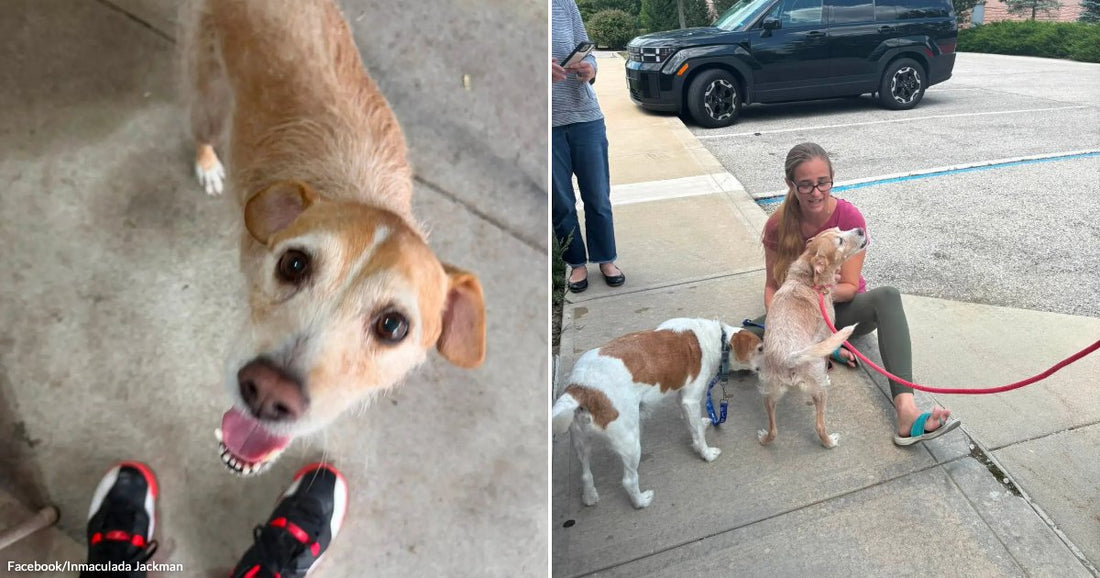
A missing dog reunited with an owner after 5 years is the kind of story that quietly restores faith in patience, persistence, and the power of not giving up. In this case, the dog was found more than 600 miles away from home, and the journey from heartbreak to homecoming is as emotional as it is unlikely. For anyone who has ever taped up “lost dog” posters or refreshed local shelter pages hoping for a miracle, this story offers a clear message: sometimes, hope is not misplaced.
The story begins in Lincoln, Nebraska, in 2021, when a dog named Chong escaped from his home. His owner, Inmaculada Jackman, described being heartbroken when he vanished. Losing a pet can feel like losing a member of the family, and her reaction reflects what many people experience in that situation, a painful mix of worry, guilt, and uncertainty. What stands out here is what happened after the immediate search faded from the spotlight. Jackman did not simply move on.

Facebook/Inmaculada Jackman
According to her account, she and her family continued to look for Chong long after many would have assumed the trail had gone cold. She told local station WKRC that she still drove through the old neighborhood, scanning sidewalks, yards, and parks to see if Chong might appear with someone new or wandering on his own. It was a ritual sustained over years, not days or weeks. That steady, almost quiet persistence is one of the most striking details of the entire experience.
Despite their efforts, Chong did not surface in Nebraska. Time kept moving. The family eventually brought another dog into their home, a new companion they named Che Che. This choice is familiar to many people who have lost a pet: trying to balance honoring the memory of the missing animal with providing companionship and love to another. There is often a delicate emotional line between “replacement” and “new family member.” In this case, Che Che would later become part of the reunion itself, another layer of this already emotional story.

Facebook/Inmaculada Jackman
Five years after Chong disappeared, long after most would have given up, a message arrived that changed everything. A friend reached out to Jackman after seeing a social media post about a dog that had been found behind an Indiana truck stop. The distance is remarkable. Chong had somehow ended up about 642 miles away from his original home in Nebraska, discovered not in a neighborhood but behind a truck stop, a setting that raises questions about how he traveled so far. The source material does not explain the path he took, so those details remain unknown, yet the distance alone highlights the strange routes lost pets can follow.
The friend’s decision to share the post and Jackman’s willingness to pay attention to it show how community networks and social media can play a surprisingly powerful role in missing pet stories. In a sea of posts, one correctly identified dog picture can bridge hundreds of miles and several years. Jackman reached out to the Hendricks County Animal Shelter in Indiana, the facility that had taken Chong in after he was found.
What she learned next added a twist that few expect in a straightforward lost and found narrative. According to the shelter, someone had microchipped Chong during his years away from home. Microchipping is intended to connect pets with their owners, yet here it created a moment of confusion. Legally and practically, the chip pointed to a more recent caretaker, not to the family that had been missing him for half a decade. The staff at the shelter had already contacted the person whose information was tied to the chip and were waiting for a response.
The shelter then explained to Jackman that there was a required waiting period. If the person linked to the microchip did not respond within three days, the shelter would be able to release Chong to his original family. It put everyone into a tense pause. Jackman recalled that shelter staff told her they were all hoping and praying that the more recent contact would not respond. This detail suggests that the people working at the shelter recognized the emotional depth of a missing dog reunited with its first family, and it also reflects how shelters often have to navigate sensitive human stories as well as animal care.
When the three-day grace period ended without any reply from the person tied to the microchip, the path cleared. Jackman was allowed to re-adopt Chong. That simple administrative outcome carried enormous emotional weight. After years of uncertainty and a sudden spark of possibility, it meant that the long wait was finally over. The dog who had been a source of worry and unresolved questions was on his way back to where his life had begun.
The reunion itself was captured in heartwarming footage at the shelter. The video did not show an instant, cinematic leap into familiar arms. Instead, it showed initial confusion, which is understandable for a dog that had been away for so long and likely experienced multiple environments and caretakers. Over time, though, Chong began to relax, recognize, and respond. The report describes him cuddling with Jackman and barking with joy. That gradual shift from uncertainty to excitement feels very real, reflecting how memory and recognition may surface in animals when given a moment to settle.
Once Chong returned home, he was greeted not only by Jackman but also by Che Che, the dog the family had adopted after his disappearance. The article does not detail the full interaction between the two dogs, yet it notes that Chong is now happily back with his family. That simple statement carries the sense of a circle closing. The home that once lost a pet now holds two, and a period of grief that stretched for years has been replaced with a daily, living reunion.
Jackman has framed this entire experience as a message of hope. Speaking to WKRC, she encouraged people who have lost their pets not to give up, saying, “Never lose hope. It’s been five years and we found him.” For those navigating the painful uncertainty of a missing animal, this story of a lost dog found 600 miles away underscores that outcomes are not always predictable. While not every story will have the same ending, this one demonstrates that effort, time, and a bit of good fortune can align in unexpected ways.
I found this detail striking: even after five years, Jackman was still looking, still scanning old streets, still open to the possibility that Chong might be out there. That mindset did not guarantee the reunion, yet it kept her ready to recognize him when an opportunity emerged. Combined with the role of a friend sharing a social media post and a shelter staff balancing procedure with compassion, this missing dog reunited with owner after 5 years story becomes an example of how persistence and community can intersect to produce something quietly extraordinary.