
🚨Urgent: Missile Strikes Shelter in Ukraine! Rush Emergency Aid!
Mother and Daughter Share Strength Through Early Breast Cancer Detection Journey
Guest Contributor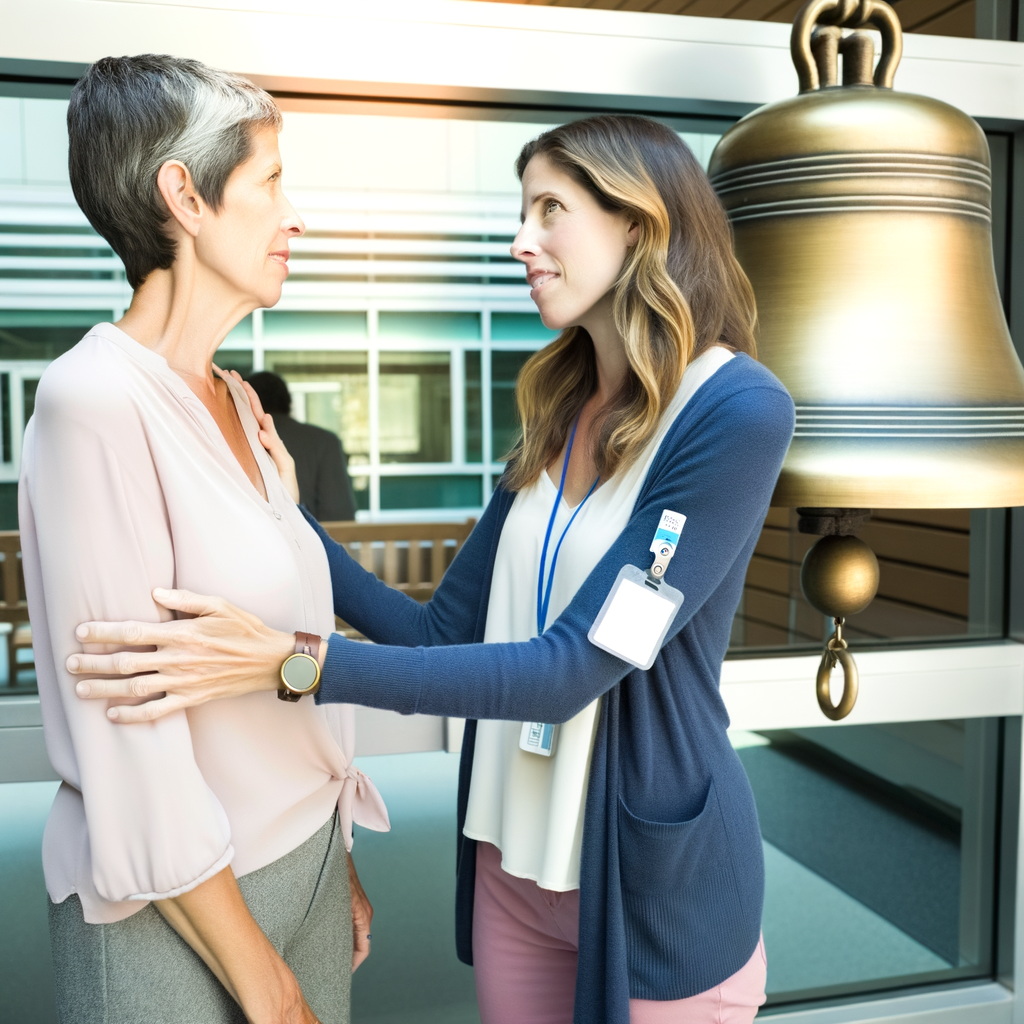
When breast cancer strikes, it often feels like a deeply personal and isolating battle. But for Jeannette Reding and her daughter Kristina Walters, their parallel diagnoses—just five days apart—turned a daunting experience into a shared journey of strength, resilience, and hope. Diagnosed with breast cancer in February, both women recently rang the “completion bell” at the Hoag Family Cancer Institute in Newport Beach, symbolizing the end of their treatment. Their story is a powerful reminder of the importance of early detection, family support, and medical innovation in the fight against breast cancer.

The emotional weight of receiving a breast cancer diagnosis is difficult to overstate. For Reding, 66, the news came on Valentine’s Day. Just five days later, her 43-year-old daughter, Kristina Walters, learned she too had breast cancer. The two, who live in the same Orange County neighborhood, leaned on each other in ways neither could have anticipated. “It wasn’t like, ‘Oh my God, poor us.’ It was more like, ‘Thank God we have each other,’” Walters said. I found this detail striking—how adversity can sometimes deepen familial bonds in unexpected and meaningful ways.
Both women had been diligent about their yearly mammograms, and this vigilance played a critical role in their early diagnoses. Walters was found to have ductal carcinoma in her right breast, while Reding was diagnosed with both ductal and lobular carcinoma. Because their tumors were detected early and were relatively small, they were both candidates for oncoplastic surgery, a technique that removes the tumor while preserving the natural shape of the breast. This approach not only addresses the medical issue but also helps patients maintain a sense of normalcy and confidence in their appearance post-surgery—an often overlooked but significant aspect of recovery.
Dr. Elizabeth Kraft, a breast and oncoplastic surgeon at Hoag, treated both mother and daughter. She noted that this was the first time in her decade-long career that she had seen two generations undergo breast cancer treatment at the same time. Kraft explained the oncoplastic procedure with a memorable analogy: removing one slice from a pizza and reshaping it to maintain its original form. “They’re able to wear swimsuits again. They’re able to wear the same bras. That stuff makes a difference, every day getting dressed,” she said. The emphasis on both physical and emotional healing is a testament to how far breast cancer treatment has come in recent years.
Walters underwent her surgery two weeks before her mother, who had a double lumpectomy with breast reconstruction. Both procedures were performed with the assistance of Hoag plastic surgeons Nirav Savalia and Raquel Minasian. Their coordinated care allowed for a smoother recovery process and a shared sense of progress. Walters completed her radiation treatments a few weeks before her mother, and the family gathered to celebrate together when Reding rang the bell, marking the end of her own treatment.
For Reding, the experience was surreal. “Here I am, and I have cancer, and she’s invading my moment,” she joked, showing that even in the face of hardship, humor and lightness can still find a place. Her husband, Tony, and Walters’ husband, Mike—co-founder and former news director at TMZ—stood by them throughout, offering quiet strength. Walters noted that having both women go through treatment at the same time may have brought a surprising sense of calm to their loved ones. “It was kind of a blessing in disguise, which is weird. You’re not alone. You do feel alone, but you’re really not,” she said.
The family’s experience underscores the critical importance of early detection. Reding’s older sister, Pat, is also a breast cancer survivor but did not seek screening until she found a lump. She advised both Reding and Walters through their treatment, reinforcing the message that waiting can have serious consequences. Walters now encourages other women to prioritize their mammograms. “It’s not a big deal, just get it done. That one year of waiting could change a lot of things,” she said. The advancements in technology, she added, make screenings more effective and accessible than ever before.
As the two women embraced after ringing the bell, their journey came full circle. Walters was visibly emotional, not just for herself, but for her mother. “It was hard watching her, because she was a lot more sore, and the burns and everything were harder for her. I was more happy for her, that she’s done,” she said. Reding, ever the pragmatist, shared a humorous anecdote about her recovery. One area didn’t heal as well and required medicated gauze, which had a strong odor. “I lost my sense of smell during COVID, so it didn’t bother me,” she quipped, even as her husband found the smell difficult to tolerate.
Looking ahead, Walters is already thinking about the future health of her family. Her daughter Ava, 12, attended the bell-ringing ceremony along with her brother Tyler, 14. Walters said she will make sure Ava undergoes the appropriate screenings as she gets older. It’s a poignant reminder that breast cancer awareness is not just about treatment—it’s about prevention, education, and passing on the lessons learned to the next generation.
In a world where health challenges can so often isolate, the story of Jeannette Reding and Kristina Walters offers a different perspective—one of unity, love, and shared resilience. Their experience highlights the importance of early detection, the value of advanced surgical options like oncoplastic surgery, and the unbreakable bonds of family. For those navigating their own breast cancer journeys, their story is a beacon of hope.