
Authorities Seize Twenty Three Horses In Major Cruelty Case
Guest Contributor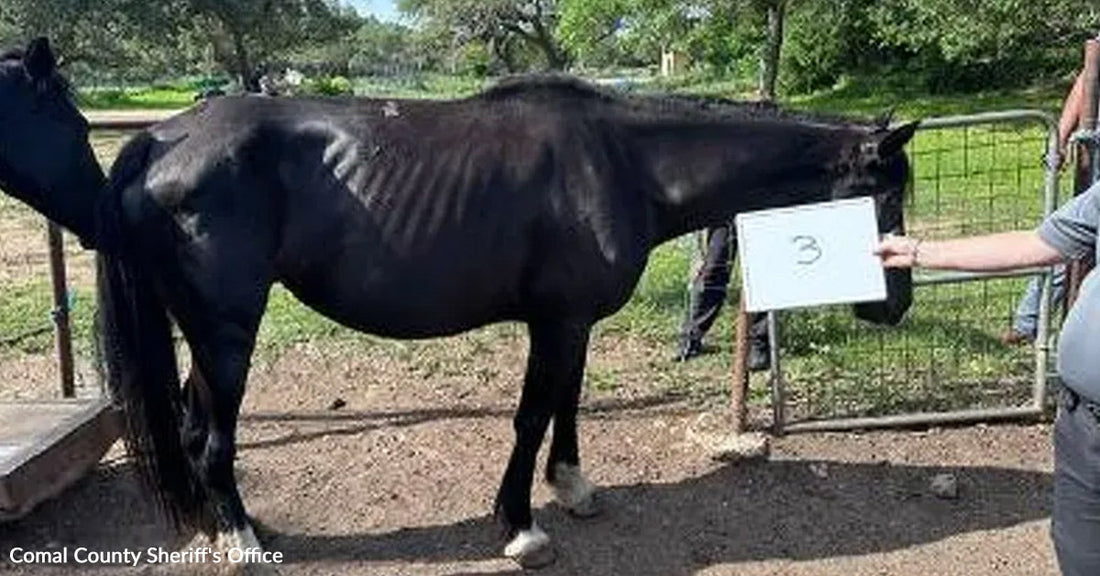
In Comal County, Texas, 23 horses were recently seized from a Bulverde property after officials determined they were being neglected and cruelly treated. This animal cruelty investigation did not unfold overnight. It was the culmination of years of welfare calls, visits and growing concern about the deteriorating health of the animals. For anyone who cares about animal welfare, the case is a sobering reminder of how neglect can build slowly and why consistent, careful oversight matters.
According to the Comal County Sheriff's Office, deputies removed the horses after a licensed veterinarian evaluated them and concluded that they were indeed being neglected and “cruelly treated.” The horses were described as starving and lacking medical care. County photos showed animals appearing emaciated, their visible ribs and hollow frames hinting at how long they had gone without proper nutrition and attention. The sheriff’s office explained that this was not simply a case of bad luck or a single bad month. Instead, they said, it reflected a long, steady decline in the animals’ condition.

Mitchell Pratt, the Comal County Animal Control Supervisor, shared additional context on how the situation reached this point. He said that the owners had not had a veterinarian on the property for at least five years. That gap is striking, especially for large animals such as horses that typically require ongoing veterinary care for vaccinations, dental work, hoof and joint health and prompt attention to injuries or illness. According to Pratt, the lack of medical care was a major factor in the determination that the horses were suffering from neglect.
Officials also described the case as an example of how financial strain and animal ownership can collide with tragic results. Pratt explained that the property owners could no longer afford to care for all of their horses, which led to worsening conditions. Over time, this inability to pay for feed, farrier visits and veterinary services translated directly into the animals' health problems. While the sheriff's office did not identify the owners publicly or release the address of the property, Pratt indicated that they had been candid about their challenges when speaking with authorities.
The seizure followed what Pratt described as a years long process. Since 2018, officials had been making welfare visits to the property after receiving calls from concerned members of the public. Each time they visited, they requested changes to improve the horses' health. Pratt said the owners would comply with these instructions, at least for a while. The pattern over several years was troubling. The horses would improve, then decline again, then improve once more before sliding back into poor condition.
Pratt noted that the law places an important threshold on when authorities can step in and remove animals. “A crime has to be committed in order for us to seize animals, and we had to have proof of said crime,” he said. He explained that over the course of this year, officials gathered enough evidence to show that a crime had occurred. This accumulation of proof, combined with the horses' steady decline, is what ultimately led to the decision to intervene and seize all 23 horses.
From a legal standpoint, this approach reflects how many animal cruelty and neglect cases are handled. Authorities often must balance respect for property rights with the obligation to prevent suffering. To remove animals, they generally need documentation, expert assessments and a clear demonstration that conditions have crossed the line into criminal neglect or cruelty. In this case, the veterinarian’s evaluation and the visible condition of the horses served as key pieces of evidence.
The sheriff's office reported that the horses were starving and lacked basic medical care, which is central to understanding why seizure was deemed necessary. Inadequate feed can quickly weaken horses, making them more susceptible to disease, parasites and injury. Without veterinary oversight, treatable conditions can become life threatening. I found this detail particularly striking, because it highlights how neglect is often not a single act but a long series of omissions. The failure to call a veterinarian for five years is not just an oversight, it is a prolonged absence of care that leaves animals vulnerable.
Pratt emphasized that despite earlier cooperation from the owners, the situation had reached a point of no return. He explained that in the past, when officials asked for changes, the owners made efforts that temporarily improved the horses' condition. However, he said that this year the animals showed a “steady decline” that did not reverse. That sustained downturn signaled to authorities that the owners were no longer able to maintain even a minimum standard of care.
The question of what happens next now moves into the legal system. A hearing will determine whether the property owners will face charges as a result of the cruelty and neglect findings. While officials did not specify the possible counts or penalties, Pratt said the owners would likely be fined. The hearing may also address the ultimate fate of the horses, including where they will be placed and how their ongoing care will be managed.
Cases like this often raise challenging questions for communities. On one hand, there can be sympathy for individuals who become overwhelmed financially and logistically when caring for large numbers of animals. On the other hand, there is a clear responsibility that comes with animal ownership. When that responsibility is not met, the consequences fall on the animals, which cannot speak for themselves. In this situation, the lengthy timeline from the first welfare call in 2018 to the final seizure shows how long officials monitored and attempted to work with the owners before concluding that more decisive action was necessary.
For residents in Comal County and beyond, this incident underscores the importance of responding to signs of neglect by contacting appropriate authorities. Those welfare calls were the starting point for the investigation and the repeated visits that eventually led to the horses' removal. It also highlights the role of trained animal control personnel and veterinarians in evaluating conditions on the ground. Their assessments provided the factual foundation that allowed the sheriff's office to move from concern to action.
Ultimately, the seizure of the 23 neglected horses from the Bulverde property stands as a painful example of how animal cruelty cases develop over time. It is a reminder that neglect is not always dramatic or immediately visible. Sometimes it is a slow, quiet decline that requires persistence from neighbors, dedication from investigators and clear legal standards before animals can be safely removed. As authorities in Comal County move forward with the hearing and any potential charges, the central focus remains on ensuring that the horses themselves, once starving and without medical care, now have a chance at a healthier future.