
Neighbors Rescue Fawn Stuck in PVC Pipe After Months of Patience
Guest Contributor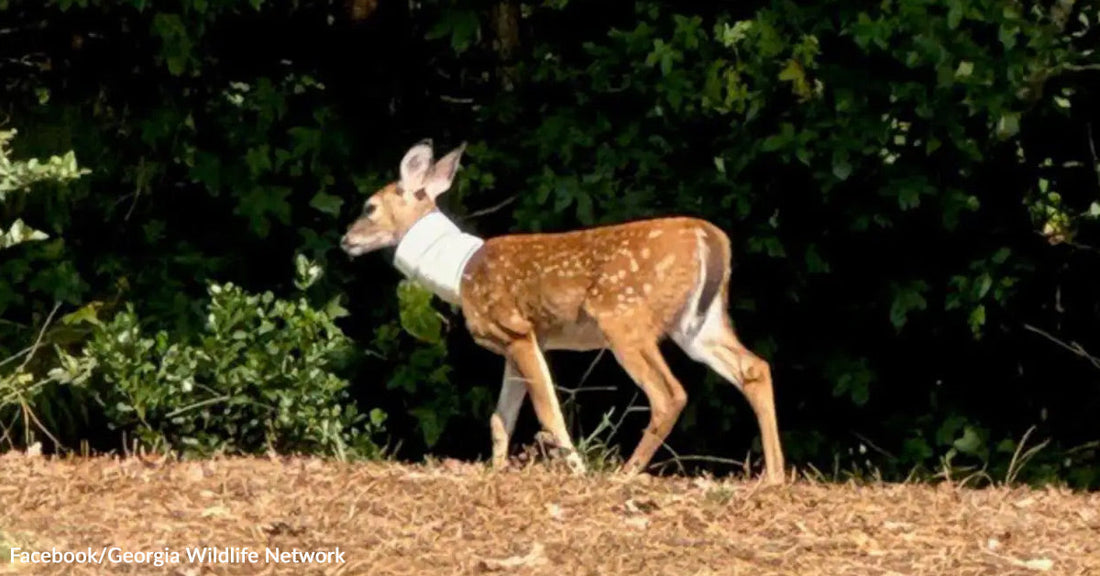
When neighbors in Jasper, Georgia first spotted a tiny spotted fawn with something white locked around his neck, they did not yet know how long his story would unfold. The sight of a baby deer carrying a rigid ring of PVC pipe through woods and backyards was heartbreaking, but it soon became the center of an extraordinary community effort to save a wild animal in quiet trouble. The rescue of this fawn with a PVC pipe around his neck reveals how much difference a determined, caring neighborhood can make for local wildlife.
According to the account shared with The Dodo, the first sightings happened in early September 2024. The deer was still very young, his white spots clearly visible, which meant he was only a few months old. What looked, from a distance, like a strange white collar turned out to be a section of PVC pipe stuck tightly around his neck. As residents compared photos and sightings, their concern grew. This was more than an odd visual; it was a growing danger.

One worried resident reached out to Georgia Wildlife Network for help. That call set in motion months of coordination, waiting and persistence. Tiffany Greene, assistant director at Georgia Wildlife Network, explained that the problem was not just the pipe itself, but what time would do. If the deer kept growing while the rigid ring remained, it could eventually strangle him. The organization knew the safest solution would involve tranquilizing the deer and carefully cutting the pipe away so that he would not be injured or further stressed.
That plan, however, required more than goodwill. In Georgia, only the state’s Department of Natural Resources is authorized to tranquilize deer. Without their involvement, no one could safely sedate the animal. At the same time, tranquilizing any wild animal is not as simple as walking into the woods with a dart. Officials needed detailed information about the deer’s habits where he showed up most often, what time of day he tended to appear and how he moved between properties. Without that information, the chance of a failed or incomplete rescue was too high.
Another obstacle stood in the way. Deer hunting season in Georgia begins in mid-September and runs through January, and DNR officials do not tranquilize deer that close to or during hunting season. That policy meant the community and the organizations hoping to help could not act on their first wave of concern in fall 2024. Instead, they had to wait, watch and hope that the young deer would survive both hunting season and the slow constriction of the pipe.
As weeks shifted into months, the seasons changed. Autumn gave way to winter, then winter to spring. For a while, there was no public update, and it would have been easy to assume the worst. Yet the story did not end there. The following summer, to the relief of people who had been watching and worrying, the deer reappeared in the area. This time he was bigger and stronger, still traveling through familiar yards, still very much alive and alert. The PVC pipe was still tight around his neck.
The original resident who had contacted Georgia Wildlife Network reached out to them again with the news that the deer was back and, in Greene’s words, looking great. The pipe appeared more snug against his neck, a visual reminder of what could happen if it was not removed, but observers noticed that he still moved with energy through yards and fed as he went. The danger remained yet so did the young deer’s resilience.
From that point on, neighbors in Jasper treated the fawn less like a passing curiosity and more like a shared responsibility. Residents grew more organized in tracking the deer, noting the time of day he visited certain properties and how often he appeared. They began reporting every useful detail to the Department of Natural Resources. Greene described it as a true community effort, with local people persistently contacting DNR to say when the deer was present and where. The community essentially built the detailed picture of the deer’s routine that wildlife officials needed in order to safely intervene.
This coordination eventually paid off. In July 2025, nearly nine months after the young deer was first spotted with the PVC ring, DNR officials were finally able to move forward. Using the community’s reports and careful planning, they tranquilized the deer and sawed off the pipe. When the pipe was removed, they found that, despite the long months he had carried it, the deer was uninjured.
Once the sedative wore off, the animal woke up and ran back to his herd, no longer encircled by plastic. After months of uncertainty, the outcome was surprisingly simple. A problem that had started with a dangerous piece of PVC pipe around a deer’s neck ended with one short procedure and a wild animal returning to his normal life.
Greene later shared her belief about how the accident likely happened in the first place. She suspected the fawn got his head stuck while eating from a homemade deer feeder. In a follow up post on Facebook, Georgia Wildlife Network used his story as a reminder that improvised feeders can unintentionally create hazards. A rim, pipe or opening that seems harmless to people can trap or injure an animal, particularly a curious young one. The organization urged people not to construct homemade feeders in order to avoid situations like this.
I found this detail striking, because it highlights how often harm to wildlife begins with an effort to help or to feel closer to animals. Many people enjoy attracting deer and other wildlife to their properties and may not realize that food and equipment, when not designed and placed with expert guidance, can have hidden risks. This story adds a specific, memorable example to that broader concern and provides a practical takeaway. Respecting wildlife sometimes means resisting the urge to intervene in ways that are not professionally vetted.
At the same time, the rescue underscores how powerful collective attention can be. The fawn survived not because of a single dramatic act but because residents refused to stop caring. They kept their eyes open, compared notes and repeatedly reached out to those with the legal authority and training to act. When Greene reflected on what happened, she credited the local community with saving the deer’s life. Their persistence ensured that the story did not fade from view and that, once conditions allowed, DNR had what it needed to solve the problem safely.
There is an emotional dimension to this that many readers may recognize. Stories of injured or trapped wild animals often end quietly and sadly, with no one able to help in time. Here, a potentially grim scenario turned into something hopeful. A very young deer lived in a place where people respected and cared about the wildlife sharing their space. Those people coordinated with wildlife professionals, followed the rules, honored hunting season regulations and still found a way to protect one vulnerable animal.
In a time when human and wildlife encounters can easily become conflict stories, it is encouraging to see one unfold differently. A small Georgia community watched a fawn grow up, advocated for his safety and finally saw him return to his herd free of the PVC pipe that once threatened his life. The details matter the reminder to avoid homemade feeders, the patient collaboration with DNR, the careful use of tranquilizers but the lasting impression may be simpler. Paying attention and working together can change the outcome for even one small, spotted deer in the woods.