
🚨Urgent: Missile Strikes Shelter in Ukraine! Rush Emergency Aid!
Man Who Strangled His Girlfriend And Beat The Dog That Tried To Save Her Gets Prison Time
Guest Contributor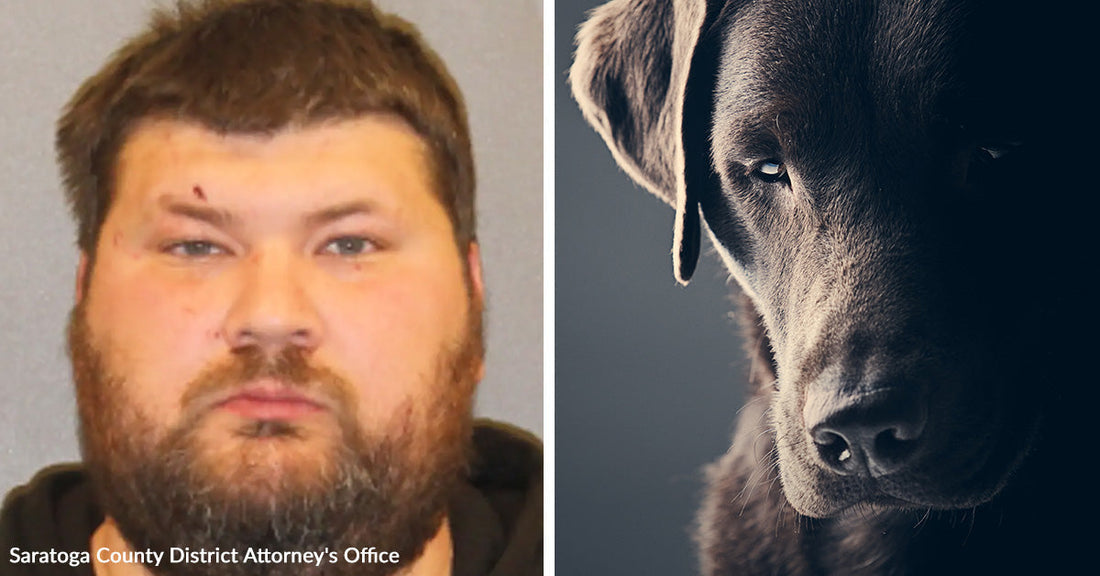
The recent case of a Northumberland man sentenced for strangling his girlfriend and beating her dog has drawn attention to the intersection of domestic violence and animal abuse. In Saratoga County, a 34-year-old man named Michael Blair received a four-year state prison sentence after an incident that left his partner hospitalized and her 12-year-old dog injured. The facts are disturbing, yet they also highlight how law enforcement and prosecutors are beginning to more clearly recognize patterns of violence that extend across both human and animal victims.

According to information from the Saratoga County District Attorney’s Office, the events unfolded on December 4, when sheriff’s deputies responded to Blair’s home in Northumberland. Prosecutors said that during a violent altercation, he choked his girlfriend, causing injuries that required treatment at Glens Falls Hospital. As the attack took place, the woman’s dog, a senior canine named Moses, attempted to intervene. At that point, Blair turned his aggression on the animal and beat the dog.
Reports indicate that Moses survived and made what was described as a quick recovery, a small relief in an otherwise grim account. The dog’s age, 12 years, underscores how vulnerable he was in that moment. The idea of an older dog trying to protect a person and then being harmed for that protective instinct is especially striking. The case resonates with many people because it reflects a situation in which both a human partner and a companion animal were targets within the same violent episode.
After his arrest, the case proceeded through the Saratoga County justice system. On April 13, Blair pleaded guilty to second-degree strangulation and animal cruelty. Second-degree strangulation is a serious felony charge that recognizes the potentially lethal nature of choking or restricting someone’s breathing. When combined with animal cruelty, the charges laid out a pattern of violence that the court could not ignore. Sentencing took place in Ballston Spa, where County Judge James R. Davis imposed four years in state prison along with significant additional penalties.
Beyond the prison term, Blair will serve five years of post-release supervision. This extended period of oversight indicates that the court viewed continued monitoring as necessary to protect the community and to help manage any risk after his return from incarceration. Post-release supervision often includes conditions related to behavior, treatment, and contact with victims, although the specific terms were not detailed in the available report. The presence of a long supervision period highlights how seriously the justice system treated this combination of domestic violence and harm to an animal.
The sentence also included two important animal-related restrictions. First, Blair is barred from owning an animal. Second, he is required to join an animal abuse registry. These measures aim to reduce the chances that another animal could be placed in his care and potentially face a similar fate. In recent years, some jurisdictions have created such registries so that shelters, breeders, and others can identify individuals with a history of animal cruelty. In this case, the requirement to register marks a clear legal response to the abuse of Moses and to the broader concern that violence toward animals can be part of a larger pattern of behavior.
Saratoga County District Attorney Brett Eby noted that this case illustrated a connection between animal abuse and domestic violence. That observation reflects a growing awareness in law enforcement and advocacy communities that cruelty to pets sometimes coexists with or foreshadows abuse of human partners and family members. Although the article did not elaborate at length, the sequence of events in this case makes that connection tangible. An assault on a partner escalated into an attack on the animal that tried to protect her, showing how a single violent incident can encompass both human and nonhuman victims.
I found this detail particularly telling because it underscores how pets can become caught in the middle of domestic disputes. Companion animals often form deep emotional bonds with the people in their homes. In many situations of domestic violence, pets may stay close to those they perceive as vulnerable or distressed. When violence erupts, they may instinctively intervene or simply be in the path of harm. Stories like Moses’s remind readers that animal cruelty is not an isolated issue but can be intertwined with broader patterns of control, intimidation, and physical harm.
The quick recovery reported for Moses offers a small measure of hope amid the distressing facts. Physically, the dog was able to heal from the abuse, although the report did not discuss any emotional or behavioral impact. Emotionally, for many who hear about this case, the dog’s survival becomes a focal point for empathy. It draws attention to the need for community members, professionals, and policymakers to consider pets when addressing domestic violence. In some contexts, support services have begun to provide safe housing options or foster arrangements for animals belonging to survivors, recognizing that concern for a pet’s safety can influence decisions about leaving an abusive environment.
The human survivor in this case required medical care at Glens Falls Hospital following the strangulation. The fact that she received treatment is important, as strangulation can be life-threatening and may cause serious internal injuries that are not always immediately obvious. The article does not go into detail about her long-term condition, but the need for hospital care signals the severity of the attack. It also illustrates why strangulation has been increasingly recognized by the legal system as a particularly dangerous form of domestic violence, deserving of felony-level charges.
On a broader level, this Northumberland case serves as a reminder that legal responses to domestic violence and animal cruelty are evolving. Sentences that combine incarceration, post-release supervision, bans on animal ownership, and registration on an animal abuse registry show a multifaceted approach. The goal is not only to punish past behavior but also to reduce the risk of future harm. While the article does not discuss broader policy debates, the measures taken here reflect a clear stance that violence in the home, whether directed at a person or a pet, has serious consequences.
For readers, learning about an incident like this can be difficult, yet it also underscores the importance of paying attention to warning signs of both domestic violence and animal abuse. If someone harms an animal in the context of a relationship, that behavior may speak to deeper issues of control and aggression. The acknowledgment by Saratoga County’s district attorney that this case highlights a connection between these two forms of violence supports what many advocates have long observed. Addressing one often means recognizing and responding to the other.
As this case concludes with a sentence handed down in Saratoga County Court, the story of a woman who survived strangulation and a dog named Moses who bravely intervened will likely stay with many who read about it. It calls attention not only to the harm that took place, but to the systems in place to respond. By documenting what happened, how authorities acted, and how the court ultimately sentenced the defendant, the report contributes to a broader understanding of how the justice system is treating intertwined acts of domestic violence and animal cruelty. Read more at https://www.timesunion.com