
Scientists Amazed As Hidden Camera Captures Elusive Clouded Leopard Survives Years in the Wild With Every Tooth Intact
Guest Contributor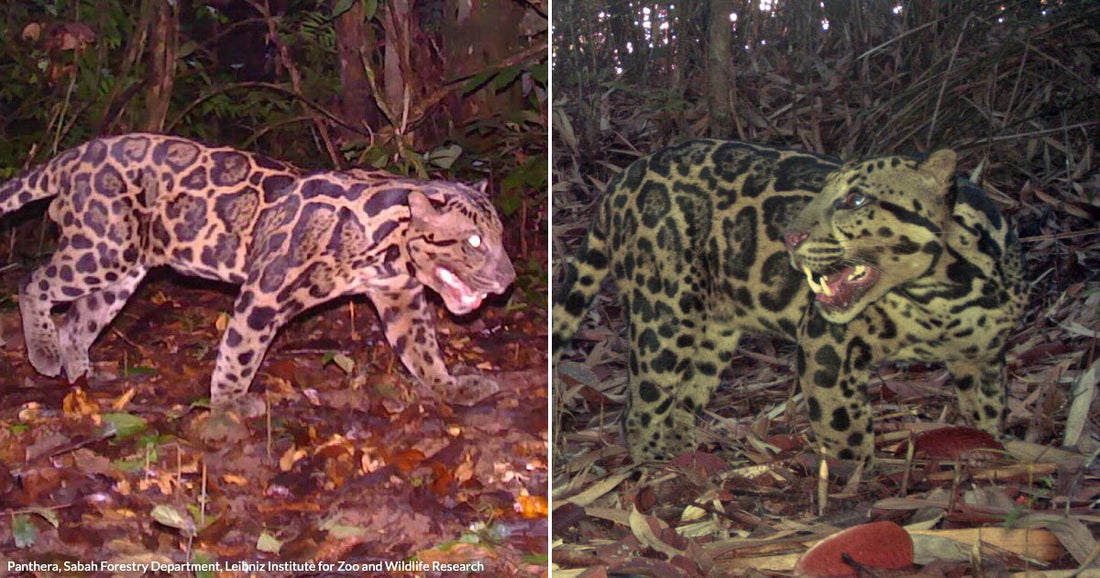
Deep in the rainforests of Borneo, a new set of camera trap images has revealed an extraordinary resident of the treetops. An 8.5-year-old female Sunda clouded leopard, now recognized as the oldest-known individual of her species ever recorded in the wild, has stepped briefly into the light of scientific understanding. For an animal often described as a ghost of the forest, and one of the world’s most elusive wild cats, this rare glimpse offers a powerful look at how these secretive predators live, move, and survive. For anyone fascinated by wild cats and rainforest conservation, the story of this long-lived huntress and the people who study her is especially compelling.
The newly released footage comes from a recent study that used a network of camera traps scattered across Borneo’s dense forests. These motion-triggered cameras quietly watch and wait, sometimes for months, until a passing animal happens to cross their path. In this case, they captured clear images and video of a female Sunda clouded leopard whose age could be estimated at 8.5 years. For a species so rarely seen that many local people may never encounter one in their lifetime, simply knowing that a female can reach this age in the wild is a significant step forward in understanding their natural history.

The research marks the first time a female Sunda clouded leopard’s lifespan has been documented in the wild. Researchers were able to follow her over time using recurring camera trap appearances and distinctive coat patterns that act like a fingerprint. Each time she appeared on camera, the study team could confirm that the same animal was still alive and thriving. I found this detail striking because it shows how careful observation, combined with relatively simple technology, can unlock key insights about a species that usually slips past humans unseen.
Beyond confirming her age, the study revealed that Sunda clouded leopards are far more mobile than previously believed. By comparing images taken from different forest reserves and tracking how individual cats appeared across locations, researchers learned that some leopards traveled up to 19 miles between protected areas. For an arboreal predator that often prefers the canopy, covering such distances hints at the connectivity of the forest and the importance of maintaining wildlife corridors. It suggests that these cats use a much larger landscape than earlier data indicated, and that isolated forest patches might not be enough to sustain healthy populations.
The camera trap data also highlighted a striking difference between males and females. Females were found to be 68 percent harder to detect than males. This was not because there are fewer females, but because of how they use their habitat. Camera traps are typically placed along trails, ridgelines, and areas where animals are likely to walk on the ground. Males, which spend much of their time patrolling territories and refreshing scent marks along these paths, naturally cross cameras more often and show up frequently in the dataset.
Females, on the other hand, spend far more time in the trees. Their bodies are relatively slender and their tails are long and fluffy, traits that help them balance as they move along branches high above the forest floor. That arboreal lifestyle makes them much harder to photograph with ground-based camera traps. The study’s findings demonstrate in a practical way how this difference in behavior shapes what scientists can and cannot see. When the cameras do capture females, those moments offer a rare and valuable look at how they navigate their complex world of branches, vines, and filtered light.

Panthera, Sabah Forestry Department, Leibniz Institute for Zoo and Wildlife Research
The Sunda clouded leopard itself is a remarkable animal. Found only on the islands of Borneo and Sumatra, it is known locally and scientifically as a phantom of the rainforest. Its dappled coat, inspired by patches of light and shadow, makes it nearly invisible against the forest backdrop. The species also carries the largest canine teeth of any wild cat relative to its body size, drawing frequent comparisons to saber-toothed cats. These enlarged canines and a powerful, flexible body allow it to take down prey and haul it into the trees, away from scavengers and competitors.
Although the Sunda clouded leopard is rarely seen, interest in elusive wild cats has been growing worldwide, partly thanks to camera trap technology. Recent projects have captured other shy species emerging from the dark. Earth’s tiniest wild cat, the rusty-spotted cat of India, has been filmed in the wild, revealing a miniature predator that weighs little more than a kitten yet moves with the intensity of a seasoned hunter. In Arizona, a rare ocelot was recorded for the first time in 50 years, a surprising return after decades without confirmed sightings in that region. Meanwhile, in Thailand, trail cameras have documented the so-called “fire tiger,” one of the rarest and most mythical-looking cats in the world. Together, these glimpses show how much of the natural world still unfolds out of human view, and how technology can bring those hidden lives into focus without disturbing them.

Panthera, Sabah Forestry Department, Leibniz Institute for Zoo and Wildlife Research
The Sunda clouded leopard study would not have been possible without the deep involvement of indigenous communities in Sabah, a state on the island of Borneo. Partnering with the forestry and wildlife departments of Sabah, these communities have taken on critical roles as wildlife rangers and community engagement officers for Panthera, the conservation organization dedicated to wild cats that led the research. Their work includes patrolling dense, often challenging terrain, maintaining extensive camera trap networks, and serving as frontline guardians against poaching. This collaboration blends local knowledge of the forest with scientific methods, strengthening protection for clouded leopards and other wildlife.
The partnership between Panthera and Sabah’s communities began in 2020 with efforts focused on human-elephant conflict, an issue that affects both people’s livelihoods and the safety of endangered elephants. Over time, this cooperation grew to include community reporting of illegal logging and other threats. That local vigilance contributed to the creation of government-funded ranger stipends, recognizing community members not only as residents but also as professional stewards of the forest. This model shows how conservation research, from tracking an 8.5-year-old female clouded leopard to measuring how far these cats roam, is deeply connected to the people who live alongside these habitats.
The story of the oldest-known Sunda clouded leopard offers more than a scientific milestone. It illustrates how much can be learned when advanced tools such as camera traps are paired with community leadership and long-term commitment. Each image of this female moving through the rainforest adds a fragment to a larger puzzle about her species: how long they live, how they share space, how they avoid detection, and how they manage to survive in forests under pressure from human activity. For readers who care about wild cats, wildlife corridors, and rainforest conservation, sharing this kind of research helps keep attention focused on both the species and the people working to protect them. With every new photograph of a “ghost of the forest,” that ghost becomes a little better known and, hopefully, a little safer.