
Six Tiny Survivors Get a Second Chance After Their Mother Is Killed by a Car
Guest Contributor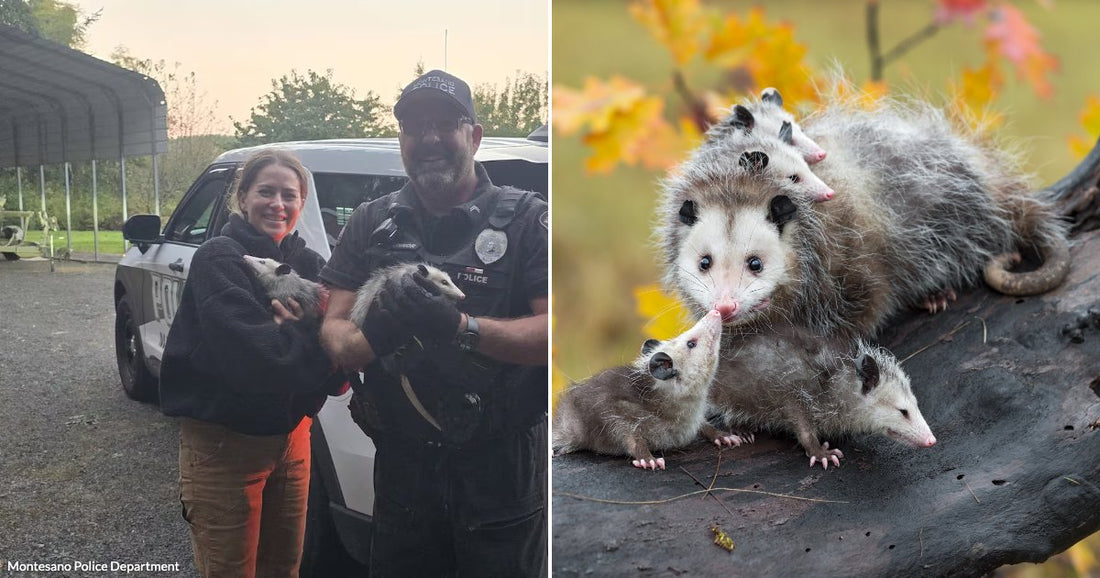
Six tiny survivors shuffled quietly out of their crate and into the underbrush outside Montesano, Washington, bringing a feel-good close to a story that began with loss. The release of six orphaned baby opossums back into the wild, after months of careful rehabilitation, highlights both the fragility of local wildlife and the important role that rehabilitation centers play in helping injured and orphaned animals. For anyone interested in wildlife rescue stories or in learning more about the role opossums play in local ecosystems, this is a moment worth pausing over.
According to the Montesano Police Department, the rescue began several months ago when a mother opossum was struck and killed by a vehicle while her babies were still attached to her. It is a scenario that plays out quietly on roadsides more often than many realize, but this time there were survivors. Six of the offspring lived through the collision, clinging to life despite the loss of their mother.

MPD Officer O’Connor responded to the scene and took quick action that would shape the rest of the story. Recognizing that the babies could not survive on their own, the officer contacted Twin Harbors Wildlife Center, a local nonprofit based in Montesano that specializes in caring for injured and orphaned wildlife. The center agreed to take in the opossums and provide the support they needed.
From that moment on, the young opossums traded the chaos of a roadside emergency for the structured care of a wildlife rehabilitation facility. Twin Harbors Wildlife Center reports that caring for orphaned and injured opossums is a frequent part of its work. The staff and volunteers there routinely step in when wild animals are impacted by vehicle strikes, habitat disruptions, or other hazards that come with living close to human communities.

Montesano Police Department
At the center, the six babies would have received specialized attention designed to mimic, as closely as possible, what their mother might have provided in the wild. While the article does not detail specific rehabilitation steps, centers like Twin Harbors typically focus on safe housing, proper nutrition, and minimal human imprinting so animals can maintain their natural behaviors. The goal is always the same: get healthy, grow strong, and return to a life in the wild.
Officer O’Connor did not disappear from the story once the opossums were transferred. Instead, the officer later joined representatives from Twin Harbors Wildlife Center on October 3 for the release of the now healthy juveniles. That return to the wild marked the culmination of months of care, coordination, and quiet daily work by the people at the center.

The release itself symbolized more than just a happy ending for six individuals. It illustrated how local partnerships between law enforcement and wildlife rehabilitation organizations can make a difference for native species. In this case, a quick decision at the scene of an accident, combined with a ready and experienced rehabilitation team, turned a roadside tragedy into an uplifting wildlife rescue success story.
Twin Harbors Wildlife Center notes that opossums are regular visitors to their facility, which suggests that these animals are both common in the region and frequently affected by human activity. The center also rehabilitates a variety of other wildlife, including squirrels and birds. That range of species reflects the broader responsibilities these organizations take on, from small songbirds that collide with windows to squirrels injured by falls or other encounters.
The story of these six opossums also offers a reminder that these often misunderstood animals fill an important ecological niche. The center highlights that opossums help control insect populations as well as other pests, including rats and mice. This pest control benefit makes them quiet allies for both rural and urban communities, where rodent and insect management is an ongoing concern.
Opossums are sometimes misjudged as nuisances, but accounts like this draw attention to their value in maintaining a healthy, balanced environment. By consuming large numbers of insects and other small creatures, they help moderate populations that might otherwise grow unchecked. When rehabilitated opossums are returned to their natural habitat, they resume that role in the local ecosystem, contributing to the overall health of the landscape around Montesano and beyond.
Stories about wildlife rehabilitation centers often revolve around intense work done behind the scenes. Staff and volunteers commit time, training, and resources to each animal that comes through their doors. In this case, six orphaned babies represented six long-term projects. From initial intake through daily feeding, monitoring, and eventual preparation for release, every step required consistent attention and care.
I found it striking that a nonprofit organization like Twin Harbors Wildlife Center is so deeply embedded in its local community that a police officer knew exactly whom to call when confronted with orphaned wildlife. That kind of awareness does not happen by accident. It grows out of sustained effort by organizations that emphasize education, outreach, and collaboration with local agencies.
For many residents, knowing that such a resource exists nearby can change how they respond when they encounter injured or orphaned animals. Instead of assuming nothing can be done, people may be more inclined to contact a rehabilitation center or local authorities. In turn, that can increase the number of animals that receive professional care and have a chance to return to the wild.
The successful release of the six opossums also underscores how individual actions contribute to broader patterns. One driver slowing down at night, one officer making a call, or one person choosing to support a wildlife rehabilitation center can all influence outcomes for local species. While the collision that killed the mother opossum could not be undone, the response afterward ensured that her surviving offspring had a second chance.
In a time when news about wildlife often focuses on decline and loss, this story from Montesano offers a quieter, hopeful counterpoint. It shows that when communities maintain strong connections between public agencies and nonprofit organizations, they can respond compassionately and effectively to the everyday emergencies that affect local animals. Six orphaned baby opossums, once clinging to their mother at the side of a road, now move through their natural habitat, playing their part in keeping ecosystems balanced.
As they slip back into the trees and underbrush, the work of Twin Harbors Wildlife Center continues with new patients and new challenges. Yet for a moment, this successful release is a reminder that rehabilitation can work, partnerships can matter, and even some of the smallest, most overlooked creatures have an important place in the world they share with us.