
🚨Urgent: Missile Strikes Shelter in Ukraine! Rush Emergency Aid!
Attorney Disbarred After Horrific Animal Cruelty Case Involving 100 Dogs And Cats Sends Her To Prison
Guest Contributor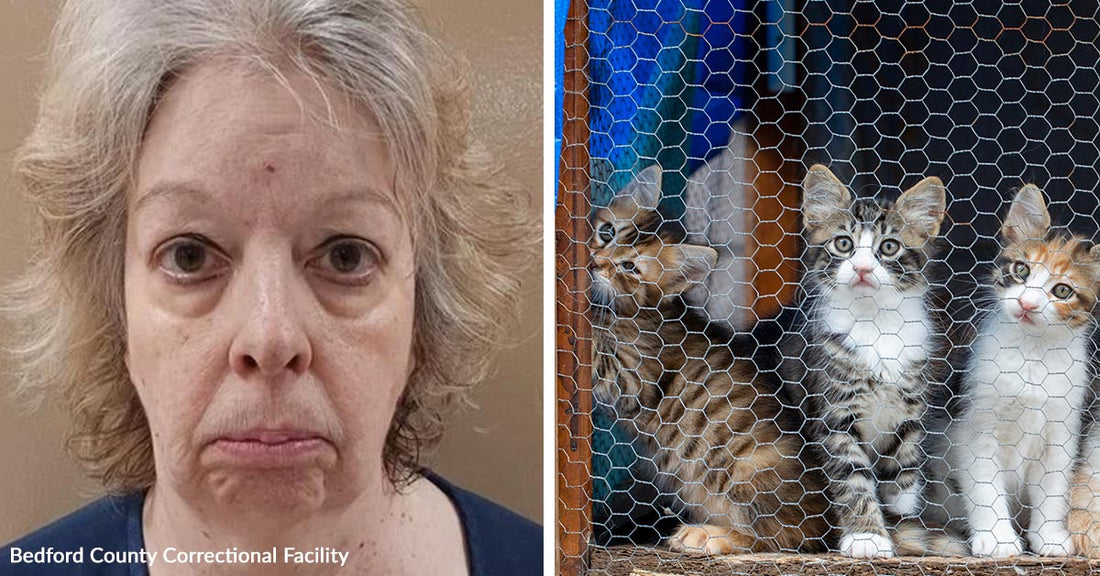
The Pennsylvania Supreme Court’s recent decision involving Bedford County attorney Renee Piper has drawn attention to the intersection of professional ethics, criminal accountability, and animal welfare. The court has accepted Piper’s resignation, which disbars her from practicing law in the state following what prosecutors have described as a “horrific” animal cruelty case. For anyone who cares about both the legal profession and the treatment of animals, this case stands out as a sobering example of how those worlds can collide.
According to the report, Piper and her husband, Nyal, were arrested in early 2024 after a lengthy investigation by Pennsylvania State Police. That investigation began when approximately 90 dogs and cats were rescued from the couple’s home. Authorities said the animals had been subjected to abuse and neglect on a scale that shocked both investigators and the community. The details put the case in the category of serious animal cruelty, not a matter of minor violations or misunderstandings. The phrase “horrific animal cruelty case” has been used in coverage for good reason.

The couple later entered no contest pleas to the charges, a legal position that acknowledges the prosecution has sufficient evidence for conviction without an admission of guilt in the traditional sense. Even so, the outcome was substantial. Both Renee and Nyal Piper were sentenced to prison terms of up to 40 years. That length of potential incarceration reflects how the justice system sometimes responds when animal abuse is widespread and deliberate rather than isolated or accidental.
Against that backdrop, the Supreme Court of Pennsylvania addressed a separate but related question. What should happen to an attorney’s license when the attorney has been criminally convicted in connection with such a “horrific” case? In this instance, the court accepted Piper’s resignation, which has the effect of disbarring her. She is now prohibited from practicing law anywhere in the Commonwealth of Pennsylvania.
Disbarment in Pennsylvania is not a routine or casual step. It is usually reserved for the most serious ethical violations, criminal acts, or conduct that undermines the integrity of the profession. The fact that the state’s highest court accepted her resignation in light of these criminal convictions signals how seriously the legal system views both animal cruelty and the responsibilities of an attorney. When someone holds a license to practice law, they are expected to uphold standards that protect clients, courts, and the public trust. Conduct that results in nearly 100 abused or neglected animals is fundamentally at odds with those obligations.
In a statement quoted by 6 News, Bedford County prosecutors confirmed that Piper had been disbarred and added that “we are grateful that the PA Supreme Court has prohibited her from practicing law.” That reaction speaks to the broader importance of attorney discipline. Prosecutors, defense attorneys, and judges all depend on the idea that legal professionals follow rules, maintain integrity, and avoid serious criminal conduct. When that trust is broken, disciplinary systems are one way the profession signals that certain actions are incompatible with the privilege of holding a law license.
For those who follow animal cruelty cases, this matter in Bedford County fits into a larger pattern. Over the past several years, law enforcement and prosecutors across the country have increasingly treated major animal cruelty incidents as serious crimes. The rescue of approximately 90 dogs and cats from the Pipers’ home is not just a statistic. It represents individual animals that, according to the investigation, were living in unacceptable conditions with inadequate care. Animal welfare cases at this scale often require substantial resources from shelters, veterinarians, and volunteers, all working to stabilize, treat, and rehome the animals involved.
When someone with professional standing is involved, such as an attorney, physician, or educator, the public response tends to be even stronger. There is an expectation that people in positions of trust understand and meet higher ethical requirements. From that perspective, professional consequences such as disbarment serve a dual function. They hold the individual accountable within their field, and they also reassure the public that the profession is committed to maintaining its standards.
I found this detail striking: the Pipers’ case did not simply end with criminal sentencing. The legal system followed through to address the impact on Piper’s professional status as a lawyer. That sequence underscores that serious wrongdoing can have long-term effects that go beyond prison time or fines. It affects the ability to return to a previous career or to occupy roles that require a high level of confidence from clients and communities.
It is also notable how the language surrounding this case has been consistent. From the initial investigation, through the animal rescue, to the court proceedings, authorities and media coverage have referred to the situation as “horrific” and “abuse and neglect.” Those descriptions matter because they shape how the public understands what happened. They reflect not only the physical conditions the animals were found in but also the moral judgment that such treatment is profoundly wrong.
For residents of Bedford County and people across Pennsylvania, this case serves as a reminder of the mechanisms in place when animal cruelty occurs. Law enforcement can investigate, prosecutors can bring charges, courts can impose substantial sentences, and professional licensing bodies can act when the individuals involved are members of regulated professions. In this situation, all of those layers were activated, leading to both criminal penalties and a permanent bar from legal practice.
At the same time, the rescue of nearly 100 animals shows the other side of the story: intervention, care, and potential recovery. While the article does not provide details about the animals’ long-term outcomes, the fact that they were removed from harmful conditions is an important step. Animal welfare organizations and local shelters often become the quiet backbone of these responses, taking on the hard work of rehabilitation after the initial law enforcement surge fades from the headlines.
For people concerned about animal cruelty in Pennsylvania, the case highlights how seriously such matters can be taken when evidence supports strong charges. For those within the legal community, it reinforces the reality that criminal behavior, particularly when described as “horrific,” can end a career in law entirely. The Pennsylvania Supreme Court’s acceptance of Piper’s resignation and the resulting disbarment send a clear signal about where the boundaries of acceptable conduct lie.
Ultimately, the Bedford County case illustrates a painful but important connection between animal welfare and professional accountability. The combination of a lengthy state police investigation, the rescue of approximately 90 dogs and cats, substantial prison sentences of up to 40 years, and formal disbarment outlines a full arc of response from institutions tasked with protecting both the vulnerable and the public trust. For many observers, that arc is a somber affirmation that when cruelty and neglect reach this level, the consequences can and should be profound.