
Punch the Monkey Once Clung to a Stuffed Toy and Now Takes an Interest in a Baby Macaque
Guest Contributor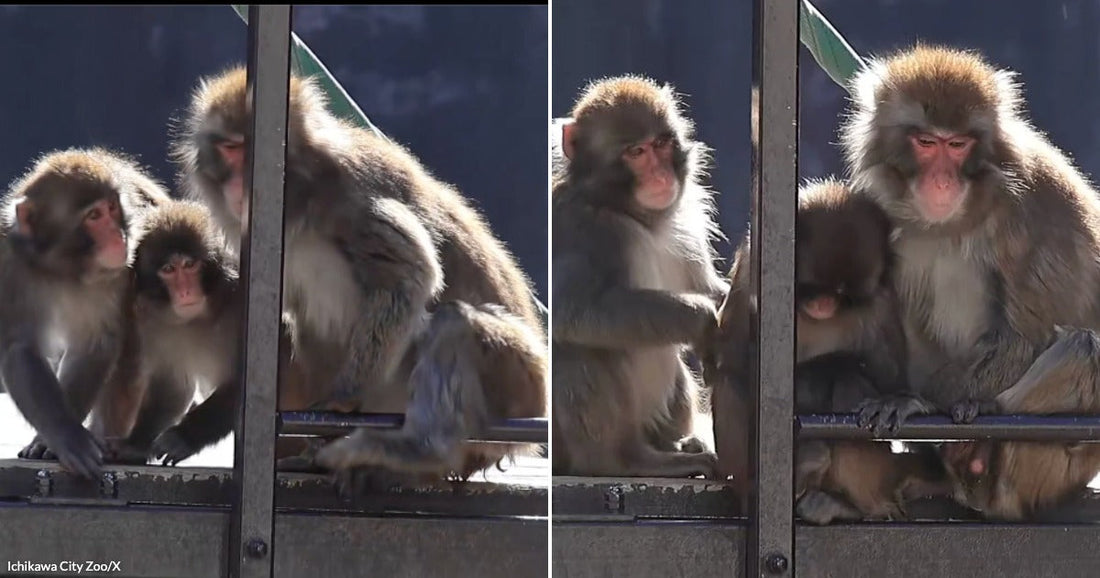
Punch the Japanese macaque has already lived a life full of plot twists. After becoming an internet sensation for bonding with a stuffed orangutan, the little monkey is now stepping into a new chapter at Ichikawa City Zoo and Botanical Gardens in Japan. Recent footage shared by the zoo shows Punch curiously watching over a new baby macaque in the troop, a gentle moment that continues his heartwarming journey and has fans revisiting his story of resilience and connection.
Punch’s early days were anything but typical for a young monkey. Born in July 2025 during an extreme heat wave, he was rejected by his mother and could not rely on her for the care baby macaques usually receive. Instead of being cradled and groomed by his mother, Punch was hand-raised by zookeepers who stepped in to provide round-the-clock support. To help him feel less alone, they eventually introduced a stuffed orangutan from IKEA into his world. This plush toy became Punch’s constant companion and an unexpected symbol of comfort.

Images and videos of Punch dragging the oversized orangutan around his enclosure quickly spread online. Viewers watched as he clung to the toy, sometimes almost dwarfed by its size, and tried to figure out how to fit in with the much larger troop of Japanese macaques at the zoo. Those early clips resonated with people who saw something very relatable in a young animal leaning on a soft toy for security. The internet rallied behind him, inspiring the hashtag #HangInTherePunch and turning this small, fluffy primate into a global feel-good story.
His journey from isolation to integration has been gradual. At Ichikawa City Zoo, Punch lives among a sizable group of approximately 60 macaques. Initially, it was not easy for him to navigate the complex social world of the troop. The keepers, aware of how sensitive these dynamics can be, watched closely as he started to interact with others. Over time he began to form relationships, shifting from a youngster mostly glued to his stuffed orangutan to a more confident member of the group.

Ichikawa City Zoo/X
The zoo’s recent update highlights how far he has come. In new footage shared on X, Punch is seen taking an interest in a baby macaque at the facility. For anyone who followed his story from the beginning, seeing this once-rejected infant now turning his attention to a younger troop member feels especially moving. It suggests a subtle but meaningful change. Instead of being the smallest, most vulnerable animal in need of comfort, Punch is now in a position to show curiosity and perhaps one day offer comfort to another young monkey that is just starting out.
The zoo used the opportunity of this update to shine a light on the caretakers behind Punch’s transformation. In the post, translated from Japanese, they explained that Punch and the other animals change from day to day. Because of this, the keepers continuously observe them, spend time interacting with them, and adjust care plans to meet evolving needs. They noted that even something as simple as feeding routines are adapted to the season and weather. This flexible, attentive approach is central to why Punch is thriving.
The zoo’s message was also a gentle reminder that while Punch may be the face of the story, there is a dedicated team working behind the scenes. They wrote that they believe Punch is able to live so healthily thanks to the care their keepers provide, and they encouraged fans to extend their support and appreciation to those staff members. It is a helpful reframing of the narrative. The viral star might be the cute monkey with the stuffed orangutan or the curious observer of a new baby macaque, but his progress is also the result of skilled, consistent human effort.
That human support has resonated with people far beyond the zoo’s walls. When Punch turned 1 year old in July, the zoo reported that he received more than 2,500 birthday cards from fans. This response speaks to the depth of connection that can form between online audiences and a single animal whose story encapsulates struggle, adaptation, and growth. A baby primate who once relied on a plush toy for comfort is now one of the zoo’s best-known residents, supported emotionally by thousands of well-wishers around the world and physically by the keepers who monitor his health and social development.
The new baby macaque who has drawn Punch’s interest is a reminder that zoo life is always in motion. Social groups shift, new members arrive, and hierarchies change. For Punch, paying attention to a younger troop mate might be a simple act of curiosity. At the same time, it can also be seen as an indicator of how fully he is settling into his environment. He is no longer just reacting to his own challenging start but engaging with the life unfolding around him.
Stories like Punch’s reveal how closely animal welfare, professional caregiving, and public interest can intersect. Viewers around the world watched a vulnerable baby monkey find security in a stuffed orangutan, then slowly build confidence within a troop of 60 macaques. The zoo’s repeated emphasis on careful observation, responsive care, and seasonal adjustments to feeding underlines the complex work required to support each individual animal. Punch’s viral fame may have started with a plush toy, yet his continued well-being hinges on steady, skilled attention from the people who know him best.
For fans, the sight of Punch showing interest in a baby macaque feels like a gentle payoff for following his journey. It suggests growth, healing, and the possibility that this once-fragile youngster might play a positive role in his social group as he matures. The zoo’s encouragement to support the keepers adds another layer, inviting everyone who has cheered for Punch to also recognize the labor and care that make his story possible. As he continues to grow and adapt, Punch stands as a small but memorable example of how thoughtful animal care and global goodwill can come together around one very determined monkey.