
🚨Urgent: Missile Strikes Shelter in Ukraine! Rush Emergency Aid!
Rare Angelshark Sighting in Cardigan Bay Highlights Urgent Marine Protection Needs
Guest Contributor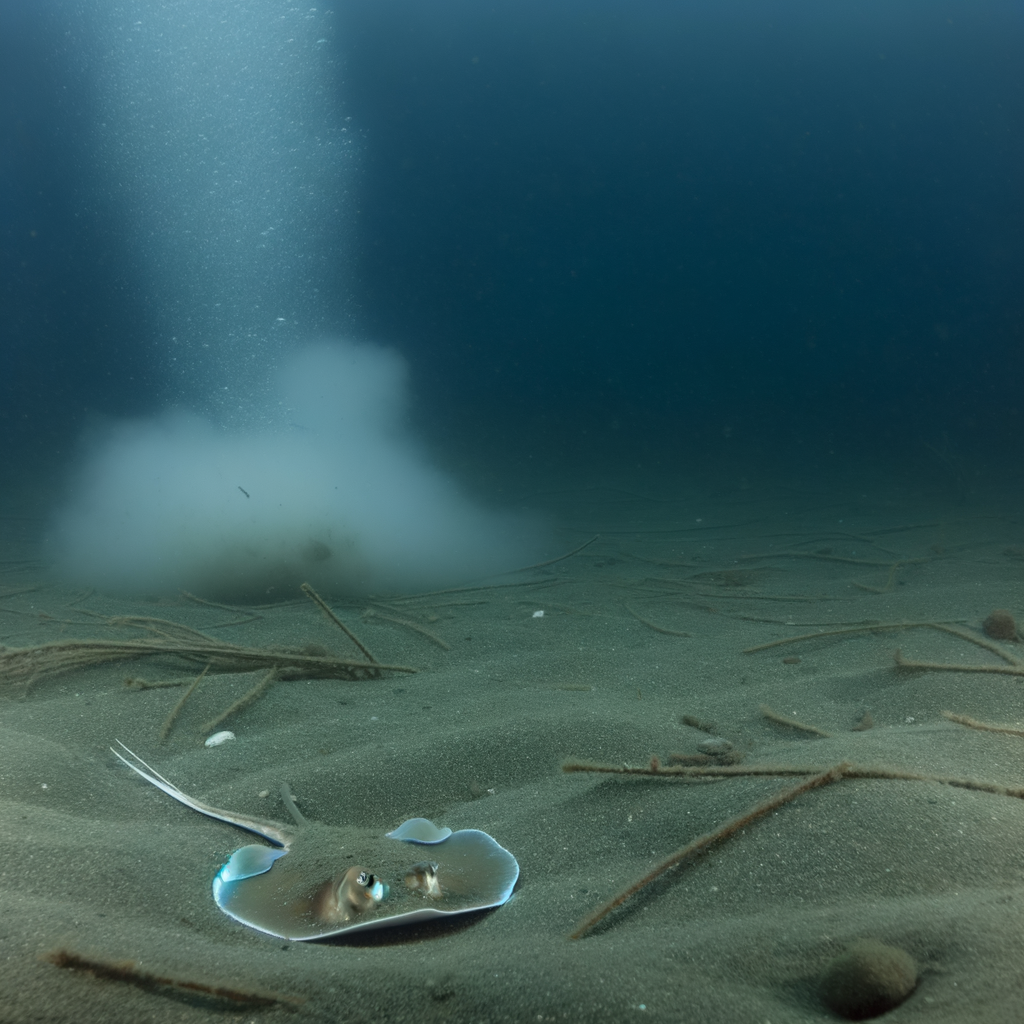
In a rare and remarkable event off the coast of Wales, researchers recently captured footage of one of the world’s most elusive marine creatures: the critically endangered angelshark. This unexpected sighting occurred in Cardigan Bay, where scientists from the Wildlife Trust of South & West Wales (WTSWW) had deployed underwater cameras—not to look for sharks, but to study dolphin feeding habits and broader marine biodiversity. The footage has stirred excitement among conservationists and marine biologists alike, offering a powerful reminder of the fragile ecosystems hidden just beneath the waves.

The angelshark, or Squatina squatina, is a flat-bodied species that once thrived across parts of Europe and North Africa. Historically, spotting one along the UK coastline wasn’t considered extraordinary. But over the past few decades, their numbers have plummeted. Today, the International Union for Conservation of Nature (IUCN) classifies the angelshark as “Critically Endangered,” meaning it is just one step away from extinction in the wild. The IUCN estimates that the population has declined by at least 80 percent over the last 45 years, a staggering figure that highlights the urgency of marine conservation efforts.

Dr. Sarah Perry, Marine Conservation and Research Manager at the WTSWW, explained that the sighting marked the first time since 2021 that an angelshark had been captured on film in Cardigan Bay. “We were thrilled to record an Angelshark in Cardigan Bay, a rare and exciting encounter,” she said in a statement. I found this detail striking—not only because of the rarity of the sighting but also because it underscores how much we still have to learn about our oceans and the creatures that inhabit them.
The camera that recorded the angelshark was part of the Dolphin Diet Detectives project, an initiative designed to better understand what dolphins eat and to catalog the marine life that shares their habitat. While the project's primary focus wasn’t on sharks, its broader ecological scope allowed for this serendipitous discovery. The footage has become a vivid illustration of the marine diversity that could be lost without stronger protections.
One of the key threats facing angelsharks is bottom trawling, a fishing method that drags heavy nets across the seafloor. This practice is particularly harmful to species like the angelshark, which live and feed along the ocean bottom. The physical destruction caused by trawling not only disrupts individual species but also damages entire habitats. When combined with the angelshark’s slow reproduction rate, the impact becomes even more devastating.
The broader consequences of bottom trawling were recently brought to public attention through Sir David Attenborough’s latest documentary, OCEAN. The film includes the first-ever footage showing the real-time effects of bottom trawling, capturing scenes of rays, cephalopods, and other marine life fleeing from the destructive path of the trawling gear. Toby Nowlan, director and producer of the film, likened the practice to bulldozing ancient woodlands or the Amazon rainforest. “It’s happening everywhere around the ocean, including in many of our protected areas,” he told IFLScience. His comments highlight a troubling reality: much of the destruction is hidden from public view, occurring just below the ocean’s surface.
Nowlan emphasized that this hidden nature has allowed bottom trawling to continue largely unchecked. “If my local ancient woodland, Leigh Woods, was just bulldozed, the entire city would be up in arms,” he said. “But this is what's happening underwater. The whole reason [people aren’t up in arms about trawling] is that it's remained hidden from view.” These words underscore the importance of visual documentation like the angelshark footage, which can help bridge the gap between scientific research and public awareness.
Encouragingly, the timing of the angelshark sighting may prove significant. As Dr. Perry noted, the discovery comes as both the Welsh Parliament and the UK Government are considering a ban on bottom trawling in Marine Protected Areas. The underwater cameras used in the Dolphin Diet Detectives project have already revealed a rich tapestry of life on the seabed, reinforcing the argument for stronger protections. “These findings highlight the urgent need to protect these fragile habitats from damaging activities like bottom trawling,” Perry said.
For those invested in marine conservation, the angelshark footage is more than just a rare glimpse of a seldom-seen species. It’s a call to action. The oceans are teeming with life that remains largely unseen and underappreciated, and the tools we use to study one species can often illuminate the struggles of many others. As policymakers debate the future of bottom trawling, discoveries like this one could play a pivotal role in shaping more sustainable practices.
Ultimately, the reappearance of the angelshark in Welsh waters offers a glimmer of hope. It suggests that with the right protections, even critically endangered species may have a chance to recover. But it also serves as a stark reminder of how much is at stake. The ocean’s secrets are slowly being revealed, and with them comes a responsibility to act—before the next sighting becomes the last.