
A Rare Primate Feared Extinct for Nearly a Century Is Found Alive in Indonesia
Guest Contributor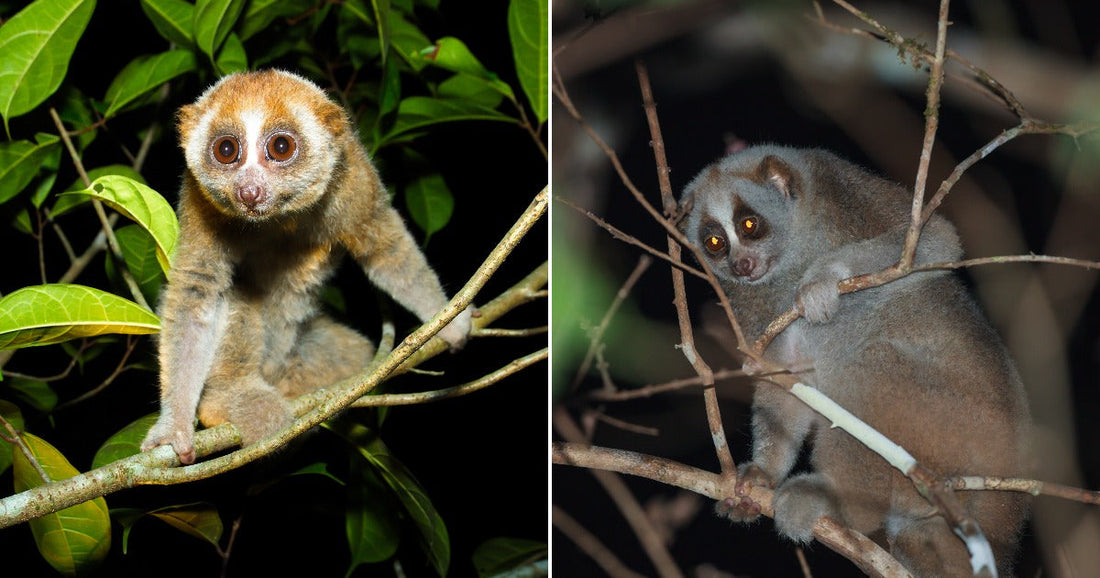
The rediscovery of the Bangka slow loris reads almost like a conservation miracle. Once listed as critically endangered and possibly extinct, this elusive primate has quietly persisted in the forests of Bangka Island in Indonesia. Now, thanks to years of work by local rescuers and international researchers, more than 90 individuals of this “lost” species have been documented, offering rare good news in the world of biodiversity and endangered species.
The Bangka slow loris, known scientifically as Nycticebus bancanus, is one of Earth’s most unusual primates. It is small, nocturnal and slow moving, with reddish-brown fur, large reflective eyes and bold facial markings that make it instantly recognizable. Unlike the agile leaps of monkeys, apes and lemurs, this animal moves carefully and deliberately along branches, relying on stealth and patience rather than speed. The original scientific records from Bangka date back to the early 1930s, and for decades after that, researchers had no reliable evidence that the species still survived in the wild.

The new study, published in the journal Spixiana, documents how the Indonesian conservation group Alobi Wildlife Rescue Center encountered more than 90 Bangka slow loris individuals between 2015 and 2025. These animals came from multiple locations across Bangka Island, which lies off the southeastern coast of Sumatra. According to study coauthor Timon Glaw, this wide geographic spread indicates that the species has been hanging on in several remaining forest pockets, despite extensive habitat destruction and decades of scientific neglect.
Much of Bangka’s native habitat has been cleared or degraded for tin mining and expanding oil palm plantations. These activities fragment forests and reduce the continuous canopy that slow lorises rely on for food, shelter and safe movement. The article notes that the most urgent priority for the Bangka slow loris now is to protect the remaining natural forests on the island, particularly those threatened by further mining and plantation expansion. Without this remaining habitat, any rediscovery could quickly be overshadowed by renewed decline.

Alobi Wildlife Rescue Center’s role in this story is central. Many of the slow lorises they documented were found in and around human environments: houses, gardens, plantations and roads. Others were discovered injured, especially from contact with electrical wires. A number of those animals did not survive despite treatment, yet 86 recovered well enough to be released back into suitable natural habitat. That cycle of rescue, rehabilitation and release illustrates both the pressures the species faces and the tangible difference local conservation efforts can make.
For scientists, one particularly striking aspect of this rediscovery is how such a distinctive primate could effectively vanish from the scientific record for nearly a century while living on an island only about an hour’s flight from Jakarta. Glaw highlights this contrast as a reminder that there may be other “lost species” still persisting in overlooked or under-surveyed regions. I found this detail striking because it illustrates a gap between where people assume biodiversity has already been fully mapped and where field research is actually taking place.
The Bangka slow loris also stands out for a rarer reason: it is venomous. Like other slow loris species, it possesses specialized glands near its elbows that secrete a substance the animals can mix with saliva. When threatened, a slow loris may raise its arms, lick these glands and then deliver a venom-loaded bite. According to the study, this venom can trigger severe allergic reactions in humans, potentially even life threatening ones. Research on other slow loris species suggests the venom is used primarily in conflicts between lorises, while also serving defensive functions against predators and parasites.

Its mouth contains another unusual adaptation, a structure known as a toothcomb. This is made of forward-projecting lower teeth that serve multiple purposes. The toothcomb is used for grooming, scraping or gouging tree bark to access gum and assisting in delivering venom during a bite. The Bangka slow loris also has a specialized second tongue that sits beneath the main tongue and helps clean the toothcomb. Details like these emphasize just how finely adapted the species is to its particular lifestyle in the trees.
Although this new research confirms that Bangka slow lorises are still alive in the wild, many aspects of their biology remain uncertain. Their diet, for instance, is thought to include insects, tree gums, nectar and other plant parts, similar to other slow loris species, but it is not yet fully documented. This lack of detailed knowledge speaks to how long the species has existed out of scientific view. After the early 1930s, there were no clear scientific records from Bangka until the recent work highlighted in this study.
In 2020, the International Union for Conservation of Nature had listed the Bangka slow loris as critically endangered and possibly extinct, highlighting a sense of urgency and despair around its fate. It was also recognized as one of the “lost primates” by the conservation group Re:wild. Against that backdrop, the confirmation that viable populations still survive is genuinely hopeful. The author notes that every species is the product of millions of years of evolution and part of a complex ecological network. Losing one of them, especially one as distinctive as the Bangka slow loris, would mean losing something irreplaceable.
At the same time, this rediscovery is not the end of the story but the beginning of a new phase of responsibility. The study calls for systematic field surveys to determine where the species survives and how large its populations are. Without that information, conservation planning remains approximate and reactive. Protecting natural forests, enforcing safeguards around electrical infrastructure and monitoring wildlife trade and human interactions will all likely play a role in any long-term strategy, even though the article stays focused mainly on habitat loss from tin mining and oil palm expansion.
The larger message of this rediscovery is quietly powerful. Even in an era of rapid habitat loss and accelerating extinctions, some species persist against the odds in small overlooked corners of the world. The Bangka slow loris survived almost a century of scientific silence in fragmented forests near one of the largest metropolitan areas on the planet. Its return to the scientific record underscores the value of local rescue organizations, targeted fieldwork and persistent curiosity about places that may appear well known but still hold ecological surprises.