
🚨Urgent: Missile Strikes Shelter in Ukraine! Rush Emergency Aid!
Remembering Burma Star Veterans on the 80th Anniversary of VJ Day
Guest Contributor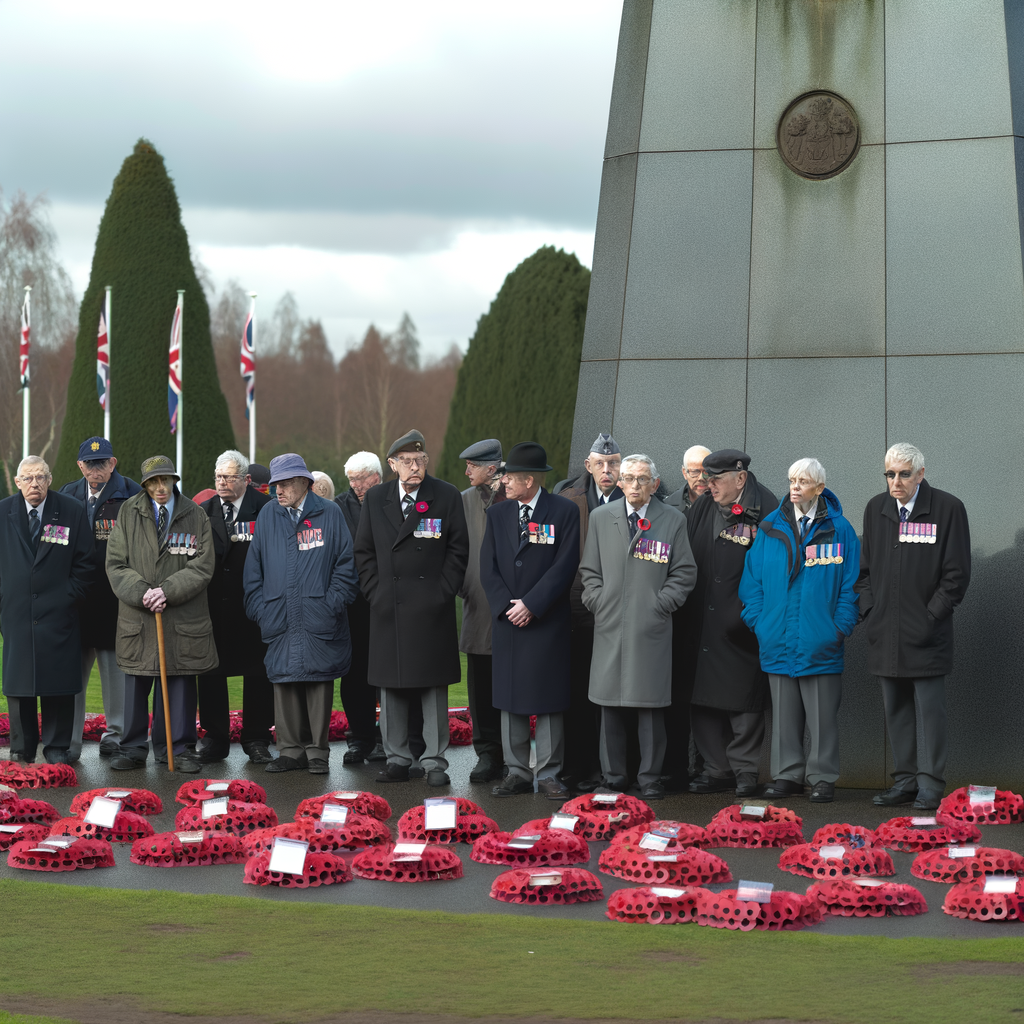
As the world prepares to mark the 80th anniversary of Victory over Japan Day (VJ Day), the story of James Fenton, a 103-year-old Burma Star veteran, offers a poignant reminder of the sacrifices made during the final chapters of World War Two. Fenton, the last surviving Burma Star recipient living on the Isle of Man, served with the Royal Artillery in the treacherous jungles of Burma. His reflections on the war, the challenges of jungle warfare, and the emotional weight of Japan’s surrender provide a rare and deeply human perspective on a conflict often overshadowed by the European front.

Fenton’s journey into military service began in July 1942, when he was drafted into the Lancashire Fusiliers at the age of 20. After completing his basic training, he joined the Royal Artillery and was assigned to the 178th Field Regiment. By February 1943, his unit was deployed overseas, embarking on a voyage aboard the Britannic—a leisure ship repurposed for military transport. The destination was kept secret, though the issuance of tropical gear hinted at their likely deployment.
After a six-week journey that included a stop in Cape Town, the regiment arrived in Bombay (now Mumbai), India. From there, it became clear they would be engaging Japanese forces in Burma. The Burma Campaign, a series of grueling battles that stretched from December 1941 to September 1945, was one of the most challenging theaters of the war. Dense jungles, extreme weather, and logistical hurdles made combat particularly difficult.
Fenton recalled the practical challenges of operating artillery in such an environment. Gun placements had to be carefully chosen to avoid obstruction by trees, and the terrain often dictated the pace and strategy of their advances. Nights were tense but typically quiet, with Japanese forces opting to shell British positions rather than engage directly. “We didn’t very often fire back during the night,” Fenton shared. “It was just a straight occasion, it was the Japanese firing us.”
While celebrations erupted across Europe in May 1945 following the Allied victory there, Fenton and his comrades remained in the jungle, still under fire. The war in East Asia continued, and his unit was soon pulled back into India to prepare for a potential invasion of the Japanese mainland. As an assault unit, they were retrained for this daunting task. The prospect was grim. “That would have been a terrific problem and horrible for us,” he said.
Everything changed on 15 August 1945, when Japan announced its surrender following the atomic bombings of Hiroshima and Nagasaki. For Fenton, the news was more than a historical milestone—it was a lifeline. “We realised if they hadn’t dropped that atomic bomb at that time, if perhaps they had delayed that for three months, maybe four months, we were in a position then to make a landing on the Japanese mainland,” he reflected. “So that fortunately was really a godsend as far as I was concerned because I knew then that I might have survived the war.”
Even after VJ Day, Fenton’s service was not over. His unit was deployed to Singapore as part of the occupation forces. Eventually, he returned to England, sailing through the Channel and disembarking in Liverpool to a warm welcome. The journey home marked the end of a harrowing chapter, but also the beginning of a long silence. Like many veterans, Fenton rarely spoke of his wartime experiences. “Ex-servicemen never ever used to talk about the war,” he explained. Even he and his brother Harry, who landed in Normandy on D-Day, never discussed their respective roles in the war.
Now, decades later, Fenton is preparing to attend a commemorative service at the UK’s National Memorial Arboretum in Staffordshire. The event will honor the 80th anniversary of VJ Day and the veterans who served in the often-overlooked Burma Campaign. Despite his age and health challenges, Fenton is determined to be there. “I thought, I can’t say I’m a fit man and there are many things wrong with me, but I thought well if I can still manage to get there, I’m going,” he said. “So there I am, I’m going.”
I found this detail striking—not just for the resilience it reflects, but for the quiet dignity with which Fenton carries his memories. His story sheds light on the immense human cost of war, particularly in the East Asia theater, which remains less discussed than the battles in Europe. The phrase “Burma Star veteran” carries with it a legacy of endurance, sacrifice, and perseverance under the most trying conditions.
The BBC will broadcast a special program live from the National Memorial Arboretum on Friday, 15 August, between 11:30am and 1:00pm on BBC One and iPlayer, offering the public an opportunity to reflect on the significance of VJ Day and the veterans who made peace possible.