
Abused Rescue Dog Learns To Bark Freely After Years Of Fear
Guest Contributor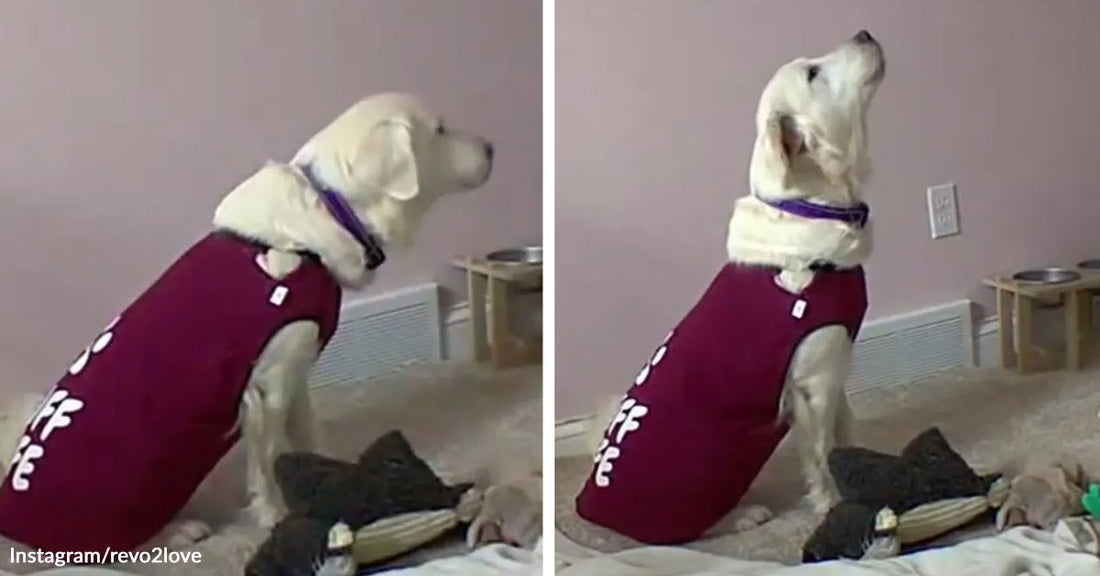
A once-silenced golden retriever is finally learning that her voice is not something to fear. Instead of punishment, she is now met with reassurance, comfort, and celebration whenever she dares to let out a sound. This touching journey from trauma to trust captures why stories about a “rescue dog finding her voice” resonate so strongly with animal lovers everywhere.
Opal, an English cream golden retriever, spent the early part of her life as a breeder dog in a commercial operation. According to her adopter, Dana Martini, Opal lived in conditions that Martini described as torture, abuse, and neglect. The dog was treated primarily as a source of income rather than as a living being with needs and feelings. Once Opal began having small litters, the breeder decided she was no longer useful and surrendered her to a local rescue organization.

That decision, while rooted in the commercial mindset that had defined Opal’s life so far, became the turning point for her future. Martini shared that she was grateful the puppy farm called a rescue instead of ending Opal’s life. By that point, Opal’s experiences included years of punishment for behaviors that are natural to dogs, including barking. A shock collar was used to keep her quiet. Over time, she learned that making noise could bring pain, which taught her to remain silent and fearful.
On November 15, Martini opened her home to Opal as a foster, unaware of just how deeply the dog’s fear ran. The original plan was fostering, yet their bond formed quickly. On December 22, Martini officially adopted Opal, transforming a temporary safe space into a true forever home. From that moment on, the focus was not on what Opal could provide but on helping her heal.
When Opal first arrived, she was terrified of almost everything related to ordinary life. Martini described how the dog recoiled from human presence, touch, and even eye contact. Objects that are typically exciting to most dogs, such as a tennis ball or a food dish, frightened her. Indoor spaces, grass under her paws, the sight and sound of cars, and even the simple offer of a small treat were overwhelming. These reactions reflected a dog who had never been allowed to simply explore, play, and feel safe.
On top of emotional scars, Opal arrived with significant physical health problems. She had untreated ear infections that had led to hearing impairment, as well as a benign growth in her ear canal. Veterinary examinations also revealed a mast cell tumor. Scars around her snout and neck hinted at past trauma, and sores on her feet pointed to prolonged neglect. In the months following her rescue, Opal underwent two major surgeries so that her new family and her veterinary team could address her urgent medical needs.
With those surgeries behind her and her physical health starting to stabilize, Martini began to focus more deeply on Opal’s emotional recovery, including separation anxiety and her near-total silence. This is where one of the most moving moments in Opal’s story took place. An Instagram video that later reached tens of thousands of viewers captured Opal alone in her designated “safe” room just minutes after Martini left the house. Through a pet camera, Martini watched Opal begin to howl.
For many dog owners, a howling dog waiting by the door is a sign of distress and something to worry about. In Opal’s case, Martini interpreted it as a breakthrough. She saw it as the first real moment that Opal felt safe enough to use her voice. After years of harsh correction whenever she barked or vocalized, this tentative howling suggested that Opal was finally willing to communicate how she felt. Martini described it as evidence that the dog was beginning to find comfort in the simple fact that her human was present somewhere nearby in the home.
The video also showed another behavior linked to separation anxiety: Opal digging at the carpet. Martini did not minimize the concern this might bring, but she chose to celebrate the underlying message. Opal was not shutting down or going silent. She was expressing herself, even if her expression still came from a place of fear and uncertainty. This perspective highlights how healing for traumatized animals can come in small, complex steps rather than clear-cut milestones.
Over time, Martini discovered simple ways to reassure Opal when she had to leave for work. One surprisingly effective comfort item was something many dog guardians will recognize. Opal began to sleep with one of Martini’s T-shirts when she was away. The familiar scent seemed to ground her and provide a sense of security. With that soft, worn shirt in her safe room, Opal stopped howling in the same distressed way when left alone. It was a quiet sign of progress that complemented the earlier, louder breakthrough caught on camera.
Opal’s story reached a broader audience through the Instagram account @revo2love, where the howling clip quickly connected with viewers. As of a recent Monday, the video had been viewed more than 48,400 times. The comments section filled with encouragement for this previously silenced dog. One viewer wrote that her howl sounded like a hurricane siren in the cutest way. Another noted how remarkable it was to see how far she had come in such a short time. Several people highlighted how evident her growing bond with Martini seemed, describing Opal as finally starting to trust and feel loved.
I found it striking that something as simple as a howl, which might otherwise be seen as a nuisance, could be reframed as a sign of healing. In Opal’s case, a rescue dog previously punished for barking is now being gently guided to understand that her voice will not lead to pain or rejection. Instead, it signals connection and belonging. Stories like this invite readers to consider how many animals carry invisible histories of fear and how patient, compassionate care can help them rediscover parts of themselves they once had to hide.
Opal’s journey is still unfolding. She continues to adjust to a world where human hands bring kindness, where a room in a house can be a refuge rather than a cage, and where her own sounds are welcomed instead of suppressed. Each small sign of comfort, whether it is resting calmly on a worn T-shirt or letting out a tentative howl, speaks to the power of a loving forever home. For many adopters, this is exactly what makes rescue work so meaningful: not just saving a life, but helping that life feel safe enough to be fully lived.