
Rescue Dog Meets A Neighborhood Cat With Bad Energy And Wants Out Immediately
Guest Contributor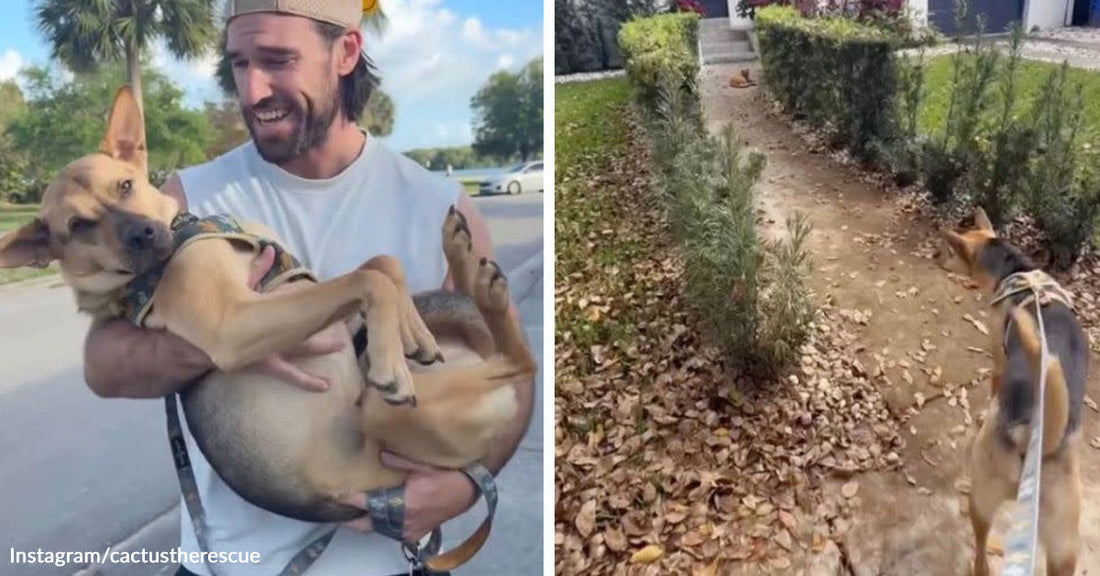
The bond between rescue dogs and their humans is often built on trust, small victories, and the occasional setback. That delicate balance is exactly what shines through in a recent clip of Cactus, a rescue dog who discovers that not every neighborhood cat is as approachable as he might hope. The video, which centers on a rescue dog encountering a scary cat during a routine walk, offers a relatable, slightly humorous snapshot of what can happen when canine curiosity meets feline caution.
In the video shared by @cactustherescue, Cactus is out on one of his regular walks with his person, Mike Brown. Instead of trotting along the sidewalk, though, Cactus is cradled in Brown’s arms like a baby. The quiet road, the easy banter, and the way Brown carries his dog signal a sense of safety and routine. Yet the reason for Cactus’ elevated position quickly becomes clear when Brown’s girlfriend, who is filming, asks whether a local neighborhood cat has spooked him again.

The couple refers to this familiar cat as “orange boy,” and the question immediately sets the scene. Viewers learn that encounters between this rescue dog and the neighborhood cat are part of an ongoing story. Brown replies that orange boy was actually “super chill” that day, a small but meaningful win for a dog still working through uneasy interactions. What unsettled Cactus, he explains, was a different feline altogether, a “black and white boy” who, in Brown’s words, seemed pretty “scary.”
The clip then shifts into flashback mode to show what happened with each cat. First comes the scene with orange boy. In this moment, Cactus approaches cautiously as Brown gently reassures him. Brown points out that the cat is calm and not doing anything threatening. The orange cat’s relaxed posture supports that assessment, remaining composed and unbothered as the dog watches from a polite distance. Cactus, however, still seems torn between curiosity and concern. He does not rush forward to make friends. Instead, he keeps space between them, visibly hesitant even as his human offers support.
I found this detail striking because it captures what many guardians of rescue dogs recognize immediately: progress often looks subtle. Cactus does not transform overnight into a fearless social butterfly. Instead, he inches forward, tests the situation, and retreats when he needs to. That careful dance reflects a dog still learning which encounters are safe and which might be overwhelming.
The second flashback, featuring the black and white cat, has a noticeably different energy. As the new cat appears, its body language appears more guarded. According to Brown, the cat looks “kind of mad,” which is a simple way of describing the tense impression it gives. The feline’s demeanor is enough for Cactus to decide he wants no part of the interaction. Almost immediately, he backs away, clearly uncomfortable and unwilling to push his luck.
Brown reads Cactus’ reaction and the cat’s attitude almost instantly. Rather than urging the dog closer or treating the situation as a test of bravery, he chooses to respect what he is seeing. He quickly tells Cactus that they should leave and does exactly that. For many viewers, this moment may be the quiet heart of the story. The video is light and a bit funny on the surface, with a rescue dog becoming a baby in his dad’s arms after meeting a “scary” cat, yet it also shows a thoughtful choice to prioritize safety and comfort over forcing a social encounter.
According to the caption that accompanies the video, walks like this are a key part of Cactus’ everyday routine. These outings help him explore his surroundings, build confidence, and encounter the unpredictable world beyond his front door. At the same time, that unpredictability is precisely what makes each walk a bit of an adventure. One day, the orange cat may seem daunting. On another day, that same cat can be “super chill,” while a new black and white cat changes the mood entirely.
The contrast between the two neighborhood cats highlights how much depends on context and personalities when dogs and cats cross paths. The orange cat, at least in this instance, offers calmer, more neutral body language. Even so, Cactus processes the scene slowly, watching and evaluating. The black and white cat, by comparison, presents a more intense presence that both Brown and Cactus interpret as less welcoming. Nothing dramatic happens on screen. There is no lunge, no swipe, no growl. Instead, the tension is more about what might happen if boundaries are not respected.
For rescue dog owners, this kind of scenario can feel very familiar. Many dogs who have uncertain pasts, or who are still adjusting to new lives, need time and space to feel secure. They might become startled by another animal’s stare, posture, or proximity. In Cactus’ case, being carried by Brown after the encounter signals both a practical choice and an emotional reassurance. He gets physical distance from the issue and the comfort of being held by someone he trusts.
The video also demonstrates how small decisions on a walk can support that trust. By choosing to leave when the black and white cat appears tense, Brown helps Cactus learn that his discomfort matters. Encounters with other animals do not have to be tests to pass or fail. Instead, they can be experiences that are navigated carefully, sometimes with a confident “let’s keep going” and sometimes with a simple “let’s go home.”
There is a gentle humor in seeing a dog of Cactus’ size being carried like a toddler after meeting a cat that looks kind of scary. At the same time, the short clip hints at a larger story of growth. The orange cat, once apparently more intimidating, is now “mellowed out,” according to Brown. That shift suggests that both Cactus and the cat might be gradually adjusting to one another. Meanwhile, the new neighborhood cat presents a fresh challenge that the pair choose not to confront head on.
Ultimately, this small neighborhood drama reflects the unpredictable nature of cat and dog encounters and the patient work of guardians who guide their pets through them. A rescue dog meeting a scary cat can make people laugh, but it can also remind viewers how important it is to honor an animal’s boundaries, pay attention to body language, and accept that not every introduction will turn into a friendship. Sometimes, success looks like a calm retreat, a safe distance, and a dog being carried home by someone who understands what he needs in that moment.