
Chained Dog Feared For Years Finally Finds The Joy And Freedom He Was Always Denied
Guest Contributor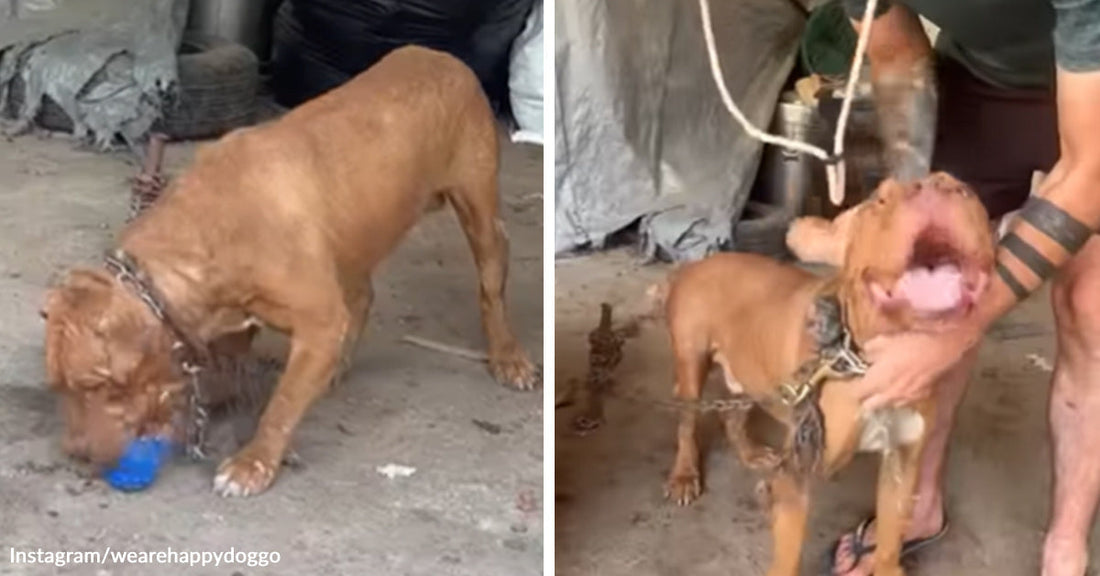
The story of Buster, a so-called “vicious” rescue dog who spent his life on a chain, unfolds as a quiet, uplifting reminder of how powerful compassion can be. In a video shared on Instagram by @wearehappydoggo, the rescue group introduces Buster as a dog once feared by everyone around him, labeled dangerous and left tied up. Yet the moment he is shown in a safe environment, that old story falls apart. Instead of aggression, viewers see a gentle giant leaning in for affection, craving touch more than anything. For anyone who has ever wondered what can happen when a chained dog finally finds a home, Buster’s new life of freedom, car rides, and beach trips offers an inspiring answer.
On-screen text in the video sets the stage for Buster’s journey. It recalls how “they called him ‘vicious’ and left him on a chain” and explains that he “spent his life tied up, feared by everyone.” This is the kind of label that can follow a dog for years and often keeps them from ever leaving the small patch of ground where they are confined. According to the rescue, though, they immediately sensed that there was more to Buster than the warnings suggested. “We saw something different,” the text explains. From the beginning, they suspected that fear and misunderstanding, rather than the dog himself, had shaped his reputation.

The video evidence is hard to argue with. Far from lunging or snarling, Buster appears as a large dog with a soft heart who seems almost to melt under kindly hands. He pushes in close to the people around him, soaking up pets and cuddles with visible relief. His entire posture communicates a simple desire for connection. Scenes of him greeting his caregivers with kisses and quiet affection make it difficult to imagine how anyone could have looked at the same dog and only seen danger. What had been described as a “vicious” rescue dog is, on camera, a living contradiction of that label.
The rescue’s caption adds more detail to what viewers see. The foster parents had been warned about Buster’s alleged temperament, told that he was the type of dog who required extreme caution. Yet as the caption explains, they quickly realized that his reputation had been built on a misunderstanding. He “spent his life on a chain because of a label he didn’t deserve,” the rescue writes, emphasizing that his confinement stemmed from fear rather than observed behavior. When Buster finally arrived in foster care, they say they saw “the truth immediately.” In their words, “There wasn’t a mean bone in his body, just a dog who had never been given a chance to be one.” That framing captures how a lack of opportunity and kindness can conceal a dog’s real personality.
The turning point in Buster’s story is described in simple, powerful terms: it came when “he met Kitty.” The caption does not dwell on every detail of their first meeting, but it is clear that Kitty becomes a central figure in Buster’s transformation. From that moment forward, his life is no longer defined by chains and warnings. Instead, the rescue explains, Buster has been living with Kitty and finally experiencing what a good life can look like. They describe how he is now “trading that chain for car rides, beach days, and ice cream,” a phrase that captures both the heartbreak of his past and the gentle joy of his present. This contrast between a life of restraint and a life of exploration and comfort underscores how dramatically a dog’s world can change when someone believes in them.
The visual difference in Buster is notable. The article points out that if he seems transformed, it is because dogs tend to learn from the lives they are given. A chained dog often endures constant stress, with very limited movement, little mental stimulation, and almost no positive human contact. That environment can make any animal appear shut down, frustrated, or reactive. Yet when the same dog is offered safety, routine, and a person who truly cares, it becomes possible for their real temperament to surface. In Buster’s case, that real self appears to be calm, affectionate, and eager to connect. I found this detail striking because it highlights how behavior can shift so profoundly once basic emotional and physical needs are finally met.
The story also touches on a broader pattern that many rescues and foster families encounter. Labels like “aggressive” or “vicious” are sometimes applied quickly and then treated as permanent. For dogs that spend their lives on chains, those labels may be based more on fear and appearance than on careful observation. When the rescue describes recognizing the truth about Buster “immediately,” it suggests that anyone willing to look with fresh eyes might have seen the same gentle dog. This does not mean every stressed or fearful dog will respond exactly as Buster did, but it underlines an important idea. With patience, structure, and compassion, many animals once dismissed as dangerous reveal themselves to be misunderstood rather than truly threatening.
The closing moments of Buster’s story feel especially meaningful. In the video’s caption, the rescue concludes that “there’s nothing to fear from this gentle giant.” Viewers see him focused on the simple pleasures of his new life, happily attacking only his treats and a playful shark toy. His world has expanded to include fun outings, a trusted human companion, and a sense of belonging. That shift from isolation to inclusion is at the heart of why his story resonates with so many people. It shows that “vicious” can sometimes be another word for “never given a chance.”
Buster’s transformation from a dog tied up and feared to one riding in cars and running on beaches offers a powerful reminder about the impact of environment and kindness. It also gently encourages viewers to question quick judgments about chained or shelter animals. When a dog has lived in a state of constant stress, their best self may not be visible at first glance. Yet as this rescue dog’s journey shows, once safety, love, and everyday joys are part of the picture, a different story can emerge. For Buster, that story is now filled with affection, playful moments, and the steady presence of Kitty, who helped him trade a chain for a real home. Read more at DogTime