
🚨Urgent: Missile Strikes Shelter in Ukraine! Rush Emergency Aid!
Car Breaks Both of This Bobcat’s Legs but Somehow She Runs Wild Again
Guest Contributor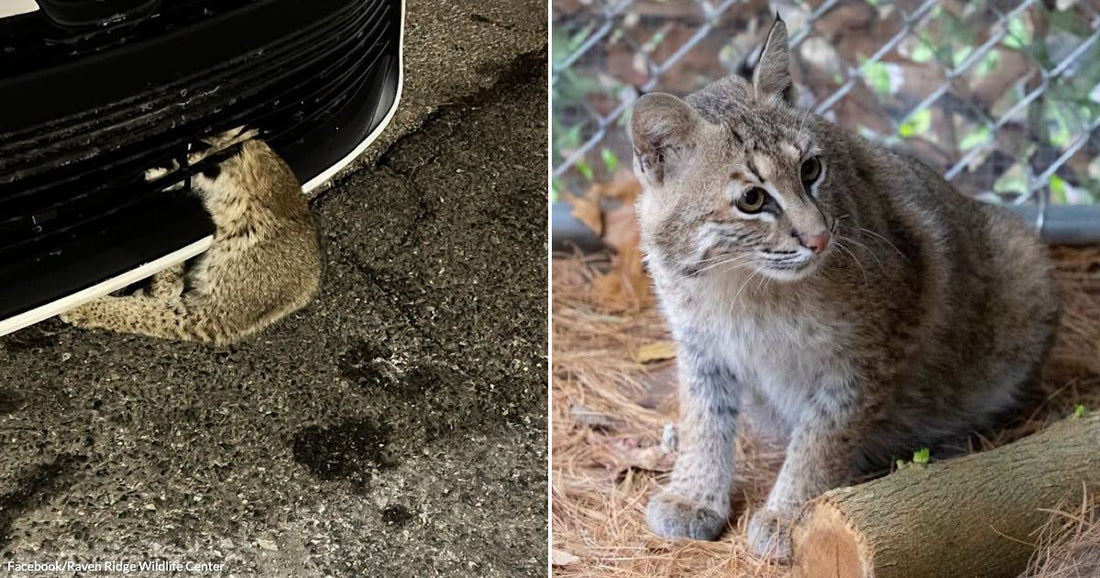
A rescued bobcat that broke both front legs after a car strike in Pennsylvania has now returned to the wild, and her journey from shock and injury to freedom is as moving as it is remarkable. The case, shared by Raven Ridge Wildlife Center, offers a rare, behind-the-scenes look at what intensive wildlife rehabilitation really involves, from emergency care and intricate surgery to custom-built recovery spaces and a community coming together for one injured animal.
According to the wildlife center, the story began on February 15, when a female bobcat was brought to Raven Ridge after being hit by a car in Adams County, more than an hour away from the facility. Staff reported that she arrived in shock and was “clearly in pain,” with both legs appearing to be broken. For a wild predator known for strength, speed, and agility, the sight of a bobcat unable to stand or move normally underscored just how serious the situation was.

The timing made the case even more complicated. The injury occurred on a Sunday, when the center’s regular veterinary office was closed. No nearby practices were able to take on such an unusual emergency. That could have meant a long, dangerous delay in care. Instead, help came from an unexpected direction. An equine veterinarian equipped with a mobile X-ray machine stepped in and traveled to the center. The images confirmed the worst suspicion. Both of the bobcat’s legs were indeed broken.
That confirmation set off a race against time. Wild animals often do not tolerate prolonged captivity or handling, and anesthesia carries real risks, especially when major orthopedic work is required. By 8 a.m. the next morning, the bobcat was in surgery. Veterinarians worked on both legs at once in order to limit how long the animal needed to remain under anesthesia. The operation lasted over four and a half hours, a significant undertaking in any medical setting and particularly intense in the context of wildlife medicine. The center later shared that the surgery was successful, but made clear that repairing the fractures was only the start of a long recovery.

Facebook/Raven Ridge Wildlife Center
Post-surgical care focused first on stability and safety. For two months, the bobcat was kept confined so she could not jump, pounce, or run. For a naturally active and athletic animal, that sort of strict limitation is essential yet challenging. It greatly reduces the risk of reinjury, but it also demands careful observation to reduce stress and ensure that the animal continues to eat, heal, and behave as normally as possible under the circumstances.
When follow-up X-rays and exams showed that her bones were aligned and healing correctly, the next stage of rehabilitation could begin. It was time to transition out of strict confinement toward a space that would let her slowly rebuild strength and muscle. This moment is critical in many wildlife rehabilitation stories. An animal might look outwardly healed, yet still lack the coordination, endurance, and power needed to survive after release.

Facebook/Raven Ridge Wildlife Center
At this point, Raven Ridge Wildlife Center ran into an unexpected barrier. The team shared that this was their first time caring for a bobcat, and they did not have a suitable enclosure that could provide both security and space for controlled exercise. They needed an outdoor cage large and strong enough for a bobcat to move, stalk, and climb as part of a gradual return to normal behavior. Building such an enclosure from scratch would take too long, and a custom dog kennel that could meet the bobcat’s needs was beyond their budget.
The solution emerged through a story that added another emotional layer to the rescue. The wildlife center learned that a loyal supporter had passed away, and a donation had been made in that person’s memory. Staff later discovered that the gift was large enough to fund the creation and delivery of a custom cage that would allow the bobcat to safely exercise outdoors. A memorial contribution, given in honor of someone who cared about wildlife, became the key to the animal’s next step toward freedom.

Facebook/Raven Ridge Wildlife Center
Once the new enclosure was in place, the bobcat began the process of rebuilding muscle tone and testing her newly repaired legs. In a secure outdoor environment, she could move more naturally and regain the agility that defines wild felines. Although detailed daily accounts were not provided, the center reported that after weeks in this space, the bobcat had regained the strength and conditioning needed to survive independently. Each day of safe movement was an incremental step away from trauma and closer to the life she was meant to live.
Eventually the team decided she was ready to return to the wild. Raven Ridge Wildlife Center described the release as a deeply emotional moment and an incredibly humbling rehabilitation experience for the staff involved. They emphasized that watching her run free again was powerful both because of the severity of her original injuries and because so many people had contributed to her survival. From the person who reported the accident to the equine veterinarian with the mobile X-ray unit, from the surgeons who spent hours operating to the supporter whose memorial gift paid for a custom enclosure, every piece of the story reflected a larger network of care.

Facebook/Raven Ridge Wildlife Center
The center’s reflections highlight a truth that often remains invisible behind short headlines about animal rescues. Successful wildlife rehabilitation requires a wide range of expertise, significant financial resources, and an extended commitment over weeks or months. It is not just the emergency surgery that matters, but also the careful confinement to protect healing bones, the design of suitable spaces for rehabilitation, and the ability to assess when an animal is truly ready for release. In this bobcat’s case, each of those elements had to align for her to step back into the wild with a real chance of thriving.
I found this detail particularly striking. The rescue described the case as illustrating that “it takes a village,” a phrase often used in human caregiving contexts. Here it applies just as well to a wild predator that will never know the names or stories of the people who helped her. The bobcat’s journey from roadside trauma to renewed freedom captures not only the resilience of wildlife, but also how individual choices, from volunteering expertise to making a memorial donation, can combine to change the course of one animal’s life.
Her story is a reminder that when local communities support wildlife centers and animal rehabilitation efforts, they are investing in outcomes that may unfold quietly over many months, far from public view. When the cage door finally opened and the bobcat disappeared back into her natural world, it marked the culmination of a long, carefully coordinated effort. For those involved, seeing her free again was not just a satisfying conclusion. It was a powerful affirmation of what compassionate, skilled, and collective action can accomplish.