
🚨Urgent: Missile Strikes Shelter in Ukraine! Rush Emergency Aid!
322 Pound Loggerhead Saved After Brutal Shark Attack
Guest Contributor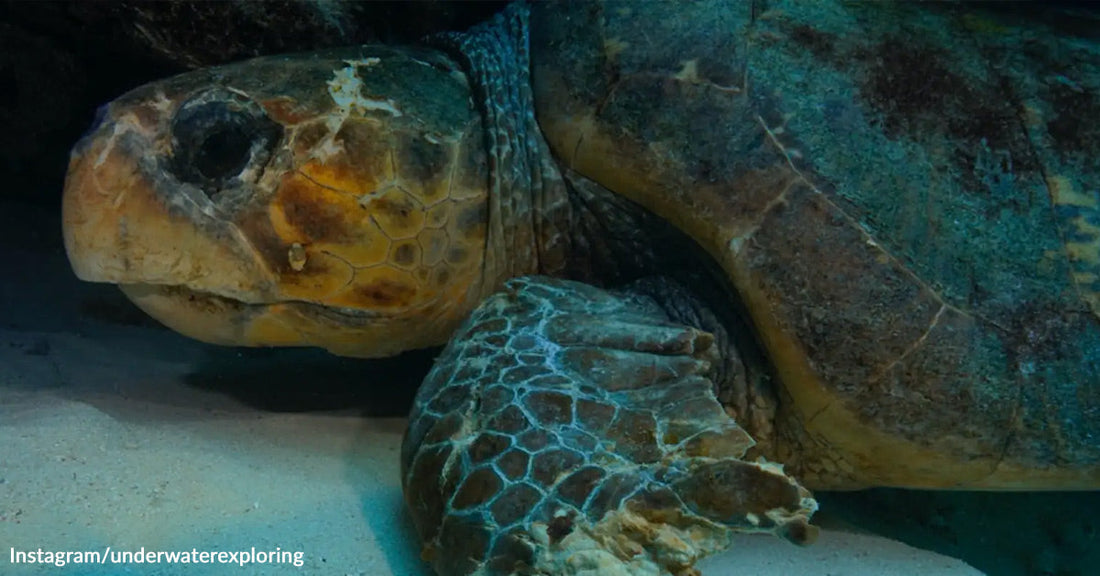
When diver and underwater photographer Mike Papish spotted a massive shape resting on the sea floor in the Florida Keys, he quickly realized something was wrong. The animal was a huge loggerhead sea turtle, later nicknamed Lenny, and he was clearly in trouble. One of his front flippers was partially missing, he was not using it to swim or move, and he had visible wounds on his head. For an endangered sea turtle, especially one of Lenny’s size and age, every moment mattered. Stories like this highlight how fragile ocean life can be, and how much difference human intervention can make in sea turtle rescue.
Papish later explained that Lenny’s injuries appeared to be from a shark attack. Out in the open ocean, such encounters are a natural part of life, but the damage to Lenny’s flipper and head put him at serious risk. Even so, the first challenge was surprisingly practical. Lenny was enormous, weighing in at about 322 pounds, roughly the size and weight of a small grand piano. Helping a distressed wild animal is one thing in theory. Lifting a 322 pound sea turtle from the ocean floor and safely getting him to shore turned out to be another challenge entirely.

Instagram/underwaterexploring
Papish did not work alone. Divers from Sundance Watersports joined in, and it took the combined strength and coordination of the team to guide Lenny up from the sea floor and onto their boat. Once they managed to get him onboard, they realized the hard part was not over. Lenny was powerful, disoriented, and far from tame. The crew needed to keep him secure and safe without causing more stress or injury. They improvised a barrier using three gigantic ice chests filled with ice, trying to create a makeshift pen around him. Even these heavy barriers were no match for a determined loggerhead. Papish recalled that Lenny could swat them aside, and in the end all four rescuers had to sit on the ice chests, forming a human and cooler barricade around the injured turtle for the journey back to shore.
On land, Lenny was brought to The Turtle Hospital in Marathon, Florida. This nonprofit facility has been dedicated to rescuing, rehabilitating, and releasing sea turtles in the Florida Keys since 1984. Over the decades, the team has treated more than 3,000 sea turtle patients. Even with that wealth of experience, Lenny stood out immediately. Hospital manager Bette Zirkelbach described his arrival as truly remarkable, explaining that he was the largest loggerhead sea turtle she had ever seen in her 13 years managing the facility.

Instagram/underwaterexploring
Once admitted, Lenny received intensive medical care. The staff gave him fluids to stabilize him, treated his open wounds, provided antibiotics to prevent infection, and used laser therapy to support healing. While the technical details of such care are specialized, the goal was simple. They needed to give Lenny the best chance to recover enough strength and mobility to survive back in the wild. Rehabilitation for a sea turtle of his size involves careful monitoring of his ability to swim, dive, and surface to breathe. A damaged flipper can affect how well he can navigate currents, forage for food, or escape predators.
What surprised many was how quickly Lenny responded. After just two weeks at The Turtle Hospital, he was medically cleared for release. This timing mattered for more than just his individual story. Zirkelbach pointed out that it was mating season in the Florida Keys. Loggerhead turtles are listed as an endangered species, and every mature individual can be vital to the species’ survival. Lenny, estimated to be between 60 and 70 years old, had reached reproductive maturity. Returning him to the ocean did not only give him a second chance at life. It also supported the long term health of his species.
Sea turtles play an important role in the marine ecosystem. Papish noted that they help keep seagrasses in check by grazing, in a way that resembles cows feeding in a field. Without that grazing pressure, seagrass can overgrow. When that happens, it can smother coral and damage reef habitats that many other species depend on. A single large turtle like Lenny is part of a much larger ecological puzzle. His presence on the reef, his movements between feeding and resting areas, and even his mating behavior contribute to the balance of the ecosystem around him.
In late March, after his treatment and recovery period, Lenny returned to the same waters where he was first found. Staff from The Turtle Hospital and members of the community were able to witness his release. Zirkelbach described watching him head back into the ocean as the best feeling, a moment that captured the mission of the hospital. The sight of such a large, once injured animal powering through the water again emphasized how effective focused rehabilitation can be when people intervene thoughtfully and in time.
The story did not end there. Since Lenny’s release, Papish has encountered him several times, most recently in early June. Each new meeting offered a glimpse into Lenny’s continued recovery. Papish observed that Lenny moves with more strength every time he sees him. The injured flipper appears to be gaining function, and Lenny’s swimming is stronger and more confident. Even the way he surfaces to breathe has changed. On the day of his release, he seemed to struggle. In later encounters, he rose with more ease and assurance, a sign that his overall condition continues to improve.
Beyond the physical recovery, Lenny also seems to have a distinct personality. Papish described him as curious and a little playful. On several occasions, Lenny has swum directly beneath the boat where snorkelers are watching, making a slow, deliberate lap that allows everyone a clear view. After that brief interaction, he returns to deeper waters. These moments offer a rare and respectful glimpse into the life of a wild sea turtle who has survived both natural predators and serious injury, and who now continues to roam his home waters.
I found it striking how many people played a part in Lenny’s journey, from the initial discovery on the sea floor to the complex rescue, the specialized hospital care, and the quiet joy of seeing him thrive again. Stories like Lenny’s remind us that marine conservation is not only about distant policies or anonymous populations. It is also about individual animals whose lives reflect the broader health of our oceans. Each successful rescue and release represents years of experience, collaboration, and commitment, and in Lenny’s case, it also means one more powerful, mature loggerhead turtle contributing to the future of his species and the balance of the reef he calls home. Read more at https://www.thedodo.com