
Dog Found With Horrific Wounds On His Back Fights His Way Into A Life Filled With Love
Guest Contributor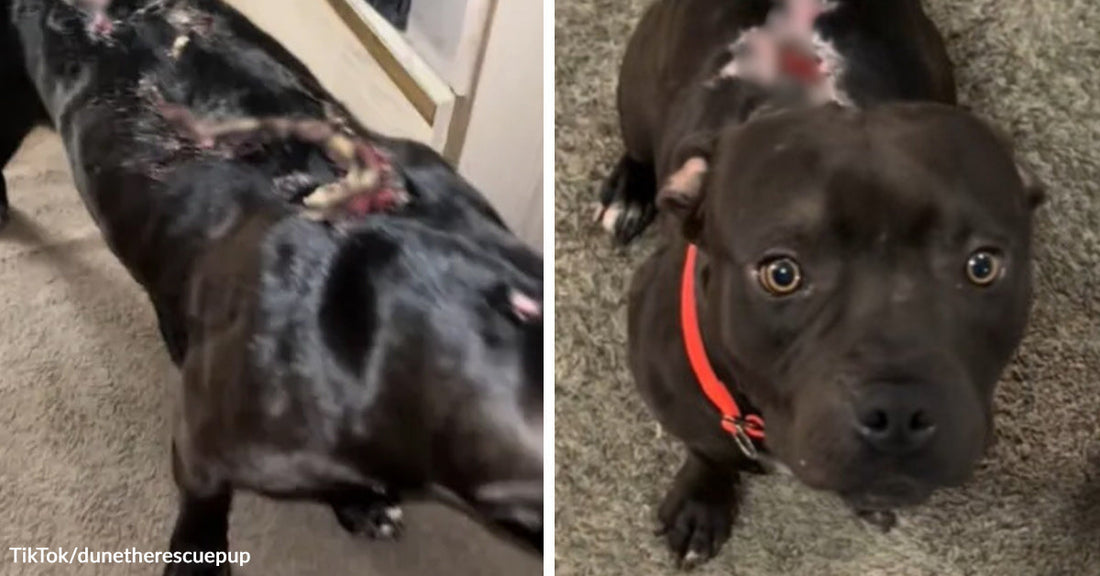
The viral TikTok video of a pit bull named Dune has been stopping people mid-scroll, and it is not hard to see why. The clip opens with a shot of the black dog’s back, torn and raw from severe wounds, his skin visibly peeling away. It is the kind of image that makes viewers flinch. Yet the same video also captures his transformation and his tentative joy in a new home, turning a moment of horror into a story of animal rescue, resilience, and quiet kindness.
Dune was discovered in June by a man on his way to trucking school. According to what he told Newsweek, he came across the injured dog and quickly realized no one else could take him. Faced with the choice of leaving Dune there in obvious pain or stepping in, he decided to act. On his lunch break he brought Dune home, offered food, and gave him a bath, likely the first gentle touch the dog had felt in a long time.

From there, Dune’s recovery began at home rather than in a shelter or clinic. The new owner explained that he has been feeding Dune, cleaning his wounds, and giving him patient, consistent care. Over time, the dog has made what he described as “pretty much a full recovery.” The TikTok account @dunetherescuepup documents this journey in a way that feels both raw and hopeful, allowing millions of people to witness the power of everyday compassion.
The most striking part of the viral video is the stark before-and-after contrast. Initially, Dune’s back appears almost unrecognizable as healthy skin. The wounds look deep and extensive, clearly the result of severe trauma. In a more recent clip, the same area has largely healed, with smooth, pinkish skin standing where the worst of the injuries once were. The fur has not yet grown back, which serves as a visible reminder of the abuse or neglect he endured, yet the improvement is undeniable. Dune’s body is literally knitting itself back together under the care of a human who chose not to look away.
Emotionally, healing can be slower. The owner says Dune is still timid at times, especially when going outside, an understandable response for a dog who associates parts of the world with pain. At the same time, Dune reportedly loves his new home, a place where he receives food, safety, and affection rather than fear. That mix of lingering anxiety and emerging trust is a familiar pattern for animals who have experienced trauma. Behavioral experts often emphasize that with patience, predictable routines, and gentle handling, many dogs can learn to feel secure again even after profound mistreatment.
Dune’s story is heartbreaking partly because it is not an isolated case. The article notes that an estimated 10 million animals die from abuse or cruelty every year in the United States. Animal cruelty can include intentional acts such as beating, burning, poisoning, or torturing. It can also involve organized exploitation, including animal fighting and other forms of deliberate harm. In some situations, abusers use violence toward pets as a way to intimidate or control people, a dynamic that has been recognized by advocates and legal professionals alike.
While most states have felony-level animal cruelty laws, many activities remain exempt. Research settings, some forms of euthanasia, farming, hunting, pest control, and rodeos often fall outside the scope of these statutes. This legal patchwork can leave gaps between what many people find morally distressing and what is explicitly illegal, even as public awareness of animal suffering continues to grow.
The National District Attorneys Association describes animal neglect as another facet of cruelty that focuses on what is not done, rather than what is. Neglect includes failing to provide basic needs such as food, water, shelter, or necessary medical care. It also covers abandonment, hoarding situations where numbers of animals overwhelm the ability to provide adequate care, and operations such as puppy mills that prioritize profit over welfare. Every state prohibits neglect on paper, yet enforcement often proves difficult.
One reason cruelty and neglect cases can be so challenging is that they frequently rely on circumstantial and forensic evidence. Animals cannot testify about what happened to them, so investigators and prosecutors must rely on injury patterns, witness statements, and expert opinions. Large-scale seizures are expensive, requiring space, veterinary care, and long-term housing. Community reactions can be intense and emotional, especially when beloved species like dogs are involved. This combination of financial cost and public scrutiny means that local authorities need specialized training and resources to investigate and prosecute cases thoroughly.
Dune’s injuries clearly suggest that something went terribly wrong in his past, even if the video does not provide answers about who was responsible or how it happened. The visible damage to his back fits the broader pattern of extreme harm that animal welfare organizations and law enforcement agencies encounter. When a case like his surfaces online, it can serve as a reminder that cruelty is not abstract. It has a face, a name, and in Dune’s case, a wagging tail.
The emotional response to Dune’s transformation video has been overwhelming. With 8.4 million views, 1 million likes, and more than 13,000 comments, the TikTok post has resonated with people across the platform. Many viewers say they find it difficult to even look at the initial footage because they can almost feel the dog’s pain. Comments ask what kind of person or situation could have caused injuries so severe, often expressing a mix of sorrow and anger. One detail that has touched many is Dune’s tail, which was reportedly still wagging even when he was clearly in agony. That small movement speaks volumes about a dog’s capacity for hope and connection, even amid suffering.
Experts point out that dogs can remember past trauma. Fear responses, nervousness in certain environments, or hesitation around specific triggers may linger long after their bodies have healed. Yet Dune’s story aligns with what many animal behavior professionals have observed for years. With time, consistency, and compassion, many previously abused dogs learn to trust again. The process is not instantaneous. It involves building routines, using positive reinforcement, and allowing the dog to approach at their own pace rather than forcing interactions. Over weeks and months, those small moments of safety can accumulate into genuine comfort.
Stories like Dune’s spread so quickly on platforms like TikTok because they tap into something deeply human: the desire to see suffering transformed into safety. While the initial images are distressing, the narrative arc from injury to recovery, from fear to a measure of peace, offers a form of emotional resolution. There is no way to undo what happened to Dune before he was found on that day in June. What his new owner could do, and did, was meet that reality with action and care. That choice, documented in a short video, has now inspired millions of viewers to think more seriously about animal cruelty and the healing power of everyday kindness.