
Neglected Dog Panics During Storm After Years Left Outside Alone
Guest Contributor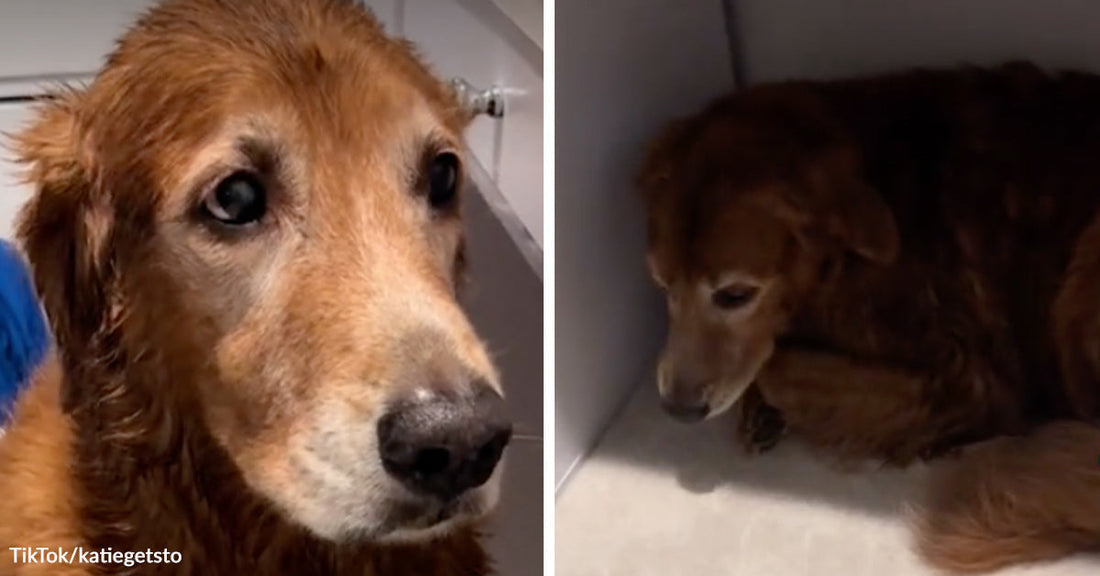
Some stories about rescue animals land with a quiet kind of heartbreak. A recent TikTok video of a senior golden retriever named Mako did exactly that, capturing how a decade of neglect can echo in a single moment. The clip, which highlights a dog’s fear of thunderstorms after years spent living outdoors, has moved viewers and sparked wider conversation about storm anxiety in dogs and what loving owners can do to help.
In the video, originally shared by TikTok user @katiegetsto, Mako is seen retreating into his new mom’s walk-in closet as thunder rumbles outside. This is not the carefree, goofy golden retriever image many people might expect. Instead, the senior dog tucks himself under a dressing table, his safe spot deep inside the house while the storm rages beyond the walls. The overlay text explains the scene simply: “Newly adopted golden hides during thunderstorm in walk in closet.” His adopter joins him on the floor, staying close as he rides out his fear.

The caption gives a glimpse into Mako’s past. According to the post, Mako spent almost 10 years living outside, left alone through the elements. For a dog, that kind of chronic exposure can leave a lasting imprint, especially when it comes to loud, unpredictable weather. The creator notes that “thunderstorms are particularly hard for him,” and adds a hopeful detail that resonated widely: Mako has discovered that what his new mom calls her “happy place” is now his sanctuary too. The simple act of sharing a closet, once a purely personal escape, has become a shared refuge for both person and dog.
The clip struck a nerve online and quickly went viral, drawing more than 267,000 views and over 56,000 likes. Viewers recognized in Mako’s behavior a mix of trauma, resilience, and the healing potential of a stable home. Many comments reflected on similar experiences with adopted seniors and rescue dogs with storm anxiety. One user shared that their own senior rescue hides under the bed whenever thunder starts, and described them collectively as “poor babies,” a phrase that summed up the compassion running through the replies.
Other commenters focused on the human choices that lead to an animal like Mako being left outside for so long. One person expressed disbelief that anyone could walk away from such a gentle face, while another admitted they cannot go even a few minutes without checking in on their dog at home. These reactions helped underline the emotional contrast at the heart of the video: years of neglect followed by the intense devotion of a new household determined to make an anxious dog feel safe.
Mako’s story also highlights a broader reality. Many dogs fear thunderstorms, even those that have never lived outdoors or experienced direct abuse. Veterinary Specialists of the Rockies notes that canine storm anxiety often arises from a combination of factors, including noise aversion, separation anxiety, and even static electricity. Thunder itself is an obvious trigger, but the picture is more complex than loud sounds alone.
Some dogs have a genetic tendency toward noise phobias. Herding breeds such as Border collies and Australian shepherds are often cited as examples, and individual dogs within any breed can be more sensitive than average. For these dogs, thunder, fireworks, or even loud household sounds can cause an outsized surge of fear. That fear can manifest as hiding, trembling, pacing, drooling, or attempts to escape a room or even a house.
Another lesser known factor in thunderstorm fear is static electricity. During storms, static can build up in a dog’s coat. When they touch metal objects, that buildup can discharge as tiny shocks. For larger or double coated breeds, that repeated discomfort may be a powerful and confusing signal that something is wrong whenever a storm moves in. It is not hard to imagine how a dog that cannot understand the cause would start to associate the entire event, from the darkening sky to the rolling thunder, with distress.
Environmental cues also matter. Dogs are sensitive to changes in barometric pressure, wind, and light. Some may begin to react before the first crack of thunder, pacing or clinging to their owners as the storm approaches. If a dog already struggles with separation anxiety, these sensations can make being alone feel even worse. For many anxious pups, the fear is not only about the storm but also about whether their person is close enough to help.
Experts recommend a few practical steps for anyone living with a dog that fears storms. Creating a safe, grounded space can make a meaningful difference. This might be a quiet inner room, a crate if the dog already sees it as a positive den, or a closet like the one Mako chose. The key is consistency. Over time, if a dog repeatedly experiences that space as calm, dark, and predictable during storms, it can become a cornerstone of their coping strategy.
White noise machines or fans can help mask the worst of the thunderclaps, while some owners experiment with clothing and gear designed to reduce anxiety. Antistatic jackets, for example, aim to minimize the static buildup that may contribute to storm-related discomfort. Other calming tools, such as snug wraps or familiar blankets, can add an extra layer of reassurance if introduced gently and paired with positive experiences.
When fear remains intense or appears to worsen, consulting a veterinarian is an important step. A professional can help identify whether a dog’s reaction points to a severe phobia, discuss behavioral strategies, and, when appropriate, suggest medications or supplements. For many families, this combination of environmental changes, training guidance, and medical support offers the most humane path toward easing their dog’s distress.
Mako’s viral moment in the closet is a snapshot rather than a full biography, and Newsweek, which reported on the video, notes that it could not independently confirm every detail of his background. Even so, the scene resonates because it reflects a dynamic many people recognize: a once overlooked animal learning to trust that the world has changed. It is a quiet, unpolished example of what adoption can look like in the everyday, not just the first joyful ride home but the long work of undoing fear, one storm at a time.
For those moved by Mako and by other rescue stories, sharing responsible, real-life experiences of animal care can be a powerful way to advocate for compassionate treatment. Videos, photos, and written accounts help keep attention on the emotional lives of animals that depend completely on human choices. The hope is that, over time, fewer dogs will spend their entire lives outside and more will discover, as Mako has begun to, that there is always room for them in the safest corners of the home. Read more at Newsweek