🚨Urgent: Missile Strikes Shelter in Ukraine! Rush Emergency Aid!
Opossum Named Ruby Survives Being Struck by a Car and Gets a Second Chance at Life
Guest Contributor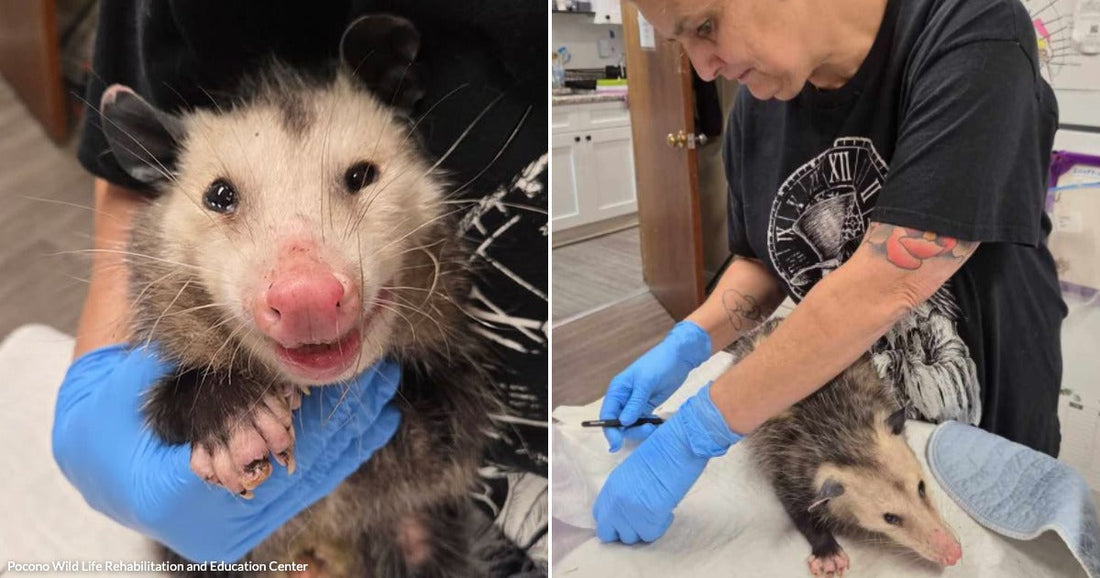
On a quiet roadside in Pennsylvania, an injured Virginia opossum lay for hours, unseen by most drivers and unable to move. Her rescuers would later name her Ruby. What began as a simple animal rescue turned into a deeply affecting story of maternal devotion, loss, and the fragile line between tragedy and hope for injured wildlife.
According to the Pocono Wildlife Rehabilitation and Education Center in Stroudsburg, a woman driving to work first spotted Ruby lying on the side of the road, apparently struck by a car. She did what many compassionate people might consider in that moment. Not wanting to leave the animal in obvious distress, she contacted a friend and asked him to pick the opossum up and take her to safety. Even as she tried to continue on with her day, she reportedly had a lingering sense that something about the situation was not right.

Hours later, that uneasy feeling pulled her back. She returned to the same stretch of road to check on the opossum, perhaps hoping she had been picked up or at least moved. Instead, Ruby was exactly where she had been earlier, still lying on the roadside, still injured, and still waiting for someone to help her. This time, the woman did not leave her fate to chance. She picked up the opossum herself and brought her directly to the Pocono Wildlife Rehabilitation and Education Center.
The center’s team took Ruby in and began to assess her injuries. The situation was already serious enough. She appeared to have head trauma and was quiet and withdrawn, signs that often point to significant neurological impact in wildlife. Yet, as the caregivers examined her more closely, they discovered something that made her story even more heartbreaking. Ruby had mastitis, a painful inflammation of the mammary glands, and three of her nipples were actively producing milk.
Ruby was not just an opossum struck by a car. She was a nursing mother.

Pocono Wild Life Rehabilitation and Education Center
Staff at the center shared that evidence of milk production typically indicates that a Virginia opossum has dependent young. Based on their experience, they estimated Ruby may have been caring for about three babies before the accident. With this species, once the young outgrow their mother’s pouch, they often ride on her back as she forages and moves through her environment. It is a familiar yet fragile arrangement. A single car strike can injure or kill not only the adult but also the tiny animals clinging to her fur.
In Ruby’s case, the center noted that they had no way to know what happened to her babies after the impact. They may have been thrown from her back or separated on the road. The caregivers described this unknown as the part of the story that was most devastating. Losing a wild animal is difficult enough for those who dedicate their lives to rehabilitation. Imagining the fate of dependent young that cannot be found adds another layer of sorrow.

Pocono Wild Life Rehabilitation and Education Center
The organization shared Ruby’s story publicly, writing about her on social media in a way that conveyed how deeply she had affected them. They explained that, although they try not to humanize wildlife, certain animals carry an emotional weight that is hard to ignore. Ruby, they said, felt “heavy.” Her injuries, her status as a nursing mother, and the long hours she spent alone on the roadside combined into a portrait of quiet, unspoken suffering. I found this detail striking, because it echoed how often the hardest stories are the ones we do not immediately see.
Despite the grim circumstances, Ruby’s rescue also illustrates what effective wildlife rehabilitation can look like once an injured animal reaches care. At the center, she now has warmth and shelter instead of cold pavement. She has pain management to relieve her physical suffering, supportive care tailored to her condition, and access to food. Perhaps just as important, she has people checking on her, monitoring her progress, and giving her what the center described as a chance.
That phrase captures the quiet hope at the center of this narrative. Wildlife centers like the one in Stroudsburg routinely handle thousands of injured animals each year, from common species like the Virginia opossum to less frequently seen birds and mammals. Their work rarely makes headlines, yet each case represents a life that might have ended alone on a roadside or in a backyard. Ruby’s story shows how one driver’s decision to act can open the door to expert care and, potentially, recovery.
The details of Ruby’s condition also highlight how much is involved in treating roadside wildlife injuries. Head trauma can manifest in subtle ways, such as unusual quietness, confusion, or unresponsiveness. In a wild animal that cannot communicate its pain, caregivers must rely on behavior, physical signs, and experience to design an appropriate treatment plan. Mastitis adds another layer of complexity, as it is both painful and closely connected to the animal’s recent maternal role. Together, these factors make Ruby’s recovery uncertain but not impossible.
Stories like this can prompt reflection on how drivers and community members respond when they encounter an animal in distress. The woman who first saw Ruby did not simply avert her eyes and move on. She tried to find help through a friend, then followed her intuition when something felt unresolved and went back to check. Her persistence changed Ruby’s trajectory from prolonged suffering on the roadside to professional veterinary and rehabilitative care. In many regions, wildlife rehabilitators encourage people who find injured animals to contact licensed centers directly for guidance, since each species and situation requires a specific response.
Ruby’s case also underscores why nonprofits that focus on wildlife rehabilitation frequently ask for donations. Providing medical treatment, specialized food, safe housing, and long term care for thousands of animals is resource intensive. When the Pocono Wildlife Rehabilitation and Education Center shared Ruby’s story, they used it to help explain the scale of their work and the ongoing need for community support. Every injured animal that reaches them uses supplies, staff time, and medical expertise, yet each is given a genuine effort at survival.
There is a somber tone to Ruby’s experience, especially given the unresolved question of her missing babies. At the same time, there is a modest but real sense of hope in knowing that she is no longer alone. She now represents not only a single opossum struck by a car but also a reminder of the countless wild animals whose lives intersect with human roads and human choices. Ruby’s story invites a more attentive way of sharing space with wildlife, one that recognizes their vulnerability and the small but meaningful actions that can help.
Read more at https://www.aol.com/articles/opossum-named-ruby-struck-car-180404000.html