
💜 Thanksgiving Food Drive for Shelter Pets Help Us Feed 1 Million Shelter Pets!
A Tiny Orphaned Bear Cub Wanders a British Columbia Town as Winter Closes In
Guest Contributor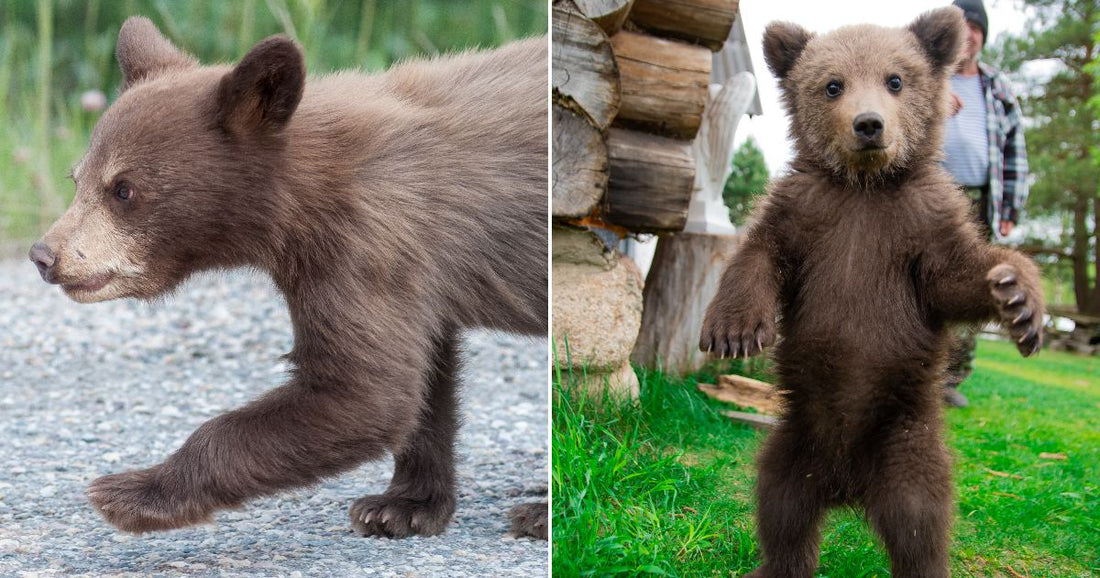
In the mountain community of Pemberton, British Columbia, residents are watching a small drama unfold that feels both intimate and urgent. A lone black bear cub has been roaming the town for months, quickly becoming known as “Spud the Cub.” The story captures a growing tension between local compassion and provincial wildlife policy, and it raises complex questions about human responsibility, bear safety, and what “leaving wildlife alone” really means. For anyone who cares about orphaned wildlife or black bear cub rescue efforts, Spud’s situation is both compelling and concerning.
Local resident Laurie Cooper first noticed the cub in mid October. She and others in the neighborhood soon realized that the little bear appeared to be alone. According to Cooper, a neighbor said the cub had been sleeping in one of his trees night after night without any sign of a mother nearby. In a place where encounters with bears are not unusual, that detail stood out. A young black bear spending nights alone in a tree, dropping in and out of residential spaces, was a clear sign that something was not right.

As the weeks passed and winter drew closer, concern in Pemberton deepened. Cooper and others pointed out that a cub this small would typically den with its mother through the winter, relying on her body heat and protection. Without that support, the cub must fend for itself at a time when temperatures drop and food becomes scarce. Cooper worried that the bear was simply too small to survive hibernation. Residents began to wonder whether a wildlife rescue would step in before the coldest months arrived.
Several rescue organizations did in fact offer to help. Among them was the Northern Lights Wildlife Society, a group that specializes in rehabilitating bears and other wild animals. Co-founder Angelika Langen explained that her team was ready to capture the cub, transport it to their facility, provide the necessary care, and eventually return it to the wild in a release area designated by provincial authorities. She emphasized that they were not asking the province for funding or extra staff, only for official permission from a provincial wildlife biologist to proceed.

So far, that approval has not come. The region’s wildlife biologist has not signed off on a rescue, and without that authorization, rescue groups cannot legally intervene. In a written statement, the B.C. Conservation Service acknowledged public concern and described the current approach. The agency said the cub is not considered a threat to public safety at this time. It added that while people may want to protect and help the bear, the best course of action is for residents to leave the cub alone so it can remain wild and avoid becoming habituated to humans.
Langen and others see the situation differently. She estimates that Spud weighs around 20 pounds, which is far below the weight that many experts consider ideal for a cub entering hibernation. She expressed skepticism about suggestions that a bear that young and small could successfully survive the winter without its mother. According to Langen, any science that claims such cubs can routinely make it on their own is, in her view, more anecdotal than evidence based. Based on her experience with similar bears, she believes this particular cub will not survive the winter if left entirely to fend for itself.

This difference in perspective creates a difficult stalemate. On one side, conservation officials stress minimal interference and the importance of keeping wild animals wild. On the other, local residents and bear rehabilitation advocates argue that a targeted, time-limited intervention could give the cub a real chance at survival. Rescue teams such as Northern Lights Wildlife Society also face their own constraints. Langen shared that some people in Pemberton have urged her group to simply retrieve the cub without formal permission, but she said they cannot risk their operating permits by breaking provincial rules. “That’s not how it works,” she explained, underscoring that even deeply motivated rescuers must follow regulatory frameworks.
For people in Pemberton, Spud the Cub represents more than just an isolated wildlife case. Cooper voiced a sentiment that many residents share. She noted that young bears are often orphaned as a result of human activities. Their mothers may be struck by vehicles or euthanized after conflicts around garbage, crops, or residential areas. When that happens, the orphaned cubs are left to navigate a world shaped by human decisions and infrastructure. Cooper suggested that if humans may have played a role in the mother’s disappearance, the community has at least some moral responsibility to consider the cub’s welfare.
At the same time, everyone involved appears to be trying to act in a way that supports long-term wildlife health. The B.C. Conservation Service emphasizes that a bear that becomes too comfortable around people can be at greater risk of future conflict and potentially lethal outcomes. Rehabilitators argue that structured care followed by a carefully managed release can produce healthy, wary bears that avoid humans and live full lives in the wild. Both approaches claim to prioritize the bear’s best interests, yet in cases like Spud’s, those priorities lead to starkly different recommendations.
In the middle of this stands a small bear, circling a town that has come to care about its fate. The cub’s nickname reflects that sense of local identity and affection. Pemberton is sometimes called “Spud Valley” thanks to its long association with potato farming. Residents extended that heritage to the little bear, calling him Spud the Cub and turning him into a kind of unofficial mascot for their concern about orphaned wildlife.
Stories like this one do not always end with a clear resolution. Whether or not the province eventually authorizes a black bear cub rescue in Pemberton, the situation has already sparked a larger conversation. It asks communities to think about how close they live to wild animals, how everyday actions affect those animals, and where the line sits between necessary protection and respectful distance. I found this detail striking: everyone involved believes they are doing what is best for wildlife, yet their paths forward diverge sharply. Spud’s story brings those tensions into sharp, personal focus, turning abstract policy debates into a single, shivering cub in a tree as winter closes in. Read more at https://www.ctvnews.ca/vancouver/article/pemberton-bc-residents-plead-with-province-to-allow-rescue-of-orphaned-black-bear-cub/