
🚨Urgent: Missile Strikes Shelter in Ukraine! Rush Emergency Aid!
Revolutionary War Soldiers’ Remains Identified Through Forensic Genealogy Effort
Guest Contributor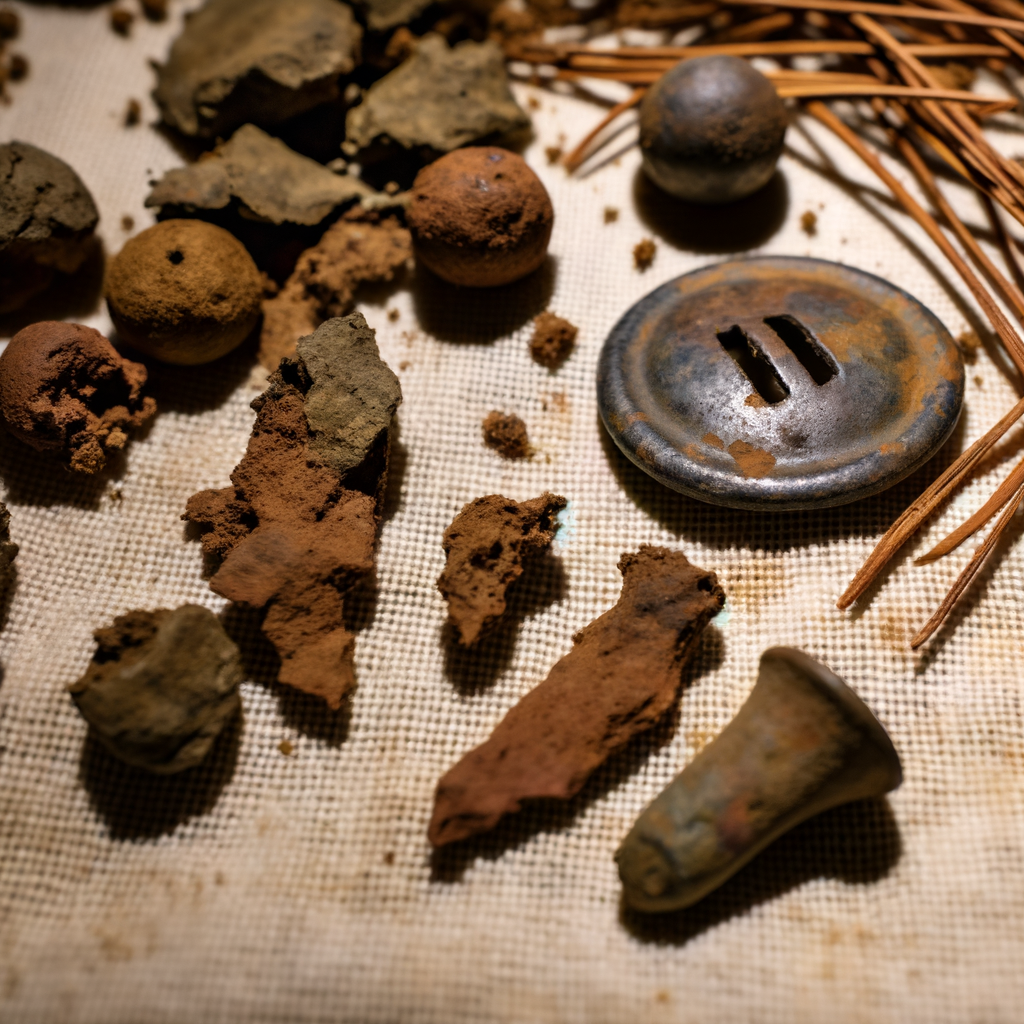
Deep in the pine forests of Camden, South Carolina, a quiet revolution is taking place — not of muskets and marching feet, but of science, memory, and respect. Archaeologists and forensic genealogists are working together to identify the remains of Revolutionary War soldiers discovered in shallow battlefield graves, more than two centuries after they fell. The effort to restore the identities of these long-lost individuals is a powerful reminder of the human cost of America’s founding and the importance of honoring those who came before us. I found this detail striking: the remains of soldiers who died in 1780 are now being traced through modern DNA techniques, bridging centuries through science and compassion.

The Battle of Camden, fought on August 16, 1780, was one of the most devastating encounters of the American Revolution. General Horatio Gates led the Continental Army against British forces commanded by General Lord Cornwallis. The result was a catastrophic defeat for the Americans, with nearly 2,000 troops killed, wounded, or captured. According to archaeologist Jim Legg, who has spent decades studying the battlefield, the fighting was close and brutal. “All parties fought stubbornly and exchanged musket fire at close range,” he recalled. “It was a disaster for the Americans.”
Although the battle is mentioned in history books and dramatized in films like “The Patriot,” the exact locations of many key events remained uncertain until Legg and his colleague Steve Smith from the South Carolina Institute of Archaeology and Anthropology began their work in the 1990s. Their methodical surveys eventually led to a remarkable discovery: a uniform button that pointed to a burial site. Beneath the soil, they uncovered five sets of human remains. Soon after, nine more were found nearby. These were not formal cemeteries, but hurried battlefield burials — the final resting places of soldiers who died where they fell.
The remains included men from both sides of the conflict: Continental soldiers, a Scottish Highlander, and even a Native American fighter. Their identities, however, were lost to history. That’s where forensic genealogy entered the story. Allison Peacock, president of FHD Forensics, described the project as “the ultimate cold case.” Her team uses a combination of DNA analysis and genealogical research to trace the family lines of unidentified individuals. The challenge in this case is immense: the bones are more than 240 years old.
Despite the age of the remains, Peacock’s team has already made significant progress. They have built genetic profiles for two individuals, labeled 11A and 9B. Each profile yielded more than 25,000 living genetic matches — far more than the 3,000 to 5,000 typically seen in modern unidentified remains cases. One of them, 9B, was determined to be a teenager at the time of his death, with family roots in the Anne Arundel area of Maryland. The team has narrowed their search to a few surnames, including Warfield and Griffith, and is encouraging potential descendants to contribute DNA samples through the Revolutionary War Forensic Institute.
This effort to identify Revolutionary War remains through forensic genealogy is not only groundbreaking but deeply meaningful. In 2023, the city of Camden held a formal burial for twelve of the discovered Continental soldiers, complete with full military honors. It was a solemn and moving ceremony, a public acknowledgment of the sacrifices made by America’s first soldiers. “These are the first Americans,” Smith said. “The first American soldiers.”
Yet many of their names remain unknown. Peacock emphasized the importance of restoring their identities, stating, “When you see someone getting the respect they deserve, that maybe they had been forgotten about, it matters.” The work is not just about science or history; it is about humanity. These individuals were once sons, brothers, and neighbors. They fought and died for a cause they believed in, and for centuries, their stories were buried with them. Now, through the combined efforts of archaeologists, historians, and geneticists, there is hope that their names — and their legacies — will be brought back into the light.
As the project continues, it invites participation from the public. Descendants of families with ties to the Revolutionary War era, especially those with surnames identified through genetic research, are encouraged to contribute DNA samples. The goal is not just to solve a historical mystery, but to reconnect families with their ancestors and to ensure that these early patriots are remembered not as anonymous casualties, but as individuals who helped shape the nation’s beginning.
The story unfolding in Camden is a poignant blend of past and present, of loss and rediscovery. It highlights the power of modern technology to illuminate forgotten chapters of history and the enduring need to honor those who sacrificed everything. The battle to restore their identities has only just begun, but it is already reshaping how we remember the Revolutionary War — not just as a series of events, but as a collection of lives, each one worthy of remembrance.