
🚨Urgent: Hurricane Isaias Smashes Into the Gulf Coast! Rush Emergency Aid!
Parrot Spends the Night Stranded High Above a Beach Until an Officer Climbs Up to Save Him
Guest Contributor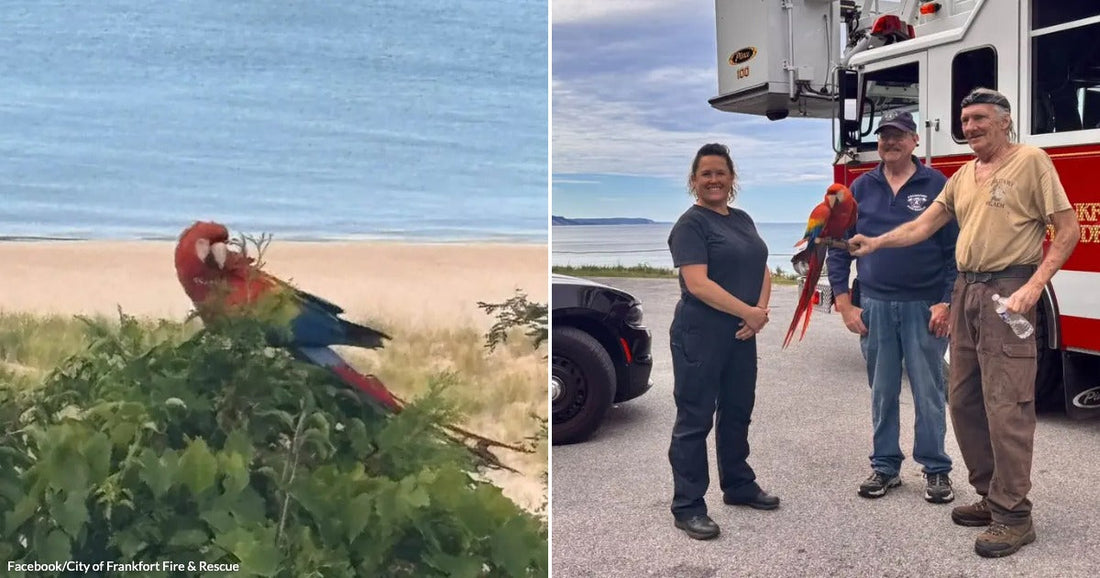
On a quiet stretch above Elberta Beach, what began as a startled flight turned into an all-night ordeal and a heartwarming rescue story. A 23-year-old scarlet macaw named Blaze ended up stuck high in a tree overlooking the Elberta Bluffs after a dog spooked the bird into the air. By the next morning, the unusual scene of a brightly colored parrot perched above Lake Michigan had drawn in local first responders and led to a carefully planned rope rescue that highlighted both professional skill and deep compassion for animals.
The macaw rescue in Elberta unfolded over the course of two days. According to the account, Blaze’s owner remained near the tree throughout the night after the bird took flight the evening of September 17, 2026. The hope was simple and very human that Blaze would eventually calm down and return on his own. When morning came, however, the parrot was still high in the tree near the Elberta Bluffs overlook, out of reach and unwilling to come down.

Facebook/City of Frankfort Fire & Rescue
It was at that point that the situation shifted from a worried owner watching and waiting to a coordinated emergency response. The owner of the dog that had originally startled Blaze returned to check on the situation and, seeing the bird still stranded, called for help. That decision connected the scene at the bluff to the Frankfort Fire Department and Frankfort Police Department, who soon arrived to see what could be done.
Melanie Cederholm, an administrative lieutenant with the Frankfort Fire Department, explained that the first attempt relied on standard equipment. Responders brought in a ladder truck and tried to use the bucket to reach Blaze. From above, it might have seemed like an obvious solution, but the terrain around the Elberta Bluffs complicates even seemingly simple rescues. The bluff’s steep drop and uneven ground meant the truck could not position the bucket low enough over the edge to get near the macaw.

Facebook/City of Frankfort Fire & Rescue
With the bucket option ruled out, the team turned to rope rescue techniques. Rope rescue is commonly used in situations involving steep terrain, cliffs, or other hazardous areas where footing is uncertain and a fall risk is high. In this case, the responders used ropes to secure personnel as they climbed down the bluff toward the tree where Blaze was perched. The operation called for caution, careful planning, and trust between team members, all while keeping the safety of both humans and bird in mind.
In the middle of this challenge, one responder stepped forward to take on the most delicate part of the task. Frankfort police officer Suzanne Maul climbed into the tree to reach Blaze directly. According to Cederholm, Maul has a particular interest in animal rescue, and that interest aligned perfectly with the needs of the moment. Climbing a tree on a bluff, while secured by ropes, to approach a nervous parrot requires calm, patience, and confidence with animals.
The account does not include every detail of how Blaze reacted during the climb, but the outcome speaks for itself. Maul successfully reached the bird and brought the scarlet macaw safely back down to the waiting responders and Blaze’s relieved owner. After a night alone in a tree and a complicated morning operation, Blaze’s ordeal came to an end not with drama, but with careful, professional teamwork.

Once Blaze was safely in hand, the work was not quite over. The team still needed to ascend the bluff again, this time carrying a live animal. Using the same rope systems that had secured their climb down, the responders made their way back up with Blaze and reunited the macaw with the owner who had remained close throughout the entire episode. That ascent represented the final step in a process that had required both physical effort and emotional resilience.
With Blaze back on solid ground, the mood shifted. What began as worry and logistical challenge became a moment of connection and relief. Responders took the opportunity to meet Blaze more closely and capture a few photos with the striking scarlet macaw. One photo shows Frankfort police officer Suzanne Maul alongside Frankfort Fire Chief Mike Cederholm, Blaze perched with vibrant feathers on display, and the bird’s owner nearby, all framed by the knowledge that the risk and effort were worth it.
I found this detail striking because it highlights how emergency work often extends beyond the typical images of sirens and smoke. In this case, the Frankfort responders were called not for a fire or a traffic crash, but for a pet that could not get down from a tree on a steep bluff. Their willingness to respond with full professional effort for an animal rescue says a great deal about how communities value all lives under their care, including those of beloved pets.
The rope rescue above Elberta Beach also underscores the variety of situations that local departments prepare for. Firefighters and police often train for rope operations on bluffs, hillsides, and other challenging terrain to be ready for hikers, drivers, or residents in distress. Here, that expertise was applied to an unusual patient a 23-year-old parrot who had simply been startled by a dog. It is a reminder that technical skills like rope work have many uses, from high-profile emergencies to quieter, personal rescues that matter just as much to the people involved.
Stories like Blaze’s rescue tend to resonate because they combine tension, community response, and a positive conclusion. A startled macaw spends a night alone above the Elberta Bluffs, held in place by fear and height. A worried owner waits below, watching the tree line for any sign of movement. The next day, another resident returns out of concern and reaches out for help. Firefighters and police arrive, assess the bluff, and adapt when their first plan proves unworkable. Finally, a rope rescue technician and an officer willing to climb into the branches work together to bring the bird safely home.
The scarlet macaw rescue near the Elberta Bluffs may not change the wider world, but it clearly meant everything to Blaze’s owner and to the responders who took part. It is a quiet testament to how local agencies stay ready for the unexpected and how care for animals can bring out the best in a community’s first responders. In Frankfort and Elberta, that readiness and care turned a frightening night in a tree into a story of relief, teamwork, and a bird named Blaze who made it safely back to those who love him.