
Tiny Kitten Disappears Into a Storm Drain Until Firefighters Come to the Rescue
Guest Contributor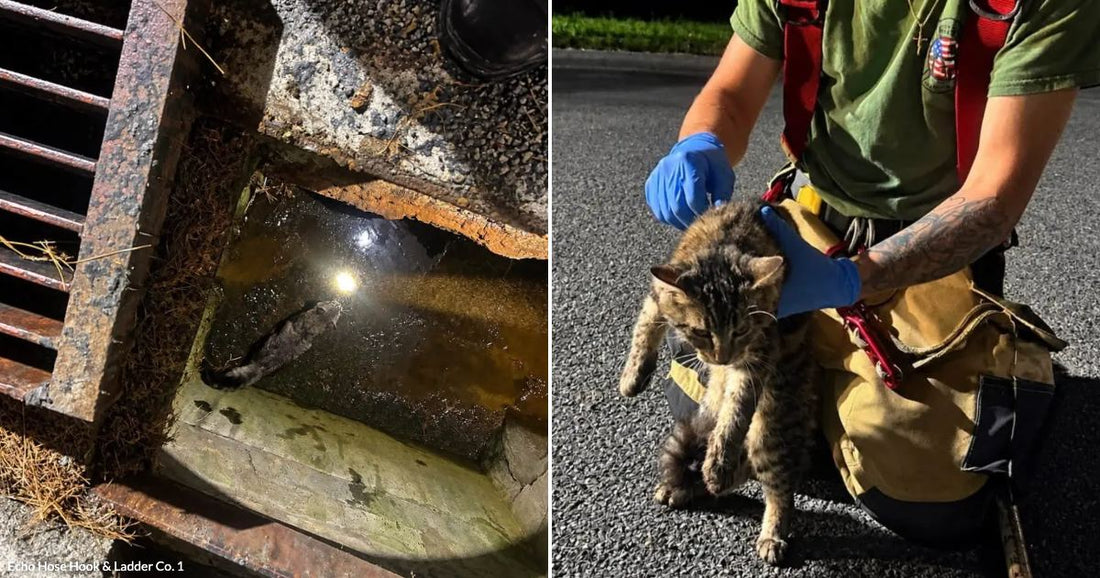
Sometimes the smallest stories carry the biggest emotional weight, and a simple account of Shelton firefighters rescuing a kitten from a storm drain is one of them. In a news landscape often filled with difficult headlines, a local animal rescue like this stands out as a reminder of everyday compassion, teamwork and the quiet heroism that defines so much community life. It is the kind of moment that people share not only because there is a cute kitten at the center of it, but because it reflects values many communities are proud of: quick action, care for the vulnerable and neighbors looking out for one another.
The original report, written by Hearst Fellow Sarah Goodman, focuses on the straightforward yet heartwarming facts of the situation. A kitten somehow ended up in a storm drain in Shelton, Connecticut, a place that is certainly not designed for tiny paws or fragile bodies. The author notes the involvement of Shelton firefighters, who responded to the call and carefully worked to free the kitten from the dangerous spot. The scene is easy to imagine: a quiet stretch of pavement, perhaps a few blocked-off parking spaces or a patch of curb, with firefighters crouched near a metal grate and onlookers hoping the animal would emerge safely.

From the account provided, the details highlight the professionalism of the fire crew and the empathy that drives them. Firefighters are trained primarily to respond to emergencies involving people, yet calls involving animals are not unusual in many communities. The article underscores how seriously they took this situation, treating the trapped kitten as a living being in distress rather than a minor inconvenience. In many towns, these calls might happen quietly and never be widely reported, but Goodman’s coverage brings this small act of public service into focus.
Stories about first responders rescuing animals, especially trapped or stranded pets, have a way of resonating far beyond their immediate locales. I found this detail striking, because it illustrates how routine duties such as checking hydrants, clearing hazards or responding to alarms exist side by side with unpredictable moments when a frightened animal needs help. A kitten in a storm drain becomes a symbol of all the unseen work that goes into keeping a community safe and responsive. The firefighters in Shelton simply answered a call, yet to anyone who has ever cared for a pet, that response can feel immensely meaningful.

Echo Hose Hook & Ladder Co. 1
Goodman’s background as described in the piece adds context to how this story came to be told. She is a Hearst Fellow covering breaking and trending news at Hearst Connecticut, and she is a graduate of Columbia Journalism School. Her experience includes freelancing for recognized outlets such as Al Jazeera, New Lines Magazine and the New York Times, where she has served as a news assistant, stringer and fact checker. This professional path reflects a grounding in careful reporting and verification, which supports the reliability of her account even for a seemingly simple local incident like a kitten rescue.
That kind of experience matters. When a journalist is used to verifying complex international stories or contributing to large investigations, they often bring the same discipline to community news. The care taken in sharing an incident like the Shelton firefighters’ kitten rescue helps ensure that even light-hearted or uplifting stories retain factual clarity. Readers can trust that the details of the rescue reflect what actually happened rather than speculation, dramatization or embellishment.

Echo Hose Hook & Ladder Co. 1
From an editorial perspective, featuring a story about Shelton firefighters and a rescued kitten also helps balance a news mix that can lean heavily toward conflict, crisis and controversy. Goodman’s role covering breaking and trending stories allows her to surface moments that might otherwise pass unnoticed. A small animal in a storm drain does not change the world, but it does change the tone of a reader’s day. A short account of firefighters kneeling at a grate, listening for faint meows and carefully retrieving a frightened animal turns into a narrative that readers can share with friends, family and colleagues when they want something hopeful rather than stressful.
Local animal rescue stories also remind readers of the broader responsibilities that communities share. Storm drains, culverts and other parts of public infrastructure are designed to handle water and debris, not to safeguard wandering pets or curious strays. When an animal ends up trapped, bystanders and first responders together form the last line of defense. The firefighters in Shelton did not design the drain, and they likely did not know where the kitten came from, yet they still accepted the responsibility to help. That decision speaks to a culture of service that goes beyond official job descriptions.
The article’s focus on Goodman’s professional background further underscores how newsrooms choose and shape such narratives. Her work for organizations like the New York Times and Al Jazeera suggests familiarity with global events and complex socio-political contexts, yet her assignment here revolves around a specific intersection of local public safety and animal welfare. This range of coverage reveals a truth about journalism in general. Whether the subject is an international development or a kitten in a Connecticut storm drain, the goal is to observe, verify and share information in a way that respects both the subject and the audience.
Readers who appreciate community-centered reporting may find that this kind of story helps them feel more connected to their own neighborhoods as well. A report about Shelton firefighters can inspire people in other towns to think about the relationships they have with their local fire departments, animal control officers or rescue groups. Even a brief article can serve as a reminder to secure pets, keep an eye out for strays in distress and support the first responders who step in when something goes wrong. It can also highlight the importance of ongoing investment in infrastructure and training that allows responders to safely access tight or hazardous spaces where animals and sometimes people become trapped.
Finally, the article reminds readers that behind every news item there is a reporter making choices about what to highlight, whom to speak with and how to frame the story. Goodman’s experience, from Columbia Journalism School to freelance work for major outlets, shapes her ability to move quickly on breaking items and still ground them in clarity. Sharing a simple rescue with regional readers might seem like a small assignment, yet it contributes to a larger ecosystem of trust between journalists and the communities they serve. When people see that their local firefighters are willing to rescue a kitten from a storm drain, and that their local reporters are willing to take the time to tell that story accurately, it reinforces a sense of shared care that is valuable in any town.