
Six Week Old Kitten Pulled From A Bucket Of Glue Fights Back From The Brink And Finds A Home
Guest Contributor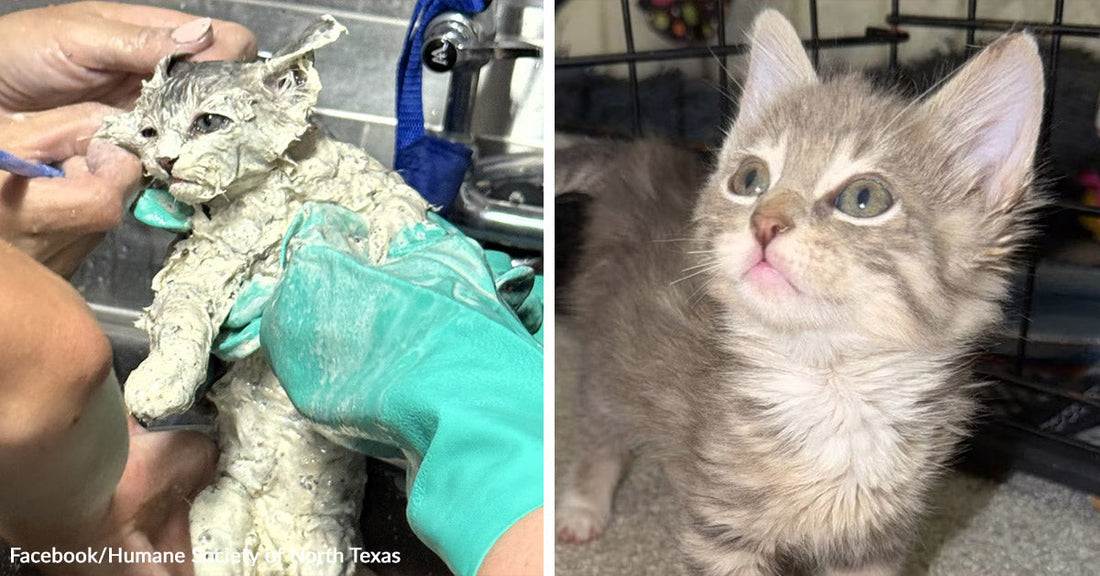
A tiny, six-week-old kitten rescued from a vat of glue and lovingly named Elmer has quickly become a symbol of resilience, compassion, and the power of community care. Stories of animal rescue often tug at the heart, but the details of this kitten’s journey from industrial disaster to hopeful recovery are especially striking. For anyone interested in animal welfare, kitten rescue, or heartwarming rescue stories, Elmer’s experience offers a vivid reminder that kindness can literally save a life.
Elmer’s story begins with a frightening discovery. According to the Humane Society of North Texas, a good Samaritan came across a kitten covered in industrial-strength adhesive and brought him straight to the organization for help. At just six weeks old, the kitten was extremely vulnerable. The glue had formed a thick, suffocating layer that left him unable to eat, drink, or groom himself, and he arrived at the shelter severely dehydrated and in critical need of care. The humane society later shared that assessment in a public Facebook post, highlighting just how serious the situation had become.

When Elmer arrived, the team did not hesitate. Cassie Davidson, senior director of marketing, communications, and public relations at the Humane Society of North Texas, recalled that staff reacted instantly. They did not stop to ask many questions. Instead, they focused on action and rushed to help the kitten. That split-second decision to prioritize care over curiosity became the starting point of Elmer’s recovery.
As soon as he was in their hands, the organization’s medical staff began experimenting with different solvents and methods that might safely loosen the hardened glue. Industrial adhesive is designed to be extremely durable, which made the challenge particularly complicated. It needed to be removed without causing more harm to an already fragile kitten. Through trial and error, the team discovered that canola oil worked best on Elmer’s glue-covered fur. It was a turning point. With that discovery, they could begin the slow, painstaking process of freeing him from the sticky prison that held him down.

The actual work of rescue was especially labor intensive. Davidson explained that four staff members massaged about two gallons of canola oil onto Elmer’s body over the course of seven hours. During that time, they carefully worked the oil into his fur and onto his skin to soften the industrial-strength adhesive. While they focused on removing the glue, they also made sure to feed him occasionally and monitor his condition, balancing physical treatment with basic, lifesaving care. For seven hours, this small group of people committed to what must have been a tiring and emotionally intense process, driven by the belief that this kitten’s life was worth every minute.
To help the oil keep working after those long hours of massage, the team wrapped gauze around Elmer’s body so the canola oil could continue to soak in. This allowed the remaining glue to keep softening, rather than hardening again on his fur. By that point, a majority of the glue had already been successfully removed. The difference in Elmer’s demeanor as treatment progressed was clear. Davidson observed that as more and more glue came off, the kitten slowly started to perk up. His energy returned a little at a time and, as she described it, he began to find his spark again.
Elmer’s revival during those hours speaks to both the physical transformation and the emotional impact of feeling safe and cared for. A kitten who had arrived in critical condition and unable to perform even the most basic functions began to show signs of life, curiosity, and personality as the glue was taken away. That change was not simply a medical achievement. It also reflected the calm patience and persistent attention of the people working with him, who refused to give up even when the process stretched into many hours.
Even with that remarkable progress, Elmer’s journey is not quite over. The Humane Society of North Texas and its foster team will continue to care for him as he recovers fully. Part of that ongoing care includes regular oil baths to gradually remove the remaining traces of glue. The process must be gentle and thorough, allowing his young body and delicate skin to heal without further stress. These follow-up treatments ensure that the progress made during that first intensive rescue session can continue safely, giving Elmer the best chance at a healthy future.
The humane society’s staff expects to place Elmer up for adoption once he is a little older and fully ready for a permanent home. Until then, he will remain under the watchful eye of caregivers who know his story and have already invested so much effort in his survival. Davidson shared a simple but powerful observation about the kitten’s personality, saying that he just wants love. That short statement captures something many people recognize in animals who have been through hardship. Even after severe neglect or danger, their capacity to seek connection and affection often remains intact.
Stories like Elmer’s illustrate how critical local shelters and humane societies can be for vulnerable animals. When a member of the public encounters an animal in distress, having a trusted place to bring that animal can mean the difference between life and death. In this case, the good Samaritan who found a kitten trapped in glue knew to bring him to the Humane Society of North Texas. The organization had both the expertise and the commitment to take on a difficult case and stay with it for hours. The combination of quick thinking by the bystander and skilled, compassionate work by professionals made Elmer’s rescue possible.
Elmer’s experience also highlights the creativity often required in emergency animal care. The use of canola oil, a common household item, as the most effective solvent for this particular glue is a reminder that solutions sometimes come from patient experimentation rather than an obvious or immediate answer. What began as a frightening situation involving industrial materials eventually became a story of ingenuity, teamwork, and a kitten’s tenacious will to live.
As Elmer continues to heal and grow, his story resonates far beyond the shelter walls. It offers a clear example of how everyday compassion, paired with professional dedication, can transform a life that seemed nearly lost. For anyone considering supporting a local shelter or adopting a pet in need, this tiny kitten from a vat of glue turned beloved rescue reminds us that behind each adoption photo is often a remarkable story of effort, care, and second chances. Read more at ABC News