
🚨Urgent: Missile Strikes Shelter in Ukraine! Rush Emergency Aid!
More Than 100 Cats Found In Overwhelming Scene Finally Receive Medical Attention
Guest Contributor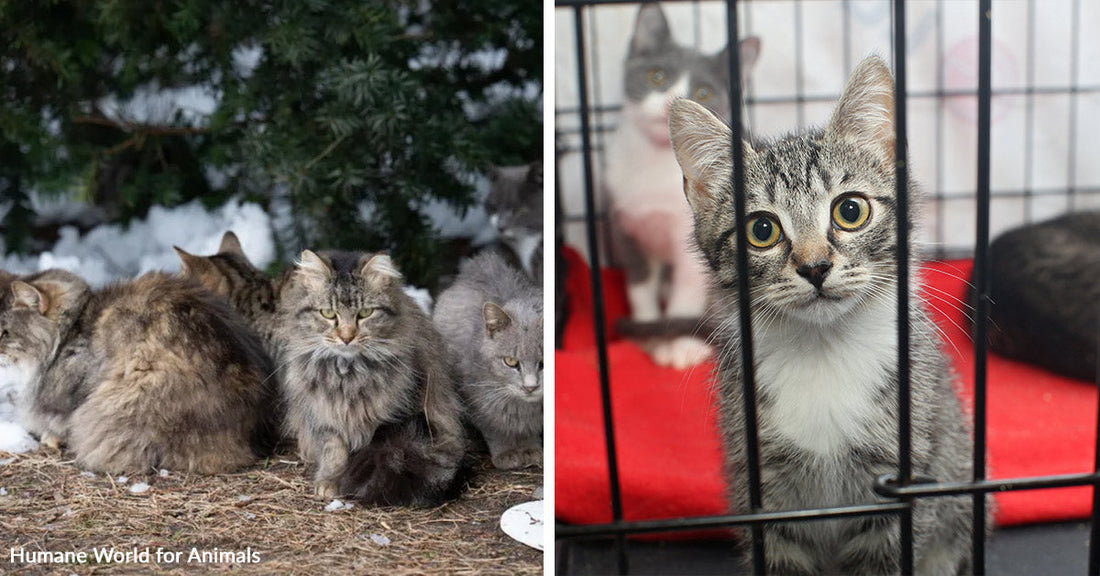
In Delmar, Maryland, a large-scale animal rescue is unfolding that lays bare both the cruelty some animals endure and the compassion that can meet them in their worst moments. Over 100 cats have been removed from an alleged cruelty situation, a scene described by responders as heartbreaking and complex. This cat rescue in Maryland is being led by Humane World for Animals, formerly known as the Humane Society of the United States, alongside the Wicomico County Sheriff’s Office and several local agencies.
According to reports, law enforcement officials served a search and seizure warrant on a residential property at about 7 a.m. Rescuers had to trudge through inches of snow to reach the site, which immediately set the tone for the difficult conditions they would find. Outdoors, cats were huddled together in the freezing air, trying to stay warm after a recent snowstorm. Indoors, many others were discovered in sheds and outbuildings described as hazardous and unsanitary.

The scene inside and outside the property was grim. Responders found several deceased cats as well as skeletal remains, stark evidence that not all animals there had survived. Among the living animals, one very thin gray cat was seen limping badly across the ice, apparently in too much pain to bear weight on a hind leg. Many of the cats were visibly underweight, their vertebrae protruding in a clear sign of long-term neglect. Others appeared to be suffering from upper respiratory infections, wheezing and struggling to breathe, with crusty discharge around their eyes and noses.
Shalimar Oliver, an animal crimes case manager with Humane World for Animals, described the situation as “sad beyond words,” noting that these cats had endured a snowstorm in poor health and harsh conditions. Oliver emphasized that the cats’ survival reflects extraordinary resilience, and that this resilience gives hope as they begin what is expected to be a long road to recovery. I found this detail striking because it highlights both the severity of their suffering and the tenacity that allows animals to hold on even when circumstances are dire.

This operation is a clear example of how animal cruelty investigations depend on coordination among multiple agencies. The Wicomico County Sheriff’s Office is leading the law enforcement side of the case and invited Humane World for Animals to provide expert animal handling, emergency veterinary care, and scene documentation. The Humane Society of Wicomico County, Wicomico County Animal Control, and an animal control officer from the Salisbury Police Department also assisted on site. Together, these partners navigated both the cruelty investigation and the immediate need to stabilize and remove the animals.
Lieutenant Burley Williams of the Wicomico County Sheriff’s Office underscored the department’s commitment to investigating animal cruelty and protecting animal welfare in the community. Williams described the rescue as a complex and large-scale operation carried out under challenging weather conditions. He credited Humane World for Animals and the Wicomico County Humane Society, as well as Wicomico County Animal Control and Salisbury Animal Control, with providing critical support. Their efforts in scene documentation, specialized handling, and urgent veterinary care have been essential to ensuring that these cats receive the treatment they need as quickly as possible.
Williams also highlighted a key legal tool that made this large-scale animal rescue operation more feasible. Maryland’s cost of care law, which Humane World for Animals helped pass in 2022 with the leadership of Delegate David Moon and Senator Jeff Waldstreicher, helps address one of the most significant obstacles in animal cruelty enforcement. This law requires owners of animals seized in cruelty investigations to either contribute to the cost of caring for the animals or forfeit custody. Without such measures, seized animals can remain in legal limbo for months or years while criminal cases proceed, creating heavy financial burdens for law enforcement agencies and taxpayers.
By requiring financial responsibility or transfer of custody, the cost of care law opens a path for animals to be safely housed, treated, and in many cases more quickly moved toward permanent placement when appropriate. In situations like the alleged cruelty case in Delmar, where over 100 cats must be fed, sheltered, and treated for health issues, the law helps ensure that agencies can act decisively without being paralyzed by overwhelming care costs.
Humane World for Animals is now transporting the cats removed from the property to a safe, undisclosed location. There, responders and volunteers will provide ongoing medical treatment, monitor their conditions, and address their basic needs. RedRover Responders volunteers are also supporting daily care. Although details about each cat’s prognosis are not yet known, the immediate priority is stabilization and relief from suffering. This phase can involve everything from rehydration and treatment for respiratory infections to pain management and assessments for more serious injuries.
Stacey Volodin, Maryland state director for Humane World for Animals, described the rescue as an example of what can happen when partners across agencies act quickly and in unison. Volodin thanked the Wicomico County Sheriff’s Office, the Maryland Department of Agriculture, and all the agencies involved in safely and effectively moving the seizure forward. In her comments, she emphasized that the animals’ well-being remained at the center of every decision made throughout the operation.
The Delmar case also illustrates how policy changes, collaborative law enforcement, and nonprofit expertise intersect. Humane World for Animals has been working across the United States to advance cost of care legislation and similar measures that enable authorities to respond effectively to cruelty cases. When animals are seized in large numbers, organizations can face impossible choices if there are no mechanisms to help offset the long-term expense of care. Laws like Maryland’s help remove that barrier, making it more realistic for authorities to intervene quickly in serious neglect or cruelty situations.
While the investigation in Wicomico County remains active, the cats are finally in an environment where their needs are being met and their suffering is being addressed. It will likely take time for many of them to heal physically and emotionally from the conditions they survived. Yet their rescue shows how commitment, preparation, and strong partnerships can shift the trajectory of an animal cruelty case. In place of isolation, cold, and illness, the focus now is on warmth, medical attention, and the possibility of better futures.
As communities and advocates continue to monitor this case, the events in Delmar serve as a reminder that large-scale cruelty does not go unnoticed and that there are systems and people ready to respond when animals are in need. The combination of local agencies, national expertise, and supportive state law has given these cats a chance they did not have before authorities intervened. Read more at https://www.humaneworld.org/en/news/100-cats-rescued-alleged-cruelty-maryland