
Dozens Of Animals Found Suffering Spark A Cruelty Arrest And Growing Outrage
Guest Contributor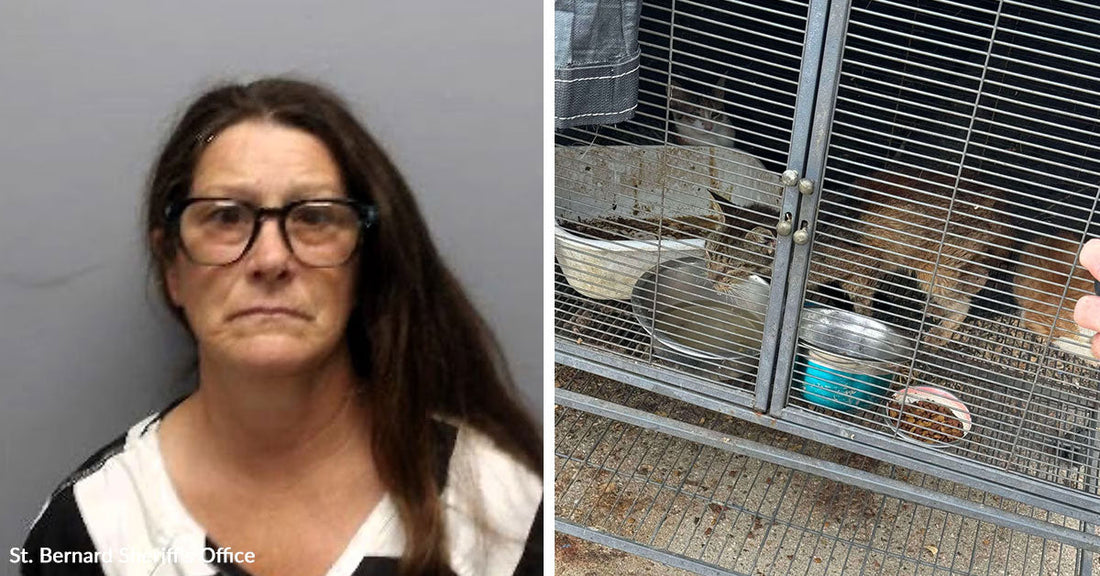
The arrest of a St. Bernard Parish woman in an animal cruelty case has brought years of quiet concern into public view, and the community is now asking how so many warning signs could have gone unaddressed for so long. Authorities describe what they found on the Robert Drive property as severe animal neglect and cruelty, with dozens of dogs and other animals living in unsafe, unhealthy conditions. This animal cruelty case in St. Bernard Parish has quickly become a focal point for residents, advocates, and parish leaders who say the situation reveals serious gaps in local oversight.

According to the St. Bernard Sheriff’s Office, investigators executed a search warrant at the property in the 1700 block of Robert Drive after ongoing complaints and mounting concern. Inside and outside the home, they discovered about 47 dogs, including 37 kept indoors and 10 outside. They also found chickens, parrots, ferrets, horses, and a pony. Veterinarians on the scene determined that many of the animals had serious health problems and were in danger of imminent death.
The property owner, identified as Tina Bernard, was arrested on a charge of aggravated cruelty to animals. Detectives with the Sheriff’s Office Criminal Investigations Bureau worked alongside the Louisiana Department of Agriculture and Forestry, St. Bernard Parish Government, state-licensed veterinarians, and other agencies as part of the investigation. Authorities say this coordinated response ultimately led to the execution of the search warrant and the removal of animals from the property.
So far, multiple animals have been seized as the investigation continues. Officials report that at least 14 dogs, five horses, and one pony have already been taken from the property, with additional animals expected to be relocated. Those in the most critical condition were removed first so they could receive immediate medical care. Parish animal shelter staff and local veterinarians have been directly involved in evaluating the animals and determining next steps for each one.
For many residents and advocates, the conditions on Robert Drive were not a surprise. Community members say they had been sounding the alarm for years, reporting concerns about animal neglect and overcrowding at the property. One resident described working for about three years to get attention on the issue and said they had contacted the parish president, animal control, and the sheriff’s department in hopes of spurring action. They spoke of animals they believed were being abused, neglected, and even dying while complaints were under review.
Jeff Dawson of the Louisiana Humane Society also said this property had been on his radar for some time. He described seeing conditions where cages began to stack on top of one another, the house fell into disarray, and a terrible odor filled the space. He explained that in such scenarios there is often not enough space, money, or resources for proper care and that the animals are no longer happy or healthy. Dawson added that reports had been provided to the parish in the past, yet in his view there was not much follow up and little sense of urgency until recently.
As news of the arrest spread, advocates and residents brought their concerns directly to parish leaders at a St. Bernard Parish Council meeting. They pressed officials for answers about why the case took so long to reach this point and what specific changes would be made to prevent anything similar from happening again. Animal advocates were expected to attend the council session and speak publicly about years of complaints regarding the property and the pace of the response.
St. Bernard Parish President Louis Pomes released an extensive statement acknowledging the long-standing concerns and outlining the limits of parish authority. He noted that the property is zoned in a way that allows certain agricultural and animal-related uses. According to his statement, that zoning status, combined with existing ordinances and the lawful authority granted to local government, restricted what parish officials could do for much of the time the complaints were under review.
Pomes explained that the property had already been subject to compliance and code enforcement action, including a case in 2024 involving a dilapidated barn structure. That matter went through the parish’s Board of Administrative Adjudication, resulting in the demolition of the structure and a lien of roughly $4,200 on the property. He said these enforcement steps show that parish government had used the authority it had, although those actions had little effect on the conditions for the animals or the growing number kept there.
In recent weeks, however, concerns about animal welfare on the property intensified significantly. Reports indicated that conditions were deteriorating and that the number of animals was increasing. Pomes described an extensive coordination effort involving the St. Bernard Parish Sheriff’s Office, the parish animal shelter, the Humane Society, the State Veterinarian’s Office, the Louisiana Livestock Brand Commission, local veterinarians, rescue organizations, and members of the parish council. That coordination culminated in the search warrants carried out on May 18 and the subsequent arrest of Tina Bernard.
Parish leaders now say that the situation has exposed weaknesses and limitations in their current ordinances. Pomes stated that his administration is committed to addressing these shortcomings through proactive measures designed to help ensure that such a situation does not occur again in St. Bernard Parish. One council member, Ryan Randall, reported working on new ordinances specifically aimed at preventing similar cases in the future, with plans to present those changes to fellow council members.
The parish president emphasized that this is now a law enforcement matter and that he will defer to Sheriff James Pohlmann on details of the ongoing criminal investigation. He also underscored that parish government does not possess law enforcement authority beyond code enforcement and compliance, and that those processes have remained active for this property, including into 2025. At the same time, he acknowledged the public’s frustration and the emotional difficulty of animal neglect cases, thanking residents and advocates who remained persistent in raising concerns.
The St. Bernard animal cruelty case has become more than a single incident. It is now a lens through which the community is examining how animal welfare complaints are handled, how quickly authorities can move, and where local laws may need to change. Many in the parish are calling for stronger safeguards, clearer procedures, and more responsive systems so that when neighbors report animals in distress, those reports translate more swiftly into meaningful action.
I found it striking how many different agencies and individuals were ultimately involved once the situation reached a tipping point. That level of coordination suggests a clear recognition that animal neglect is not an isolated problem but one that touches law enforcement, public health, community well-being, and the basic responsibility to prevent suffering. As St. Bernard Parish works to revise its ordinances and reflect on what went wrong, residents and advocates appear intent on ensuring that the lessons from Robert Drive lead to lasting change for animals and for the community watching over them.