
Surrendered Dog Stares At Wall Waiting For Family
Guest Contributor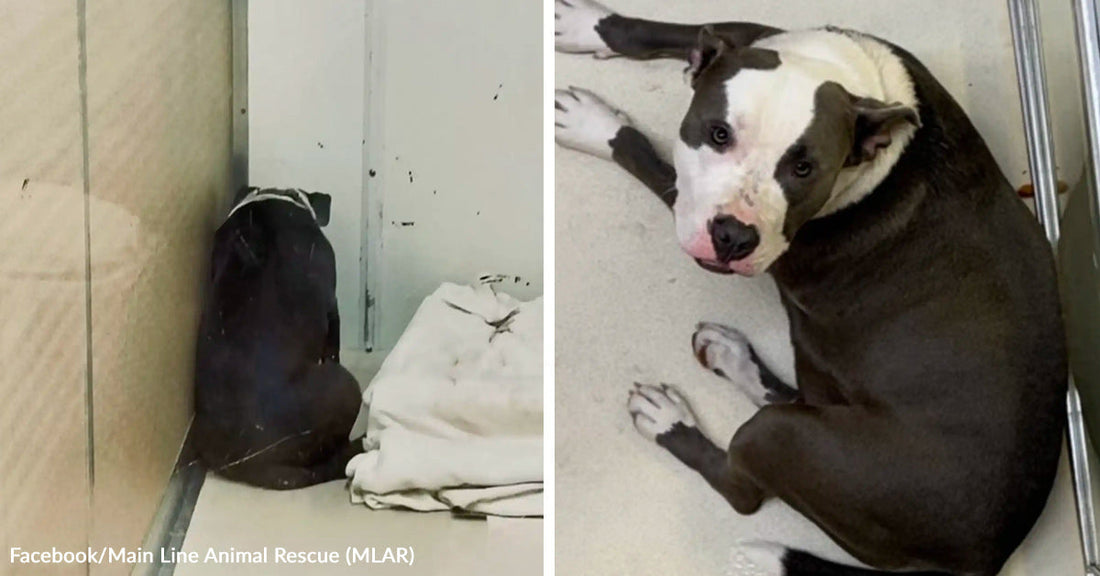
When a beloved pet suddenly finds itself in a shelter, the emotional impact can be profound. That reality is captured in the story of Homer, a surrendered dog who spent hours staring at a shelter wall, seemingly waiting for his family to return. His experience at Main Line Animal Rescue in Pennsylvania reflects not only the heartbreak of surrender but also the power of compassion, patient care, and second chances. For anyone who cares about animal rescue stories, Homer’s journey offers an intimate look at what happens when a family can no longer keep a pet and a dog must find a new home.
Homer’s life changed in an instant. Earlier this month, his family made the painful decision to surrender him to Main Line Animal Rescue, often referred to as MLAR. According to the rescue, this was not a case of neglect or lack of love. Instead, it was a heartbreaking situation in which his people believed they were doing what was best for him, even though it meant saying goodbye. The organization emphasized that such choices are often far more complex than they appear from the outside, and that judgment of families in crisis does not help the animal at the center of it all.

When Homer arrived at the shelter, the staff immediately noticed his confusion. In a Facebook post, MLAR shared that he sat in his kennel and stared at the wall for hours, as if trying to understand where his old life had gone. For many readers, this image resonated deeply, because it visibly captured the grief and disorientation that surrendered dogs can feel. Homer had lost the only world he knew and, for a time, seemed to be hoping that familiar faces might reappear if he just waited long enough.
The team at Main Line Animal Rescue responded with empathy rather than assumptions. Their representatives explained that compassion matters equally for animals and for the people who love them. They acknowledged that Homer’s family clearly cared for him and that surrendering him was likely an act made under heavy emotional strain. This perspective is significant in the broader conversation about animal welfare, because it moves away from blame and toward understanding. It highlights that while the phrase “surrendered dog” might sound harsh, there are often multiple layers of hardship behind that decision.

In the days that followed Homer’s arrival, rescue staff and volunteers focused on helping him adjust at his own pace. They did not expect an immediate transformation. Instead, they allowed him time to observe, process, and gradually trust his new surroundings. Slowly, Homer began to come out of his shell. As he ventured beyond the back of his kennel, his personality started to emerge. Staff members described him as a “lovebug” once he was out of that confined space, a dog who was eager to soak up affection and attention.
Walks and one-on-one time became important parts of his shelter routine. Volunteers spent time with him outdoors, letting him explore and interact in a more relaxed environment. With every walk and each gentle interaction, Homer built new bonds with the people around him. Before long, he became a shelter favorite. These simple acts of care helped replace his initial despair with a new sense of security. I found this detail striking because it shows how consistent, small gestures can make a significant difference for an animal who feels lost.
As Homer’s story was shared online, it sparked a strong response. MLAR’s Facebook post about the dog sitting in his kennel, staring at the wall, drew an outpouring of support. Many people were moved by the image of a dog so visibly missing his family and trying to make sense of his new reality. Adoption applications began to arrive. Among them, one application in particular stood out to the rescue team. It was clear to them that this potential adopter was a strong match and that Homer had a chance to join a new family that was ready to welcome him wholeheartedly.
The transition from shelter life to a new home can be just as emotional as the original surrender, but this time with a hopeful twist. According to the rescue, Homer’s new family was thrilled to bring him home. His new mom reportedly said that it was a privilege to have such a wonderful dog. That sentiment speaks to what many adopters of surrendered dogs discover. An animal who has known love before often carries those experiences forward and is ready to give and receive affection again, even after a period of confusion and loss.
Homer’s journey from a dog staring at the shelter wall to a cherished companion highlights a few key themes that matter in the world of animal welfare. First, it demonstrates that surrendered dogs are not “problem animals” by default. They are often deeply loved pets whose families are faced with circumstances beyond their control. Second, it underscores how important it is for shelters to approach both people and animals with kindness. MLAR’s representative explained that the organization’s goal is to help keep families together whenever possible and, when that cannot happen, to help dogs like Homer safely find their way to loving homes again.
This approach is rooted in the belief that kindness and compassion are what truly change lives. For Homer, that meant a patient welcome, the time to process his loss, and the chance to form new attachments through daily interactions. For his former family, it likely meant the reassurance that he would be cared for and given a real opportunity to thrive. For his new family, it meant discovering a dog whose loyalty and affection are all the more meaningful because of what he has been through.
Homer’s story is a reminder that behind every kennel door there is an individual history and an emotional world that matters. For those considering adoption, stories like his can be a powerful encouragement to give a surrendered pet another chance. Dogs like Homer may come with a chapter of sadness in their past, but with support from organizations like Main Line Animal Rescue and from caring adopters, they can begin again. In that new chapter, a once-silent dog staring at a wall can become a joyful companion exploring life with a new family, proving that a compassionate response to hardship has the potential to reshape more than one life at a time. Read more at The Dodo