
Tethered Chihuahua Rescue: From Two-Foot Chain to Forever Home
Guest Contributor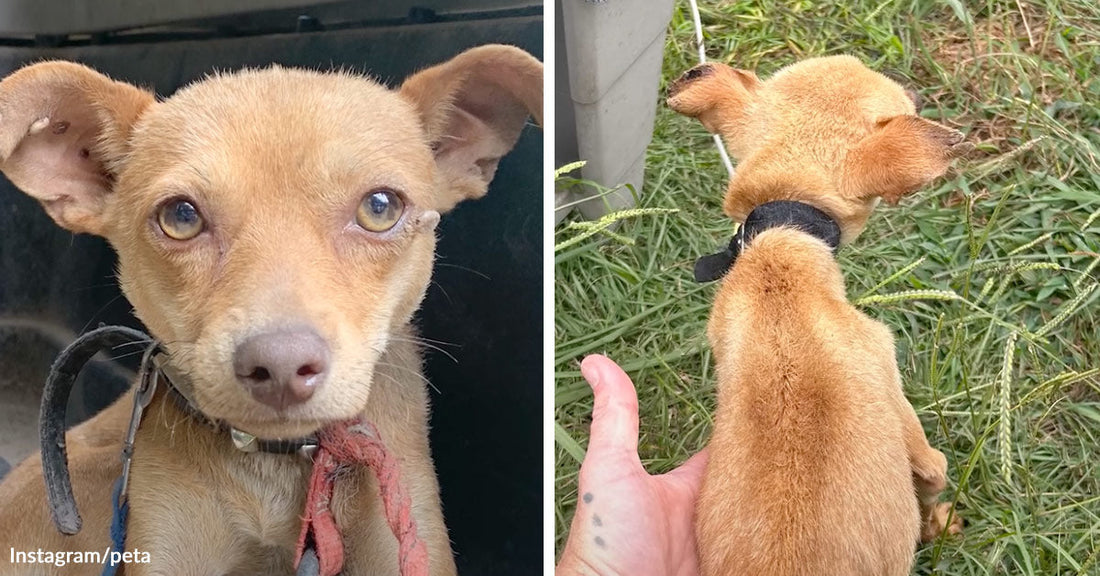
Chico was only eight pounds, yet the weight he carried was far heavier than his tiny frame. This small chihuahua spent his days outside on a tangled tether that was barely two feet long, tied to a trampoline and surrounded by hard plastic and concrete instead of comfort. Stories of neglected dogs like Chico are heartbreaking, but they can also shine a light on how much difference compassion and persistence can make. Chico’s journey from a short, miserable tether to a life filled with affection and security shows what is possible when people refuse to look away.
The account of Chico’s rescue describes a bleak beginning. PETA fieldworkers found him malnourished, with no water in reach and only inches of space in which to move. His tether had become so hopelessly knotted that the little space he was given to begin with had shrunk even more. Instead of a soft bed or a cozy shelter, he had a heavy concrete block inside a plastic crate. It is difficult to imagine such isolation for any animal, especially a social, sensitive dog who depends on human companionship.

Despite the clear signs of neglect, helping Chico was not as straightforward as simply taking him away. According to the account, his guardian initially refused to allow PETA to assume custody of the dog. That refusal placed Chico in a painful limbo, visible to those who wanted to help yet still trapped in conditions that no dog should endure. The situation illustrates a common problem that animal protection workers face: seeing suffering and needing to work within legal and personal boundaries to create change.
The fieldworkers’ response was to keep showing up. They continued to visit Chico for several months, offering him food, fresh water, and gentle affection. I found this detail striking because it highlights how rescue work often involves sustained, patient effort rather than a single dramatic moment. Each visit may have seemed small on its own, but together they built trust and ensured that Chico did not feel completely abandoned. Their persistence also created opportunities to continue talking to his guardian and to advocate for his well-being.
That persistence eventually made all the difference. The account explains that when Chico became ill, the guardian finally agreed to let PETA provide the care he needed. It took a crisis for that door to open, but once it did, Chico’s life changed quickly. He was able to receive veterinary care and the medical attention that had been denied to him while he was tethered outside. This turning point underscores how critical it is that animal welfare workers maintain contact, even when the initial answer is no. Without those months of visits, the outcome for Chico might have been very different.
After his health stabilized, Chico moved into a foster home. There, according to the foster guardian’s report, the little dog revealed a personality that had been hidden by hardship. The guardian described him as “full of heart” and “the best kind of friend.” That kind of feedback is powerful, because it reminds readers that dogs like Chico are not defined by the neglect they experience. Given care and safety, they respond with affection, loyalty, and joy. It also suggests how resilient many animals can be despite difficult pasts.
With some time to heal and adjust, Chico was ready for adoption. The story notes that the right adopter came forward quickly and welcomed him into a home where he is now a valued member of the family. The phrase “forever home” can sometimes feel sentimental, yet in this context it represents something very concrete: consistent love, indoor comfort, access to water and veterinary care, and protection from being chained outside again. For a dog who once had only a two-foot tether and a concrete block, that transformation is profound.
Chico’s story is not presented only as a feel-good rescue narrative. It also serves as an example of what so many “backyard dogs” endure. PETA’s fieldworkers reportedly encounter dogs nationwide who are chained like old bicycles and left to languish outside. Many are denied adequate food, clean water, basic veterinary care, or even a single kind touch during the day. Long term chaining or tethering is more than a matter of limited comfort. It can lead to physical harm, psychological distress, and life-threatening exposure to heat, cold, and storms.
Recognizing these realities, PETA encourages people to work with their local elected officials to pass or strengthen tethering bans and restrictions. The account recommends starting by researching the current legislation on tethering dogs in a given community. Local ordinances that limit how long and under what conditions dogs can be chained can make a measurable difference, especially when they are enforced. Advocacy does not always look dramatic, but writing to representatives, attending council meetings, and supporting humane policies are all concrete actions that can help prevent cases like Chico’s.
There is also an immediate, personal role that individuals can play. The article stresses that dogs should never be left outside unattended, and that if a dog is outside without access to water or shelter, the situation is an emergency. In that case, the first step is to contact local authorities such as animal control or law enforcement. If those channels do not respond or are unable to help, the guidance is to reach out to PETA for assistance. Acting quickly is crucial because a dog’s well-being or even life may depend on how fast someone intervenes.
Stories like Chico’s can be difficult to read, yet they carry an important message of responsibility and hope. They reveal the harm that neglect and tethering can cause, but they also highlight how much can change when people commit to advocacy, persistence, and compassion. For every dog brought from a short chain into the circle of a loving family, there are others still waiting on concrete and tangled tethers. Chico’s rescue shows that paying attention, speaking up, and supporting stronger protections for animals can turn a life around.