
🚨Urgent: Missile Strikes Shelter in Ukraine! Rush Emergency Aid!
The True Story Behind Saving Private Ryan and the Niland Brothers
Guest Contributor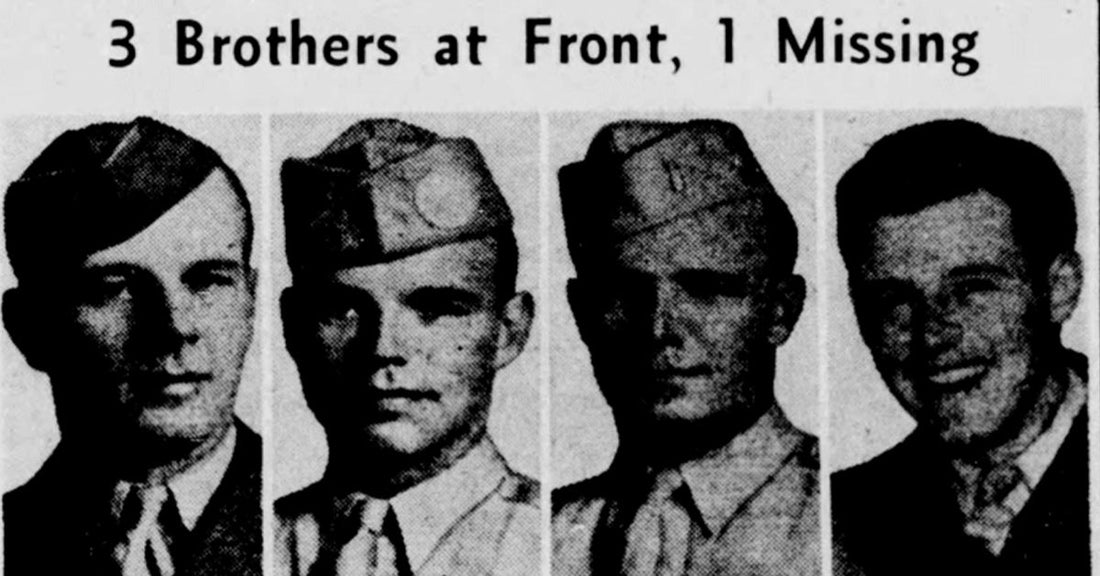
Steven Spielberg’s 1998 war epic Saving Private Ryan is widely lauded for its harrowing realism and emotional depth. What many viewers may not realize is that the film’s central premise—a mission to retrieve a soldier whose brothers have been killed in action—was inspired by the real-life story of the Niland brothers from New York. This true story, as reported by All That’s Interesting, offers a poignant glimpse into the sacrifices made by one American family during World War II and the military’s efforts to spare a mother further grief.

The Niland brothers—Frederick “Fritz,” Robert, Preston, and Edward—were four young men from Tonawanda, New York, who each joined different branches of the U.S. military during the Second World War. Fritz and Bob served in the 501st and 505th Parachute Infantries, respectively; Preston joined the 22nd Infantry, and Edward served in the Air Force. Their story, which includes loss, survival, and an unexpected reunion, closely mirrors the emotional arc of Saving Private Ryan, though with notable differences.

One of the most striking elements of the Niland brothers’ story is the sequence of misfortunes that befell them in mid-1944. On May 16, Edward Niland was captured by Japanese forces in Burma after parachuting into the jungle and missing his target. Although he evaded capture for a time, he was eventually taken to a prisoner-of-war camp. His comrades, unaware of his fate, presumed him dead. Less than a month later, on D-Day, Bob Niland was killed while heroically holding off German forces in Normandy to allow his fellow soldiers to retreat. The very next day, Preston Niland was mortally wounded during an assault on the Crisbecq battery after surviving the initial landing at Utah Beach.
With Edward presumed dead and both Bob and Preston confirmed killed in action, the U.S. War Department feared that the Niland family had lost three of its four sons. In an effort to prevent further tragedy, the military decided to bring Fritz home. This decision echoes the central plot of Saving Private Ryan, where a group of soldiers is dispatched to retrieve the last surviving Ryan brother. However, in reality, there was no dramatic rescue mission across enemy lines. Instead, Father Francis Sampson, a chaplain with the 501st Regiment, located Fritz in Europe and informed him of the plan to return him to the United States.
Fritz was first sent to England and then back to New York, where he served as a military police officer for the remainder of the war. I found this detail striking—it illustrates how the military sought to balance duty with compassion, especially in the wake of the Sullivan brothers’ tragedy two years earlier. The Sullivans, five brothers from Iowa, had insisted on serving together in the Navy. All five died when their ship was sunk during the Battle of Guadalcanal. Their loss prompted the U.S. military to adopt an unofficial policy of separating siblings in service, a policy that likely influenced the Niland brothers’ assignments.
In a remarkable turn of events, the Niland family received unexpected news in May 1945: Edward, who had been presumed dead for nearly a year, was found alive after his POW camp in Burma was liberated. This revelation meant that two of the four Niland brothers had survived the war. Fritz and Edward returned to their hometown of Tonawanda, where they spent the rest of their lives close to family and community. This somewhat hopeful conclusion stands in contrast to the fictional narrative of Saving Private Ryan, where the titular character loses all three of his brothers.
While the Niland brothers’ story is the most direct inspiration for the film, some also point to the Sullivan brothers as a contributing influence. Their collective tragedy underscored the emotional toll of war on families and helped shape military policies aimed at preventing such concentrated losses. The inclusion of these real-life events adds a layer of historical resonance to Saving Private Ryan, which itself has become a cultural touchstone for its depiction of World War II combat and sacrifice.
Of course, the film takes creative liberties. The dramatic rescue mission that forms the heart of Saving Private Ryan did not occur in the Niland case, and the emotional climax of the movie—where Captain Miller and his squad fight to protect Ryan—was a fictional construct. Nonetheless, the emotional core of the story, that of a family nearly torn apart by war and a nation’s effort to preserve what remained, is firmly rooted in reality.
By grounding its narrative in the true story of the Niland brothers, Saving Private Ryan not only honors the sacrifices of one family but also reflects the broader experiences of countless others who endured similar losses during World War II. The story serves as a reminder of the personal cost of global conflict and the enduring impact of wartime decisions on individual lives.