
Help Homeless Veterans & Their Pets This Holiday Season Send A Relief Kit
Three-Minute Brainwave Test Identifies Alzheimer’s Risk Early and Easily
Guest Contributor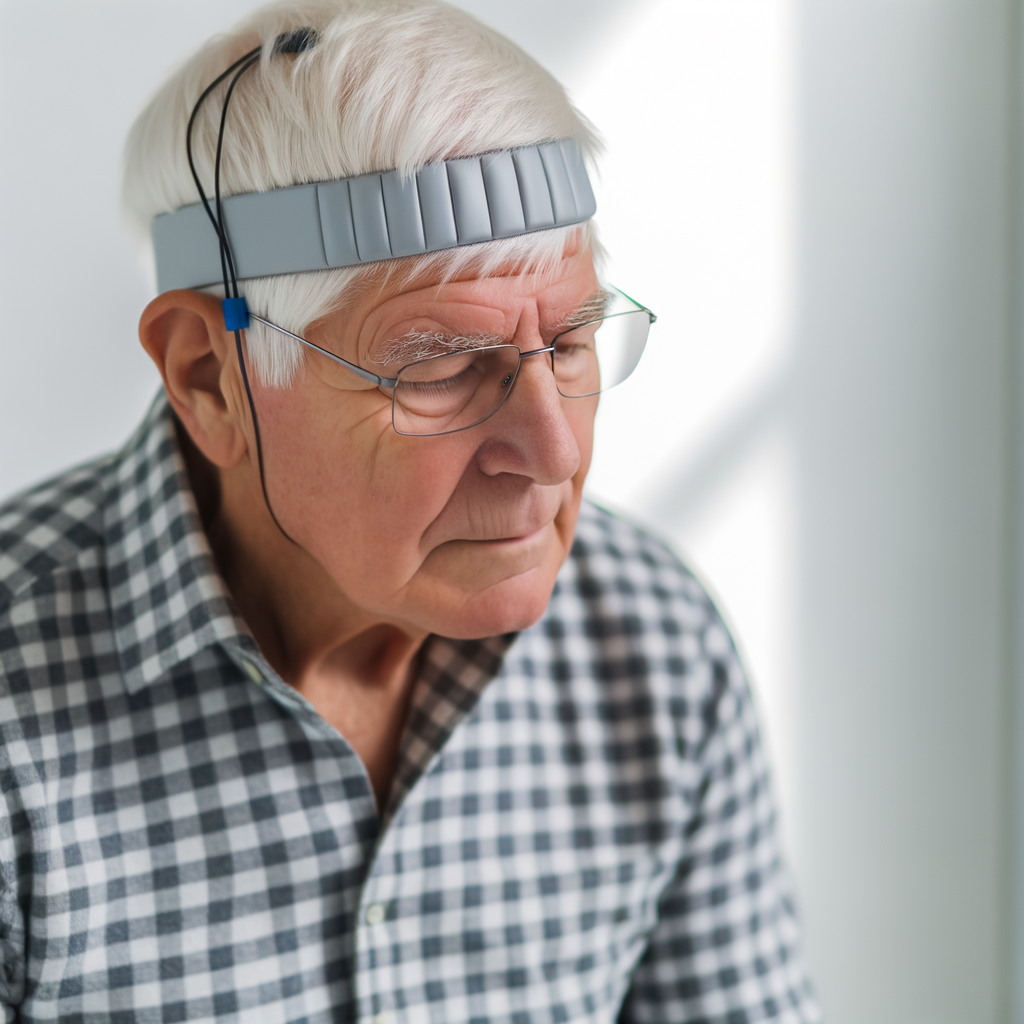
A new three-minute brainwave test could revolutionize how doctors identify people at greater risk of Alzheimer’s disease, according to recent findings from a collaborative trial by the University of Bath and the University of Bristol. The test, known as the Fastball, uses electroencephalogram (EEG) technology to measure subtle memory impairments that may signal the early stages of Alzheimer’s. This development offers hope for earlier and more accessible diagnosis, particularly for individuals with mild cognitive impairment (MCI), a group known to be at elevated risk.

The mood surrounding the research is cautiously optimistic. Scientists are encouraged by the potential of the Fastball test to detect early memory issues, especially in people who have not yet been diagnosed but are already experiencing subtle changes in cognition. The test may also help identify those who could benefit most from emerging Alzheimer’s treatments, which are believed to be more effective when administered in the early stages of the disease.
In the trial, researchers enrolled 54 healthy adults and 52 individuals with MCI. Participants first viewed eight images and were asked to name them, but were not instructed to memorize them. Later, while watching a rapid stream of images on a screen, their brain activity was recorded using EEG sensors placed on the scalp. Every fifth image was one of the original eight, and the test analyzed how the brain automatically responded to these familiar visuals. The entire process took just three minutes.
The Fastball test focuses on detecting memory problems by capturing the brain’s automatic, unconscious responses to previously seen images. According to Dr. George Stothart, a cognitive neuroscientist at the University of Bath who led the study, the test is a “passive measure of memory” designed specifically for Alzheimer’s diagnosis. He noted that the test was able to identify individuals with amnestic MCI—a form of MCI that primarily affects memory for objects—who are known to be at significantly higher risk of progressing to Alzheimer’s disease.
What makes this test particularly promising is its accessibility. All testing was conducted in participants’ homes, which Dr. Stothart emphasized as a key factor in reducing anxiety and making the test more widely available. The simplicity and portability of the Fastball could allow for broader screening in community settings, potentially reaching individuals who might not otherwise seek evaluation for cognitive concerns.
While the test cannot definitively predict who will develop Alzheimer’s, its ability to highlight those at higher risk could be invaluable. If validated in larger and more diverse populations, the Fastball could become a useful tool for guiding early intervention strategies, including the use of new Alzheimer’s drugs like donanemab and lecanemab. These treatments have shown greater effectiveness when administered before significant cognitive decline sets in.
I found this detail striking: the test does not rely on participants consciously recalling information. Instead, it measures the brain’s implicit recognition of previously seen images, offering a less intrusive and potentially more accurate assessment of memory function. This approach could be especially useful for individuals who struggle with traditional cognitive assessments or who may be unaware of their own memory decline.
Experts outside the study have also weighed in. Professor Vladimir Litvak of University College London’s Queen Square Institute of Neurology described the research as “an early step towards developing a clinically useful test.” He emphasized the importance of future studies to determine whether the Fastball can track changes in cognitive function over time and inform treatment decisions. Dr. Julia Dudley of Alzheimer’s Research UK echoed this sentiment, noting that early diagnosis is crucial for maximizing the benefits of new treatments. She also highlighted the need for longer-term studies in larger, more diverse populations.
Memory problems can arise from a variety of conditions, not just dementia. Therefore, it will be essential for future research to explore how other health factors might influence the results of brainwave-based tests. Integrating the Fastball with other diagnostic tools, such as cognitive assessments and blood tests, could offer a more comprehensive picture of an individual’s cognitive health.
The Fastball test represents a promising step forward in the quest for earlier and more effective Alzheimer’s diagnosis. By identifying at-risk individuals before significant symptoms emerge, this simple, non-invasive test could help clinicians intervene sooner and improve outcomes for patients. As larger trials continue, the scientific community will be watching closely to see whether this innovative approach fulfills its potential.
