
Baby Coyote Falls Into a Cactus and Hundreds of Barbs Pierce His Tiny Body
Guest Contributor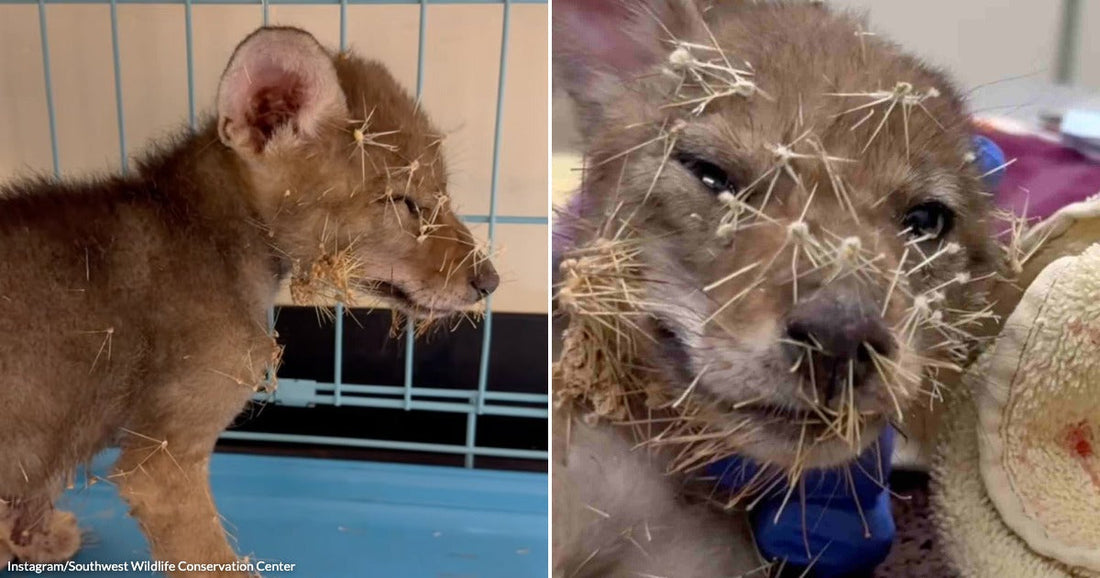
A tiny coyote pup in Arizona recently survived a harrowing ordeal after wandering into a cholla cactus and becoming covered in hundreds of barbed spines. The dramatic rescue and careful recovery, shared by Southwest Wildlife Conservation Center, offer a remarkable look at both the dangers young wild animals face and the quiet heroism of wildlife rehabilitators. For anyone who cares about animal rescue stories or wildlife rehabilitation, this little coyote’s journey from shock to safety is hard to forget.
The pup, weighing only about 3 pounds and estimated to be around 4 weeks old, was first discovered in a homeowner’s yard in Surprise, Arizona. The homeowner found the baby coyote in distress, his tiny body studded with cactus spines from the cholla plant. These spines were embedded in his face, paws, legs, stomach, and even his ears. Recognizing the severity of the situation, the homeowner contacted Southwest Wildlife Conservation Center in Scottsdale, a facility that specializes in rescuing and rehabilitating native wildlife.

A volunteer from the center was quickly dispatched to pick up the injured pup. The timing of the incident aligned with what wildlife professionals often call “baby season,” a time of year when many young animals are born or begin venturing away from their parents. During this period, wildlife centers frequently see an increase in orphaned or injured animals in need of help. In this case, the coyote pup was not only extremely young but also on his own, with no mother nearby to protect or guide him.
Once the volunteer transporter brought the pup to the clinic, veterinary technician Berk Martineau took the lead on his care. Martineau documented the process in a video later shared on YouTube. In the footage, he explains that the center is seeing many orphaned baby animals at this time of year and that their mission is always to rehabilitate these animals and eventually release them back into the wild.

Instagram/Southwest Wildlife Conservation Center
The coyote’s injuries were particularly severe. Cholla cactuses are known for their barbed spines, which latch onto skin and fur with surprising tenacity. Martineau described these spines as “super gnarly,” noting that they behave very differently from the simple thorns most people are familiar with. Unlike smooth thorns that can sometimes slide out cleanly, cholla spines are barbed so they resist removal and cause more trauma as they are pulled free.
By the time the pup reached the clinic, he was lethargic and appeared to be in shock, according to reporting from the Washington Post. Animals arriving with a few cactus spines is not unusual in the desert environment, but this particular case stood out as especially extreme. The sheer number of spines and the sensitive areas they pierced made every step of treatment both delicate and urgent.

Instagram/Southwest Wildlife Conservation Center
To minimize pain and stress, the team gave the coyote sedatives before beginning the painstaking process of spine removal. Martineau narrated parts of the procedure, describing how challenging it is to extract barbed spines without causing additional damage. Using metal clamps, he and a colleague worked slowly and carefully, gripping each spine and easing it from the pup’s skin. Some spines had pierced completely through the soft tissue of his ear, illustrating how deeply and aggressively the cactus had taken hold.
The entire spine removal process took about two and a half hours. During that time, the team methodically cleared spines from the pup’s face, paws, legs, stomach, and ears. As the procedure continued and more spines came out, Martineau noted visible progress. Under the sedation, and with each successful extraction, the small coyote was gradually freed from the worst of his immediate pain. Martineau remarked that this pup had endured a rough start in life but emphasized that the team was committed to giving him the best possible chance to recover.
Beyond the dramatic image of a cactus covered pup, the situation reveals how vulnerable orphaned wildlife can be. Without a mother to teach him, this young coyote had wandered into a dangerous plant he did not yet understand. Martineau explained that young wild animals are in a critical learning phase. They are exploring, running around, and figuring out how to navigate their environment, and in the process many of them become injured or separated from their families. This coyote pup’s injuries were not only painful but also a sign of how unprepared he was to survive in the wild alone.
Once all the visible spines had been removed, the team shifted their focus to stabilizing the pup and starting his recovery. They placed him in a warmed incubator to help regulate his body temperature and reduce stress. He was also given fluids to address dehydration, which is a common concern in injured or shocked animals. When he was stable enough, caregivers offered him his first meal at the center, a simple but important milestone after such a traumatic experience.
From there, the focus turned from emergency treatment to long term rehabilitation. The goal at Southwest Wildlife Conservation Center is not to keep wild animals in captivity permanently, but to support them until they are healthy and capable enough to return to their natural habitat. In this case, the pup will need to grow from a fragile 4 week old into a strong adult coyote. That process will involve weeks or months of careful feeding, monitoring, and preparation so that he can thrive on his own once released.
Martineau acknowledged that this journey back to the wild will take time, but he expressed optimism about the pup’s future. With the cactus spines finally gone, the most obviously life threatening obstacle had been removed. From here, the primary tasks are healing, growing, and learning the instincts needed for survival. Martineau hoped that this early ordeal would remain the most difficult challenge the coyote faces during his stay at the center and that the rest of his rehabilitation would be far smoother.
Stories like this highlight how everyday actions can make a profound difference. A homeowner’s quick decision to call a wildlife center ensured that a severely injured young animal received life saving treatment. The dedication of volunteers and veterinary staff turned what could have been a fatal encounter with a cholla cactus into a powerful example of compassionate wildlife care. For anyone curious about wildlife rescue in Arizona or about how organizations like Southwest Wildlife Conservation Center function during baby season, this rescued coyote pup offers a hopeful reminder. Even in harsh environments filled with real dangers, there are people committed to giving vulnerable animals a second chance at life in the wild.
Read more at https://www.goodgoodgood.co/articles/coyote-pup-trapped-in-cactus-rescue