
🚨Urgent: Missile Strikes Shelter in Ukraine! Rush Emergency Aid!
Doe Becomes Wedged in Metal During a Nor'easter and Firefighters Race to Cut Her Free
Guest Contributor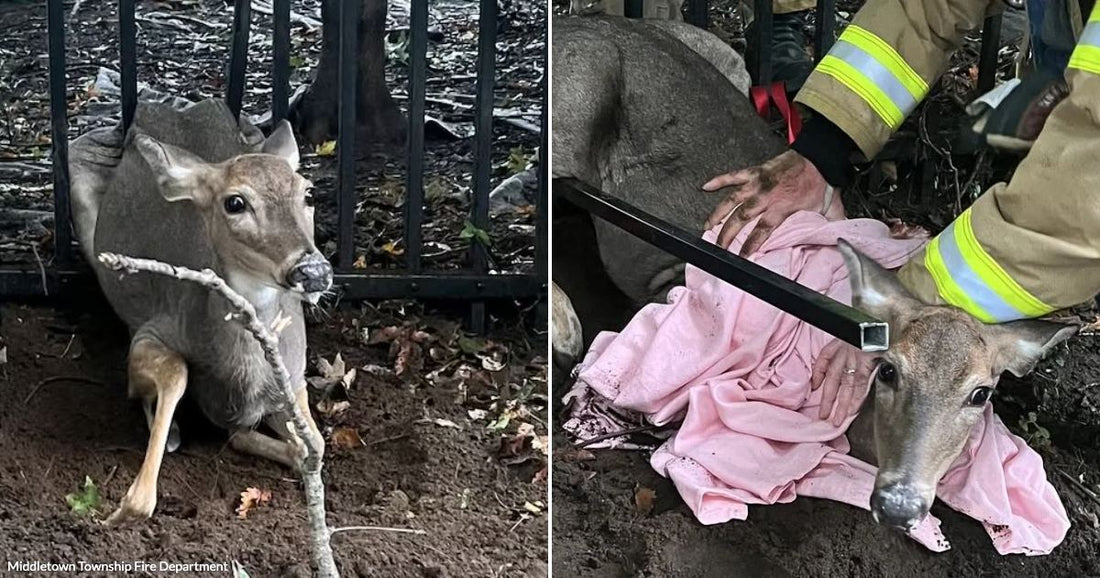
In the middle of a powerful nor'easter that drenched New Jersey with heavy rain, fierce wind and widespread flooding, one small drama unfolded at ground level that captured something gentle and hopeful. Amid road closures, power concerns and weather alerts, firefighters in Middletown Township found themselves answering an unusual call for help: a young deer trapped in a metal fence and visibly out of its depth in the storm.
According to the Middletown Township Fire Department, crews from Old Village Fire Company and Middletown Township Fire Company No. 1 responded when a doe became wedged between the vertical bars of a metal fence. The nor'easter crashing over New Jersey may have already pushed wildlife into unfamiliar areas, and this deer ended up in a risky position that required more than just a quick tug. The scene was a reminder that during extreme weather, emergency responders are not only watching out for people. Sometimes, they are life savers for the animals that share our neighborhoods.

Middletown Township Fire Department
Photos shared by the department on Instagram show the young doe firmly stuck in place, ribs and shoulders pressed between the poles. Firefighters surrounded her with calm focus, setting up equipment while working to keep the animal as still and safe as possible. To free the deer from the fence, the team brought out heavy rescue tools and used a saw to cut through the metal. Sparks flew as the blade met steel, turning what might have been a straightforward wildlife rescue into a delicate operation.
One detail from the images stands out. As the saw bit into the fence, firefighters draped a pink blanket over the doe. The cloth shielded her from sparks and debris, and it also appeared to give the frightened animal a small measure of comfort and darkness in a chaotic situation. It is a small thing on the surface, yet it says a great deal about the way responders approached the rescue. They were not only solving a problem with tools and training. They were doing their best to protect a living creature already stressed by the storm and the physical constraint of the fence.
The department later posted a series of five photos that chronicle the rescue from beginning to end. The first images show the deer caught fast, the next highlight the firefighters cutting through the metal, and the final frame captures the payoff: the moment the fence opens enough for the doe to slip free. The caption on the department's post summed up both the exasperation many locals felt and the touch of humor that sometimes surfaces in tough circumstances. "Even the deer have had enough of this Nor'Easter," the firefighters wrote, acknowledging that the storm had been hard on everyone, wildlife included.

Middletown Township Fire Department
Once freed, the doe did what many would hope a wild animal in good shape would do. The department reported that she was uninjured and quickly ran away as soon as she realized her path was clear. There was no need for veterinary transport or extended care. The rescue began and ended right at the fence line, bracketed by the roar of the saw and the quiet satisfaction of watching an animal sprint back to safety.
For residents watching the nor'easter unfold, the story offered a brief, refreshing counterpoint to the usual storm coverage of downed trees and flooded roads. The Middletown Township Fire Department used its post to reassure the community that the doe had emerged unscathed and took the opportunity to remind people to stay safe as the severe weather continued. In a situation where first responders were likely stretched thin by calls related to the storm, they still carved out time and attention for a single trapped deer.
The rescue also highlights a larger pattern that has been emerging in many communities. As industrial construction spreads and more land is developed, wildlife faces an increasing number of human made obstacles. Fences, rooftops, drainage structures and other features can unintentionally create hazards for animals that are simply moving through their traditional ranges. Deer are especially vulnerable, partly because they are so common on the edges of suburbs and partly because their size can make certain entrapments dangerous or difficult to escape.

Middletown Township Fire Department
The Middletown Township rescue is not an isolated example. In another recent incident, firefighters in Astoria, Oregon, were called to help a juvenile fawn that had somehow ended up stranded on the roof of a family home. Officials noted that it was not the type of call they receive every day and estimated that the deer had been on the roof for about an hour. To reach the animal, responders set up a roof ladder and climbed to where the small deer stood, wary and very much out of place.
Once the firefighters reached the fawn, one crew member gently scooped the animal into their arms and carried it back down to the ground. Waiting below was the mother, who had stayed nearby while her young remained stuck overhead. According to a spokesperson, the fawn made a few noises that caught the mother's attention. When the baby deer reached the bottom of the stairs, the mother rushed over to meet it, and the two walked off together as if resuming a day that had been suddenly paused.
Both the New Jersey nor'easter rescue and the Oregon rooftop incident illustrate how closely human and wildlife lives now intersect. Firefighters already train to respond to a vast range of emergencies. Increasingly, that range includes calls where animals have been caught in uniquely modern predicaments. These situations bring together technical skills, calm under pressure and a willingness to treat vulnerable creatures with care and respect.
There is another layer to these rescue stories as well. In times of stress, whether due to harsh weather or broader community challenges, narratives that center on compassion can resonate far beyond the incident itself. A deer freed from a fence or a fawn carried down from a roof becomes a moment of relief that people can share and remember. It represents the instinct to help, even when the beneficiary cannot say thank you or understand the effort involved.
For Middletown Township, the image of firefighters holding a pink blanket between a frightened doe and a shower of sparks captured that instinct vividly. It showed the technical intensity of cutting through metal during a storm and the quiet gentleness of guarding a small, wild life. In the end, as the nor'easter swept through New Jersey and residents waited for the weather to pass, a brief, hopeful scene unfolded at a fence line: the sound of metal giving way, a startled pause, and a young deer sprinting back into the wet, windblown landscape.