
Traumatized Rescue Dog Watches Moving Boxes Pile Up And Fears She Is Being Abandoned Again
Guest Contributor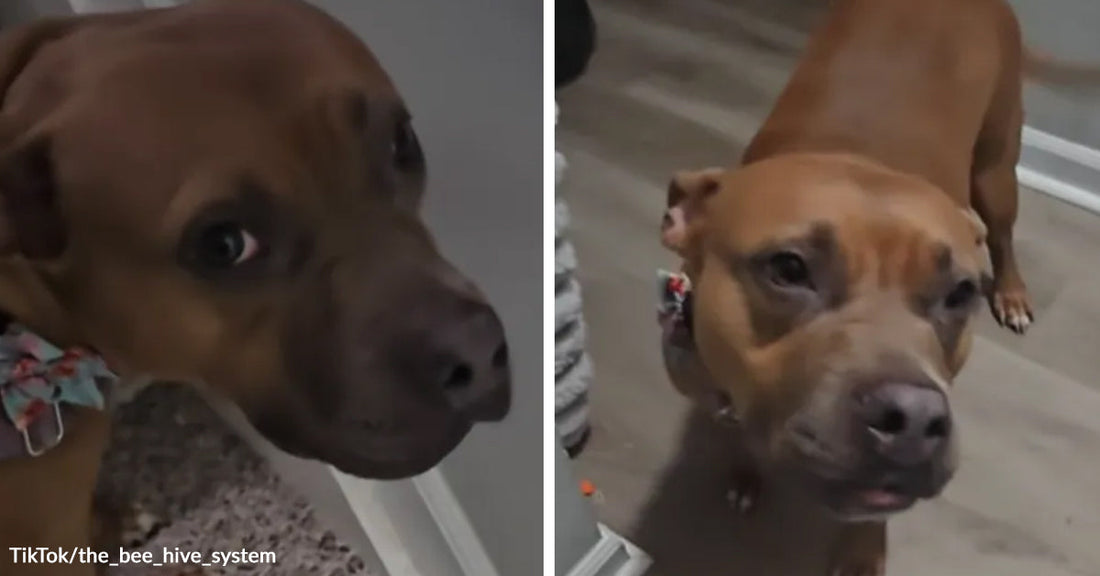
When a rescued dog flinches at every change, even a happy one like moving into a new home, it reveals just how long trauma can linger. That truth is at the heart of a viral story about Mocha, a “traumatized rescue dog” whose frightened reaction to her family moving house has captured millions of views and countless hearts. Her story is not only heartbreaking, it is also a powerful reminder of what many former breeding and fighting dogs endure long after they reach safety.
Mocha’s journey began on the streets of Columbus, Ohio, where she was found severely underweight, bearing signs that she had delivered multiple litters. Shelter staff believed that she had been used as a breeding dog for a fighting ring, and there was evidence that her vocal cords had been cut so she could not bark. Details like these make it painfully easy to understand why this bully breed rescue dog carries such deep fear, even in the gentlest of homes.

Her future changed when Kathleen and Cody, both 30 and living in Columbus, signed up for a shelter holiday foster program. The idea was simple: temporarily give a dog a warm place to stay. The couple met Mocha through this program and immediately saw a dog who was “lovely” yet “defeated,” a pup whose spirit seemed dimmed by whatever she had survived. They took her home planning only to foster, but things quickly took an alarming turn.
Just a few days into her stay, Mocha became dangerously ill. Because the shelter provided free veterinary care, Kathleen and Cody had to bring her back, not knowing if she would survive. Kathleen later told Newsweek that they were in tears dropping her off, terrified by how sick she was and what that might mean. Mocha did pull through, and during that time her foster family realized how deeply attached they had already become. Calling the shelter multiple times a day, desperately seeking updates, made it clear that they could not imagine life without her. They moved from temporary caregivers to committed adopters, officially making Mocha part of their family.
Yet survival and adoption did not erase Mocha’s memories. Those lingering fears recently came into sharp focus when Kathleen shared a video on TikTok that quickly went viral. In the clip, which has been viewed more than 1.1 million times, Mocha watches anxiously as her family packs to move to a new house. The video is framed by Kathleen’s plea for guidance: “How to convince a traumatized pitty she’s not being left behind again.” For anyone searching for stories about a rescue dog afraid of abandonment, this short video delivers an emotional punch.
In the footage, Mocha sits on the stairs, staring at Kathleen with wide, worried eyes. The dog’s expression is tense and questioning, as if she is bracing for the worst. Kathleen gently tells her, “You are not being abandoned.” She adds that Mocha seems convinced she will not be joining them at the new home, that she believes she is being “gotten rid of.” The camera follows as Mocha sticks close, shadowing Kathleen up the stairs and watching every movement.
Kathleen explains that Mocha once loved car rides, which are often joyful events for dogs. Over time, however, that enthusiasm disappeared. Now, whenever Mocha is lifted into the car, she behaves as if she is being taken somewhere she will not return from. This detail, in particular, highlights how trauma can overwrite even simple pleasures and create powerful negative associations. For dogs who have bounced between homes or been surrendered, the car can become a symbol of endings rather than adventures.
Commenters on TikTok responded with compassion and practical suggestions for easing Mocha’s transition. One user suggested making sure she has a bed at both homes so she understands that she belongs in each space. Another recommended packing her things where she can see, and even letting her “put” her toys into a box so she is involved in the process. Others mentioned offering extra treats throughout the move to build positive associations, while many emphasized that the most important thing is consistent love. One person wrote that her trauma may never fully disappear, yet the answer is to simply “keep loving her,” acknowledging that some scars remain while still allowing room for healing.
In conversations with Newsweek, Kathleen offered more insight into Mocha’s everyday struggles. Mocha is described as being afraid of shoes, umbrellas, and loud noises, all common triggers for dogs with difficult pasts. Each object might remind her of experiences people can only guess at. Yet Kathleen also painted a picture of a dog who is much more than her fears. She called Mocha “the sassiest baby ever,” and described how the pup grunts, rolls around, and snaps playfully at the air “like a land piranha.” For readers looking for heartwarming rescue dog transformations, these contrasting details show how personality can blossom even through lingering anxiety.
Mocha’s relationship with comfort is endearing and slightly comical. According to Kathleen, Mocha loves to eat just about everything, with a special fondness for chicken nuggets. She also has a habit of turning herself into what her owner jokingly calls a “baked potato.” Mocha crawls under a thick blanket, wraps herself up until she is completely cocooned, then stays tucked in until she gets overheated and starts panting. At that point, her humans have to “rescue her from herself,” pulling her out of the overzealous burrito she has created. The image of this tough, formerly exploited dog turning into a snug, blanket-wrapped bundle is both amusing and tender.
Thankfully, Mocha’s story does not end on the staircase with her anxious gaze. Subsequent videos on Kathleen’s TikTok account show Mocha in her new environment, racing out to explore the yard that her owners say was a major reason they chose the house. What began as a rescue dog afraid of moving house shifts into footage of a dog confidently claiming her space, running and sniffing in what is now clearly her home. The contrast between her initial panic and her later excitement underscores the power of patient reassurance, routine, and time.
I found this detail particularly striking: despite everything she has endured, Mocha still leans into affection, presses close to her humans on the staircase, and seeks comfort rather than shutting down. That instinct to connect is at the core of many animal resilience stories. It also highlights how vital responsible adoption, trauma-informed care, and stable environments are for dogs emerging from neglect or exploitation. For anyone sharing their life with a formerly mistreated animal, Mocha’s journey offers both validation and hope. Healing may be slow and imperfect, yet every moment of patience, every careful car ride, and every soft reassurance that “you are not being abandoned” can help rewire what a dog expects from the world.
Ultimately, Mocha’s viral video did more than collect views. It drew attention to the hidden histories of countless rescue animals and sparked a wave of empathy from people eager to help a scared dog feel safe. Her story is a testament to what happens when a vulnerable animal meets a family willing to stand by her through fear, illness, and change. As Mocha explores her new yard and settles into her forever home, she represents not just survival, but the quiet, ongoing work of trust rebuilt day by day. Read more at Newsweek