
Two Pregnant Sumatran Rhinos Bring Hope for a Critically Endangered Species
Guest Contributor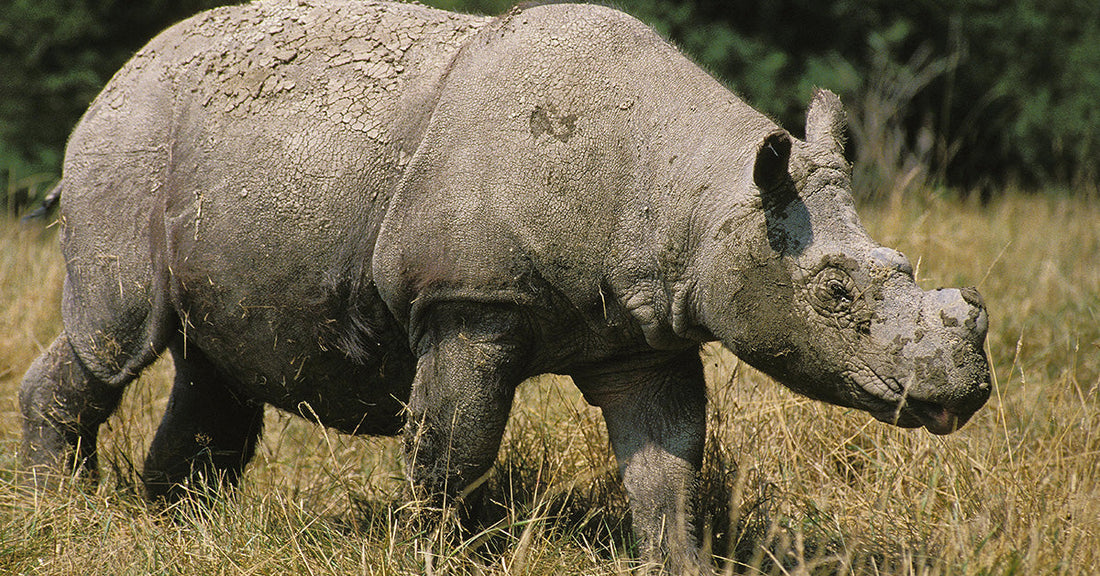
Two critically endangered Sumatran rhinos are pregnant at a sanctuary in Indonesia, offering a rare moment of optimism for one of the world’s most imperiled mammals. For a species that may number only a few dozen in the wild, every new calf represents a lifeline. At the same time, these pregnancies highlight a sobering reality that conservationists grapple with every day: how to save a species when the remaining animals share such a narrow genetic base. The story of Sumatran rhino conservation, captive breeding, and inbreeding risk is unfolding in real time.
Indonesia’s Ministry of Forestry and the nonprofit Yayasan Badak Indonesia recently announced that two females at the Sumatran Rhino Sanctuary in Way Kambas National Park are both expecting calves. One of them, a female named Ratu, is carrying what will be her fourth calf. The other, her daughter Delilah, is carrying her second. Both pregnancies are the result of carefully managed captive-breeding efforts designed to give the species a chance to rebound while wild populations become smaller and more isolated.

Ratu’s story traces directly back to the forests of Sumatra. She was captured from the wild in 2005 and brought into the breeding program. The father of her current calf is Andalas, a male born at the Cincinnati Zoo in 2001. Their daughter Delilah, who was born at the sanctuary in 2016, is now pregnant herself. Her calf was sired by Harapan, another male from Cincinnati and full brother to Andalas. That means the expected calf is the result of a pairing between Delilah and her paternal uncle.
This kind of close relationship between breeding pairs is central to the concern about inbreeding. Experts at the sanctuary, supported by organizations such as the International Rhino Foundation, work to pair rhinos that are as genetically distant as possible. Nina Fascione, the foundation’s executive director, explained that staff members consider both genetic relatedness and practical factors like body size when choosing mating pairs. In practice, however, their options are extremely limited. There are only 11 Sumatran rhinos in Indonesia’s captive-breeding program and every male among them is related.
Despite the genetic constraints, conservation teams believe that the immediate risk of extinction outweighs the ideal of broader genetic diversity. Fascione put it plainly by noting that the current critical situation takes precedence over genetic concerns. Without living rhinos, there would be no genes to preserve at all. In that sense, the sanctuary is balancing near-term survival against longer-term risks of inbreeding, hoping that future conservation strategies, such as new captures or transfers, can increase diversity later on.
Ratu’s pregnancy also carries symbolic weight for the species. If her calf is born healthy and survives, she will become the first known Sumatran rhino to give birth to four calves. That would surpass the earlier record of three calves held by a female at the Cincinnati Zoo. It is a notable milestone for a species known for slow reproduction. Gestation typically lasts 15 to 16 months, and calves remain dependent on their mothers for up to two years, which means population growth is naturally gradual even under perfect conditions.
The ancestry of the current captive rhinos at Way Kambas is intertwined with the history of a small group of founding animals. Every male at the sanctuary can trace his lineage to Ipuh and Emi, two Sumatran rhinos captured from the wild and later housed at the Cincinnati Zoo. Andalas and Harapan, the full brothers born there in 2001 and 2007, were eventually moved to Indonesia to help establish and strengthen the breeding program. Their descendants now form the core of the sanctuary’s future population.
Veterinarians and keepers are monitoring both pregnancies closely. Staff members at the Sumatran Rhino Sanctuary provide medical and reproductive care within large forested enclosures that mimic natural rainforest habitat as closely as possible. Jansen Manansang of Yayasan Badak Indonesia emphasized that the medical team will conduct intensive monitoring of both Ratu and Delilah to support them through gestation and, hopefully, safe deliveries. I found this detail striking because it illustrates how much human effort is now required just to help a naturally solitary animal reproduce successfully.

In the wild, Sumatran rhinos once roamed more widely across Southeast Asia. Today, the Asian Rhino Specialist Group of the IUCN estimates that only 34 to 47 individuals remain in Indonesia. These rhinos are scattered in several isolated groups, with the largest apparently viable population living in the Leuser Ecosystem in northern Sumatra. Fragmented habitat compounds the usual pressures of poaching and deforestation. Isolation makes it harder for males and females to find each other, particularly for a solitary species that does not move in large herds.
This difficulty of finding mates creates what biologists call a demographic challenge. Even if enough habitat remains, tiny scattered populations may be too small and too spread out for animals to encounter one another often enough to breed. The Sumatran Rhino Sanctuary exists in part to counter that problem. By bringing animals together within secure forest enclosures and carefully managing introductions, staff members can give rhinos more frequent breeding opportunities than they might have in the wild.
Progress has been slow but significant. Since the broader Sumatran rhino captive-breeding initiative began in 1984, five calves have been born at the sanctuary, with the most recent birth in 2023. Behind each successful calf, however, lies a history of reproductive challenges. Miscarriages have been a recurring obstacle, especially for rhinos that went long periods without breeding. Ratu herself experienced two miscarriages before successfully giving birth to her first calf, Andatu, in 2012. Another female, Rosa, endured eight miscarriages before she finally delivered her first calf, Sedah Mirah, in 2022.
These stories help explain why each confirmed pregnancy is treated as cause for cautious celebration. By the time a pregnancy reaches around eight months, as Ratu’s and Delilah’s have, the chances of it progressing successfully become more encouraging, though not guaranteed. Given how few Sumatran rhinos exist, every calf that survives to adulthood is more than a number in a population chart. It represents a renewed possibility that the species might one day recover enough to sustain itself without intensive human intervention.
The intertwined themes of hope and risk define the current moment in Sumatran rhino conservation. Captive breeding at Way Kambas, supported by Indonesian authorities and conservation organizations, has shown that it is possible to help these elusive animals reproduce, even after decades of decline. At the same time, the reliance on a small family tree, from Ipuh and Emi to Andalas, Harapan, Ratu, Delilah and their calves, underscores a difficult truth. Saving a species on the brink of extinction can require accepting imperfect options in the short term while working toward more resilient solutions in the long term. In that context, the two pregnancies announced in Indonesia stand as both a fragile victory and a reminder of how much work remains to secure the future of the Sumatran rhino.