
🚨Urgent: Hurricane Isaias Smashes Into the Gulf Coast! Rush Emergency Aid!
Bluefin Tuna Return in Huge Numbers After Overfishing Nearly Emptied Britain’s Waters
Guest Contributor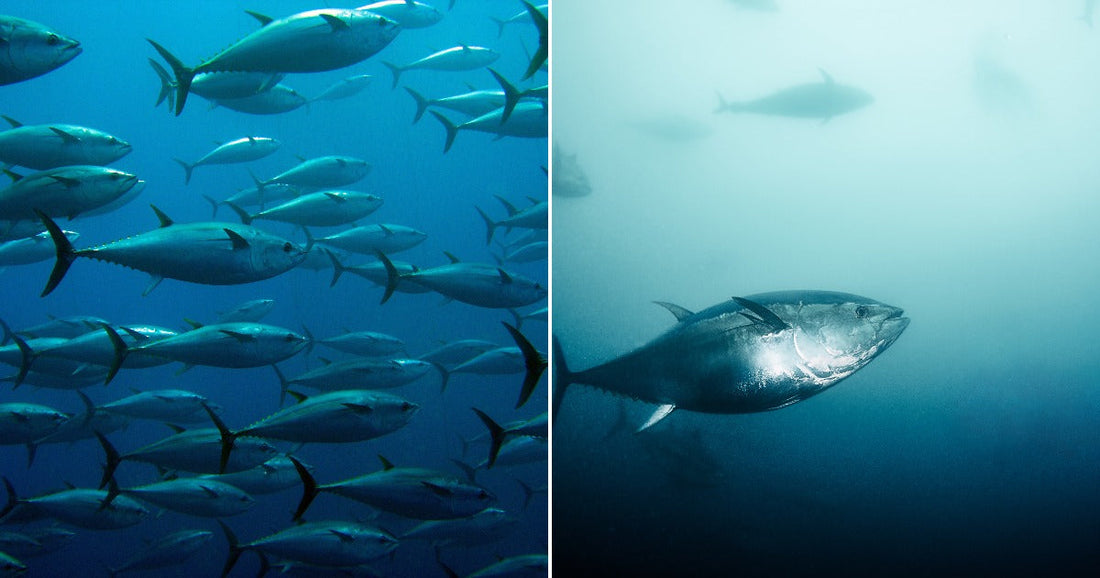
The unexpected comeback of UK bluefin tuna is offering something rare in environmental news: a credible reason for hope. After vanishing from British waters in the 1960s due to overfishing and depleted prey, these giant predatory fish have now returned in striking numbers off the British coast. Their story, highlighted in WWF’s Living Planet Report 2026, suggests that with determined action and smart policies, nature can recover.
The report presents the bluefin tuna as a standout success in fisheries management. The UK once supported large tuna fisheries, but heavy pressure on both the bluefin and the smaller fish they rely on pushed the species to near disappearance. According to WWF, it took a concentrated international effort to reverse this trend. Governments reduced catch quotas, imposed size limits, and protected crucial spawning grounds. At the same time, consumers, chefs, and retailers backed campaigns that encouraged more responsible choices. Together, these measures created the space that bluefin tuna needed to rebound.

Hannah Rudd, head of marine at the Angling Trust, described the result of this effort as close to an “explosion” in the bluefin tuna population. She called the species a “golden case study” that fisheries management can work when science, policy, and public support align. The return of bluefin tuna to UK waters is not just a feel-good story. It provides a real-world example of how targeted conservation, when enforced and monitored, can help rebuild even heavily depleted populations.
The same WWF report broadens the lens beyond UK seas. It highlights other encouraging wildlife recoveries that have taken shape over years of sustained work. One of the most striking examples is the wild tiger. Around 2010, global tiger numbers were estimated at about 3,200. By 2025, that figure had risen to around 5,700, an increase of more than 70%. This turnaround did not happen by chance. It followed coordinated conservation programs, protection of tiger habitats, and greater attention to poaching and illegal trade.

Marine conservation provides another success story. After half a century of concerted effort in roughly 80 countries, the green sea turtle has seen its protection status improve. In 2025 it became the first marine turtle to be downgraded from “endangered” to “least concern.” This shift does not mean the species faces no threats. Instead, it recognizes that decades of beach protection, nesting site management, and public awareness campaigns have helped stabilize and grow its populations to a more secure level.
On land, elephant numbers have stabilized or are growing in parts of southern Africa. WWF credits this in part to new laws that involve local communities more directly. These laws give people a share in the income elephants help generate, including from tourism. When communities see tangible benefits from protecting wildlife, they have a stronger incentive to support conservation and resist illegal killing. It is a reminder that effective conservation often depends on policies that work for both people and wildlife.
Despite these hopeful stories, the overall message of the Living Planet Report 2026 remains stark. Working with the Zoological Society of London, WWF has tracked nearly 36,000 populations of almost 6,000 species of mammals, birds, fish, reptiles, and amphibians. Across this vast dataset, monitored wildlife populations have fallen by an average of 73% since 1970. The report is careful to explain that this figure reflects changes in population size, not a simple count of animals lost, and that about half of the populations studied are stable or increasing. Yet those gains are outweighed by severe declines elsewhere.
Experts also stress that this index does not tell the full story of nature’s health. Dr Katie Collins, a senior curator at the Natural History Museum in London, pointed out that the index largely covers vertebrates, leaving out many other vital forms of life. Plants, insects, and invertebrates such as garden snails fall outside its scope. Collins noted that the loss of these overlooked species can have cascading effects. If species such as garden snails disappear, birds like the song thrush that feed on them will also suffer. This insight highlights how deeply interconnected ecosystems are and how declines in one group can echo across many others.
WWF argues that conservation action alone is not enough to reverse global wildlife decline. The report links the largest pressures on nature to farming and fossil fuel use. Intensive agriculture can destroy or fragment the habitats that wildlife needs to survive. At the same time, burning fossil fuels drives climate change, which reshapes ecosystems through heat, shifting rainfall patterns, and rising seas. These forces increase the stress on already vulnerable species and habitats.
The report also highlights how financial flows are working against nature. In 2023, an estimated 7.3 trillion dollars went into activities that harm the natural world. By contrast, about 220 billion dollars was spent on protecting or restoring it. That is a ratio of roughly 33 to one. This imbalance suggests that while conservation projects can succeed, they are currently operating within an economic system that channels far more resources into practices that undermine them.
Mike Barrett, WWF-UK’s chief scientific adviser, has contributed to seven editions of the Living Planet Report. He said that this is the first where the main message focuses squarely on hope. The report refers to this approach as the “science of hope.” In Barrett’s words, hope is not passive or wishful thinking. It is rooted in action, clear goals, and credible plans. The recovery of bluefin tuna, tigers, green sea turtles, and southern African elephants illustrates what is possible when these elements come together.
At the same time, Barrett described the situation as a closing window of opportunity. The global numbers remain deeply concerning, and the pressures from habitat loss and climate change are growing. Yet he emphasized that the window is still open if action continues and expands. I found this framing striking because it connects the hard data on declining populations with real-world examples that progress is still within reach.
The return of UK bluefin tuna shows that nature can respond with surprising speed when given a chance. Combined with other success stories, it suggests that investments in conservation, better fisheries management, community-based wildlife protection, and more balanced financial priorities can turn the tide for some of the world’s most threatened species. The challenge, as WWF presents it, is to scale these examples so they become the rule rather than the exception, and to do so while there is still time to secure a livable future for both people and the rest of the natural world. Read more at https://www.bbc.com/news/articles/c5rmyzgdjzkwo