
Faint Meow In Tornado Rubble Leads Storm Chaser To A Tiny Survivor
Guest Contributor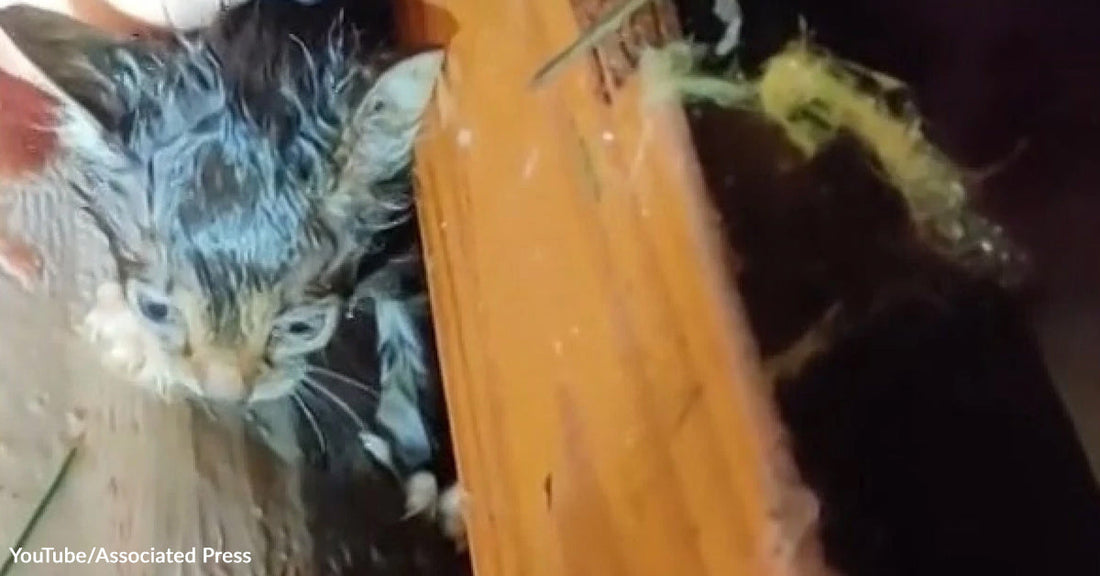
In the middle of twisted metal, shattered walls, and the sharp quiet that follows a violent storm, a single sound cut through the darkness in Bogue Chitto, Mississippi. It was not the rumble of distant thunder or the drone of emergency vehicles, but the fragile, insistent meow of a kitten buried somewhere in the wreckage of a tornado-ravaged trailer park. That faint cry led storm chaser Ashton Lemley to a remarkable rescue that has resonated with many people who have seen the video and read his account. In a week when news from severe weather zones has been filled with damage reports and injury counts, this story of a kitten surviving a Mississippi tornado offers a small but powerful moment of hope.
The tornadoes that swept across the bottom half of Mississippi flattened homes and ripped through a rural community already vulnerable to severe weather. In the Bogue Chitto trailer park, at least a dozen people were reported injured after storms spawned at least three tornadoes. The landscape that Lemley walked through in the predawn hours was one of collapsed roofs, broken boards, insulation scattered like snow, and families confronting the sudden loss of their homes. Amid this destruction, the kitten’s voice was a reminder that not every life had been claimed by the storm.

Lemley, who has been chasing storms since 2010, is used to entering disaster zones quickly after the worst has passed. As a storm chaser he documents severe weather, but he also often finds himself among the first people to witness the human and animal impact of tornadoes on the ground. As he picked his way through the debris in Bogue Chitto, it was that “unmistakable meow,” as he put it, that made him stop. He did not know where the kitten was or how badly it might be hurt, but he was determined to locate the source of the sound before it was too late.
For a few tense minutes, the cries guided him. Then they stopped. In those silent moments, the worst possibilities were easy to imagine. Tornado damage often hides dangers under every step, from nails to unstable structures, and lost animals can quickly succumb to exposure or injury. Lemley later recalled that he feared the kitten had not survived. Standing in near-darkness surrounded by splintered homes, that loss would have blended into the larger heartbreak of a community already reeling.
Then, about five minutes later, the meowing started again. This time, the sound cut through his anxiety and gave him a clear focus. By his account, his immediate reaction was one of relief: “Oh, he’s still alive!” The second chance pushed him to search even more carefully. Guided by the renewed cries, he dug beneath insulation from a flattened wall. The material had once been part of somebody’s home; now it served as fragile cover for a tiny survivor waiting underneath.
In the beam of his flashlight, Lemley finally spotted the kitten wedged between two wooden posts, wet and clearly frightened. It is a detail that stands out because it is both ordinary and extraordinary. Anyone who has tried to coax a scared animal out of hiding recognizes the slow, careful movements needed to avoid spooking it further. Yet this encounter was taking place in the heart of a disaster scene, the air still thick with the aftermath of multiple Mississippi tornadoes. The video that Lemley recorded captured his immediate response as he reached in and lifted the kitten free: “Oh my goodness, I found him!” His voice on the recording is gentle as he reassures the animal, telling it it will be cleaned up and cared for.
He held the kitten in his arms for a few minutes, providing warmth and a sense of safety it had likely been missing since the storm struck. Then he passed the animal to the commander of the United Cajun Navy, a volunteer disaster-response group that often deploys to areas hit by hurricanes, floods, and tornadoes. The commander dried the kitten and took it to safety. Lemley noted with some amazement that the animal did not appear to be injured despite everything it had endured. That detail underscores the fragile line between catastrophe and survival during violent weather outbreaks.
Lemley shared that years of experience in disaster zones have taught him to keep his emotions in check. He has been documenting storms for well over a decade, so he has seen communities shattered and lives upended many times before. Even so, he acknowledged how hard it is to witness any living being, human or animal, suffer in the wake of a tornado. I found this detail striking because it highlights how even seasoned responders can be deeply moved by small signs of resilience. The image of a storm chaser, typically associated with dramatic skyward footage, cradling a shivering kitten in the ruins brings a different side of disaster work into focus.
The aftermath of any major storm includes an uncertain period when people try to piece together what and who has been lost. Pets are an important part of that story. According to Lemley, there has already been significant interest from people eager to adopt the kitten if its original owners cannot be located. Many have suggested the name “Tornado,” a label that reflects both the trauma the animal survived and the unlikely path that led to its rescue. It is too early to know where the kitten’s new home will be, but the level of attention speaks to how stories of animal rescues can provide comfort and connection after a disaster.
Interestingly, the kitten will not be staying with Lemley himself. He explained that he is allergic to cats, so taking the animal home is not an option. There is something modest and matter-of-fact about that detail. He stepped in when he heard a cry for help, did what he could in the moment, and then entrusted the kitten to others better positioned to provide long-term care. Many responders and volunteers operate in exactly this way, helping to bridge the gap between crisis and recovery for both people and animals caught in the path of severe weather.
The story of this faint meow in the rubble of a Mississippi tornado does not erase the destruction in Bogue Chitto or the injuries suffered by residents of the trailer park. Yet within a larger narrative of loss, it offers a clear reminder of why individual acts of compassion matter. A single, fragile sound in the dark prompted a search that could easily have been abandoned when it first went quiet. Instead, persistence and attention to that tiny voice turned potential tragedy into a rare moment of relief. For communities in tornado-prone regions and for those who follow storm coverage from afar, such moments help balance the stark images of flattened homes with proof that survival and kindness can still be found in the wreckage.